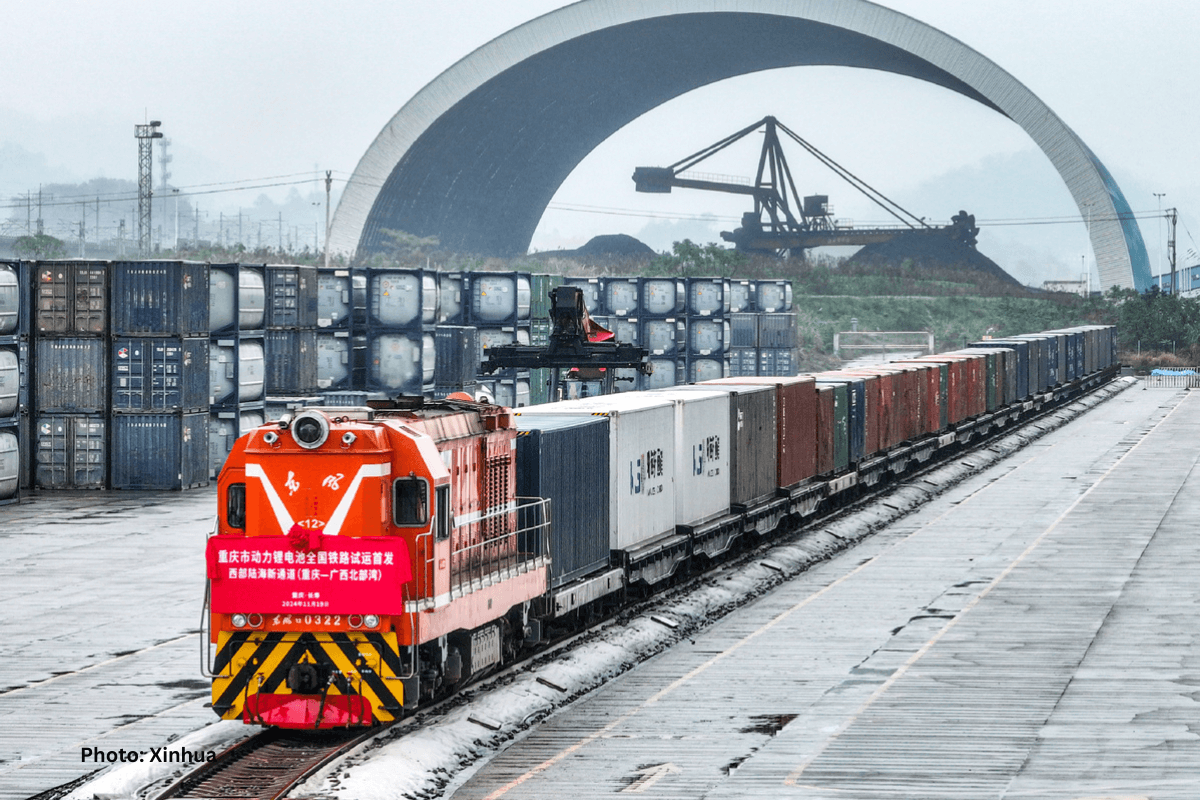

China, September 2026 — China has launched its first trial of electronic waybills for international rail freight, with the initiative designed to streamline cargo handovers and reduce documentation costs on services between China and Russia. The trial is being implemented by China State Railway Group in cooperation with Russian Railways.
The first electronic waybill covers 276 metric tonnes of industrial raw materials transported to Russia’s Chelyabinsk region via China’s Suifenhe border station and Russia’s Grodekovo station. The two railway operators have agreed on data-sharing procedures, operational arrangements and mutual recognition of electronic signatures, enabling digital waybills to replace multiple paper documents traditionally accompanying international shipments.
Under the trial, participating railways will exchange and use recognised electronic data from cargo acceptance at the origin station through border handover to final delivery. The initial rollout will cover wagonload and container shipments through the Suifenhe–Grodekovo crossing, with the digital process intended to simplify cross-border procedures and reduce document management and transmission costs.
The initiative builds on data exchanges China has conducted with railway operators in Russia, Kazakhstan and Mongolia since 2019. Following an assessment of the trial and feedback from customers, China State Railway Group plans to consider extending electronic waybills to other border crossings, including Manzhouli and Tongjiang, as well as wider China-Europe freight train services.
The development highlights the growing role of digitalisation in international rail freight, where documentation and border procedures can affect the efficiency of cross-border services. Wider adoption of electronic waybills could help standardise information exchange between railway operators and reduce administrative friction across international freight corridors.
Source: China Daily


