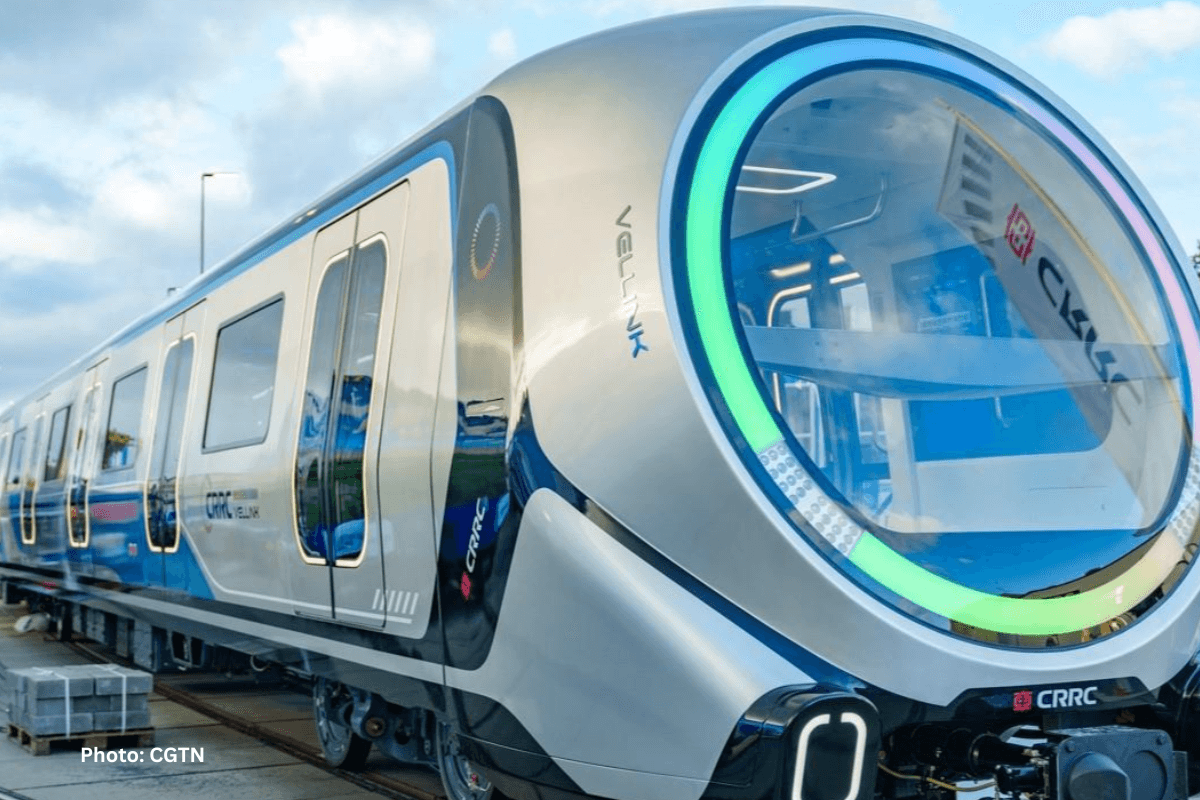
Malaysia, August 2026 – The 665-kilometre ECRL is approaching completion, with the railway designed to connect Kota Bharu in Kelantan with Port Klang in Selangor through Terengganu, Pahang and the Klang Valley. The electrified double-track railway is intended to improve both passenger mobility and freight connectivity across Peninsular Malaysia.
Pahang is particularly significant within the ECRL corridor, with seven stations planned in the state: Bentong, Temerloh, Maran, Paya Besar, KotaSAS, Kuantan Port City and Cherating. The alignment is expected to strengthen connections between industrial areas, logistics facilities and Kuantan Port, while creating opportunities for wider economic development along the corridor.
The railway is designed for passenger services at speeds of up to 160 km/h, while freight locomotives will operate at up to 80 km/h. The ECRL's freight capability is expected to provide an alternative to road-based cargo movement and improve links between the East Coast and Port Klang, supporting more efficient movement of industrial and commercial goods.
The project is scheduled for completion in December 2026, with the Kota Bharu–Gombak section expected to begin operations in January 2027. The Gombak–Port Klang extension is scheduled for completion in December 2027, with full operations targeted for January 2028. This phased opening reflects the scale of integrating a new standard-gauge railway with existing transport and logistics infrastructure.
For Pahang and the wider East Coast, the ECRL represents more than a new passenger railway. Its combination of passenger and freight functions, port connectivity and integration with other transport networks positions the corridor as an important component of Malaysia’s longer-term strategy to improve regional connectivity, diversify freight transport and support industrial development outside the Klang Valley.
Source: The Malaysian Reserve

ECRL Advances Toward Completion As Pahang Strengthens Logistics Role

Journalism & Media
Share this story
Malaysia’s East Coast Rail Link (ECRL) is moving into its final construction phase as the country prepares to strengthen east-west rail connectivity and freight capacity. The project is expected to support Pahang’s industrial and logistics development by linking major economic areas with ports and the wider national rail network.