HUNGARY, February 2026 — The expansion of efficient intermodal rail networks across Eurasia is a critical development for global supply chains. As trade routes evolve, new connections like the one established between Ukraine and the European Union via Hungary are vital for optimizing freight movement and enhancing connectivity between continents.
East-West Intermodal Logisztikai Szolgáltató Zrt. (EWG), in collaboration with UZ Cargo Poland, has launched an on-demand rail service. The inaugural train, departing January 28 from Ukraine's Sknyliv-Liski terminal, transported non-cranable semi-trailers to EWG's terminal in Fényeslitke, Hungary, with capacity for up to 42 semi-trailers per service.
This new route offers significant advantages, including greater predictability compared to road transport, mitigating risks associated with driver shortages and border complexities. Furthermore, the service champions environmental sustainability, with rail transport estimated to generate 70-80% less CO2 emissions than road freight over comparable distances.
The service's ability to handle non-cranable semi-trailers addresses a key logistical challenge, making it a versatile option for a wider range of cargo. Routing can be adjusted based on customer needs, with current destination markets including Germany and the Netherlands, underscoring Hungary's role as a strategic transit hub.
This development aligns with the growing global trend towards greater reliance on rail freight for long-haul transportation, driven by economic efficiency and decarbonization goals. Such initiatives are crucial for building resilient and sustainable logistics networks across the vast Eurasian landmass, impacting trade flows with Asia.
Source: trans.info
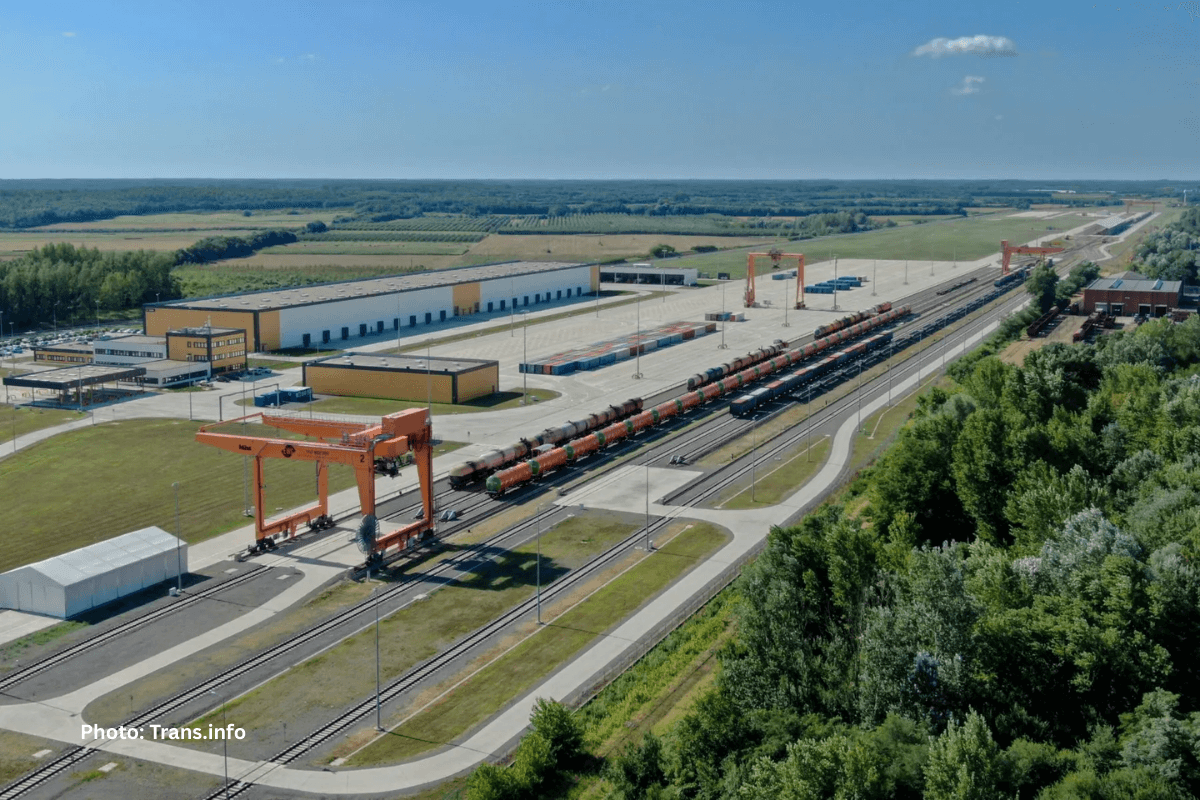
Eurasian Intermodal Rail Expansion: New Ukraine-EU Route Enhances Global Connectivity

Engineering Business Management
Share this story
The global logistics sector is increasingly leveraging intermodal rail for efficiency and sustainability. A new service connecting Ukraine with the European Union via Hungary offers enhanced freight transport capabilities, impacting broader Eurasian trade dynamics.


