Thailand, August 2026 – Phase 1 of Thailand’s Thai–Chinese high-speed rail project has reached 55.978% completion, compared with a planned 90.487%, leaving the 250.77-km Bangkok–Nakhon Ratchasima route 34.509 percentage points behind schedule. Despite the shortfall, the Transport Ministry continues to target an opening in 2030.
The project is divided into 14 civil works contracts, with several sections still awaiting construction. One of the most significant is Contract 4-1 between Bang Sue and Don Mueang, which includes infrastructure shared with the three-airport high-speed rail project linking Don Mueang, Suvarnabhumi and U-Tapao airports. Authorities expect to determine how the shared section will proceed by the end of 2026.
The situation highlights the challenges of coordinating major rail projects with overlapping infrastructure requirements. The State Railway of Thailand (SRT) is considering whether to retender the shared structure under Contract 4-1 and construct it independently, which could reduce further delays to the Thai–Chinese railway while allowing the structure to serve both high-speed rail systems.
Progress varies considerably between individual contracts. Contract 4-7 covering the 12.99-km Saraburi–Kaeng Khoi section has reached 73.25%, compared with a planned 81.50%. Segment installation is 86% complete, while construction of Saraburi Station stands at 29.30%, against a scheduled 47.22%. The four-level elevated station will feature two 450-metre platforms and four tracks.
The project’s latest status underscores the importance of resolving construction bottlenecks and coordinating interconnected infrastructure as Thailand develops its high-speed rail network. While the government remains committed to the 2030 target, accelerating delayed contracts, managing interfaces with other rail projects and maintaining strict construction safety controls will be critical to achieving the planned opening.
Source: The Nation
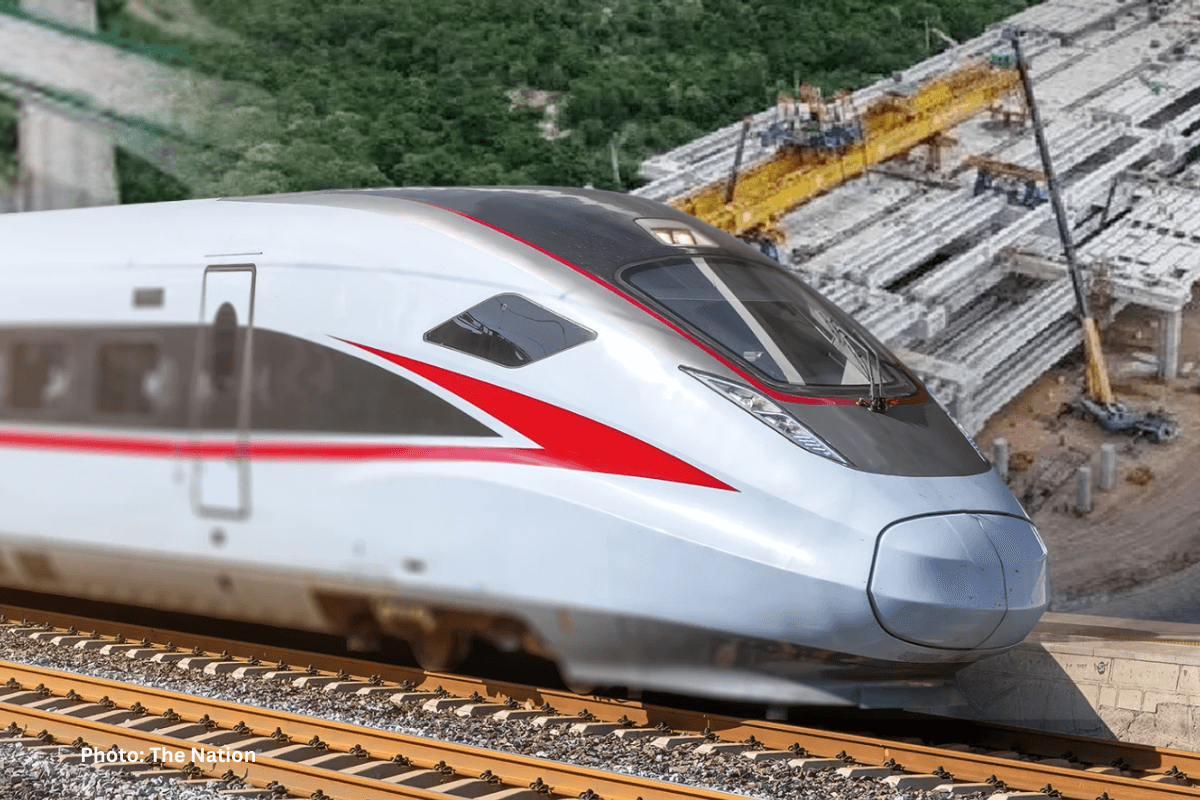
Thailand Maintains 2030 Target For Delayed High-Speed Rail Project

Journalism & Media
Share this story
Thailand is pressing ahead with its flagship high-speed rail programme despite construction progress remaining significantly behind schedule. The Bangkok–Nakhon Ratchasima section is 34.5 percentage points below its planned cumulative progress, increasing pressure on authorities to accelerate construction while resolving interfaces with the separate three-airport rail project.


