TASHKENT, January 2026 — Uzbekistan is strategically enhancing its position as a significant transit hub by developing and upgrading a network of international railway corridors. This initiative is part of a broader regional effort aimed at improving connectivity and facilitating trade flows between Europe, Asia, and South Asia, with the ultimate objective of fostering economic cooperation among these regions.
To achieve this endeavour, Uzbekistan is actively establishing new railway routes. Among these initiatives is the TRACECA (Transport Corridor Europe-Caucasus-Asia) corridor, which facilitates connections between Europe and Asia. Additionally, the China–Kazakhstan–Uzbekistan railway line bolsters trade relations between China and Central Asia, while new routes through Turkmenistan and Iran enhance access to critical markets. Furthermore, the planned Trans-Afghan Railway seeks to create a direct land linkage to Pakistan's seaports, thus providing vital trade routes for goods transport.
In alignment with its modernisation strategy, Uzbekistan is investing in advanced fleet upgrades, which include the procurement of high-speed trains from Hyundai Rotem and state-of-the-art locomotives from China. Such enhancements are anticipated to significantly reduce transit times, thus improving transportation efficiency and increasing trade route accessibility.
This comprehensive expansion is supported by substantial financial backing from prominent international financial institutions, including the European Bank for Reconstruction and Development, the Asian Development Bank, and the World Bank. Their financial and technical support is integral to the successful realisation of these large-scale infrastructure projects.
Sustainability remains a critical component of Uzbekistan’s railway development strategy. Presently, over 70% of the rail network is electrified, with a governmental target to increase this figure to 85% by 2030. This objective is complemented by ongoing investments in renewable energy sources, reflecting a commitment to reducing environmental impact and promoting clean energy solutions.
Overall, Uzbekistan's integrated strategy underscores the essential role of rail infrastructure in promoting economic integration and sustainable development across Asia. This approach not only seeks to position Uzbekistan as a logistics hub of global importance but also establishes the country as a key player in the evolution of Eurasian logistics, thereby enhancing trade and cooperation among neighbouring regions.
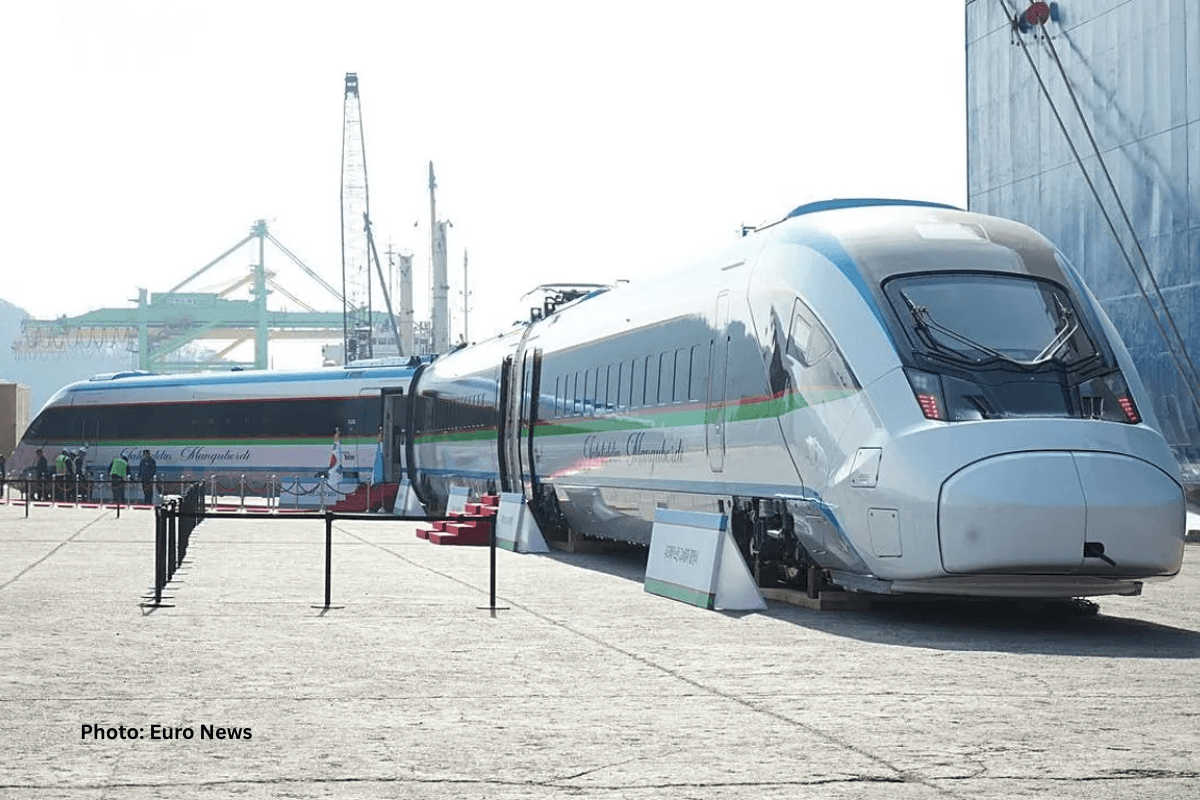
Uzbekistan Fortifies Eurasian Connectivity Through Strategic Rail Network Development

Engineering Business Management
Share this story
Asia's transport infrastructure is evolving rapidly to meet global trade demands. Uzbekistan is significantly expanding its international railway corridors to solidify its position as a crucial transit hub connecting Europe, Asia, and South Asia.


