VIETNAM, April 2026 — Three years after the launch of international services, the China–Laos Railway continues to evolve into a major trans-boundary transport artery, with regular passenger and freight operations linking Kunming (China) with Vientiane (Laos). The 1,035 km line, which began full international operations in April 2023, has carried over 800,000 cross-border passengers from more than 120 countries and regions to date.
Current operations include four daily international passenger trains, offering an end-to-end journey in under 10 hours, with border clearance at Mohan reduced to approximately 50 minutes. Capacity enhancements have raised cross-border seating from 250 to 420 seats per train, with multilingual services and international payment options introduced to improve the customer experience.
Passenger traffic continues to grow, with the first quarter of 2026 recording 112,000 cross-border trips, a 32.4 % year-on-year increase that reflects rising tourism demand between China, Laos and wider Southeast Asian destinations. Destinations such as Xishuangbanna, Luang Prabang and Vientiane are becoming key nodes in rail-based regional travel itineraries, supported by coordinated tourism and visa facilitation policies.
Freight movements are also expanding, with specialised shipments such as refrigerated cargo like durians from Thailand being transported via the corridor and distributed to major Chinese cities within two days. Rail operators have increased cold-chain freight services up to six trains per day during peak seasonal demand, alongside priority handling measures to speed up logistics.
The China–Laos Railway’s growth underscores the potential of rail infrastructure to integrate cross-border passenger mobility and freight logistics within regional economic frameworks. As traffic volumes rise, the corridor is set to play a pivotal role in ASEAN-China connectivity, tourism development, and export supply chains.
Source: China Daily (Global Edition)
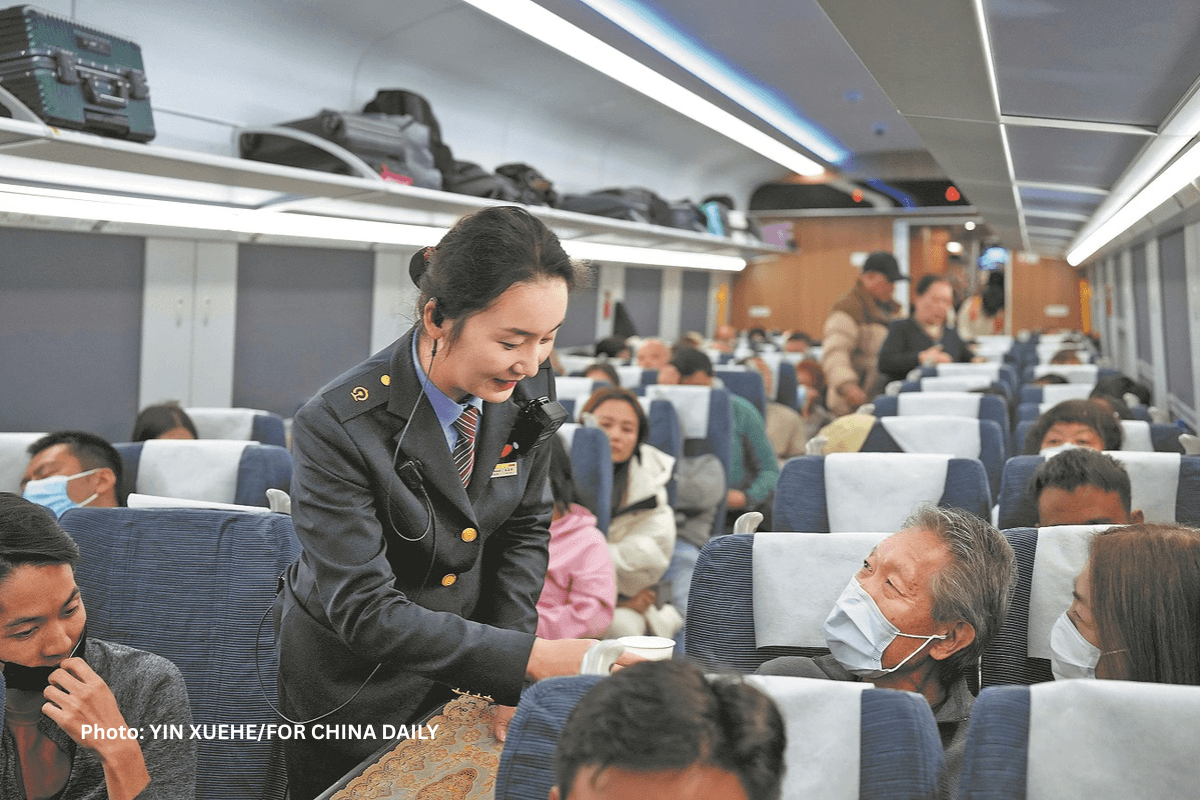
China–Laos Railway Strengthens Cross-Border Passenger And Freight Connectivity

Engineering Business Management
Share this story
Rail corridors that link national networks are driving regional economic integration and tourism growth in Southeast Asia. The China–Laos Railway has reported significant increases in cross-border passenger and freight traffic, reshaping mobility patterns and trade flows between Southwest China and Laos.


