China, September 2026 – China State Railway Group reported operating revenue of 589 billion yuan in the first half of 2026, with net profit reaching 1.85 billion yuan, more than 19% higher year-on-year. Its debt-to-asset ratio also declined to 61.83%, indicating further improvement in its financial position.
Passenger demand remained strong, with China's railways carrying 2.348 billion passenger trips during the first six months, a 5% year-on-year increase and a record for the period. Railway freight volume reached 2.015 billion tonnes, while rail-water intermodal traffic increased 11% to 9.12 million TEUs. End-to-end logistics using rail as the trunk transport mode rose sharply by 87.9% to 243 million tonnes.
Railway investment also remained substantial. Fixed-asset investment reached 363.2 billion yuan in H1, up 2.1% year-on-year, while 355.2 kilometres of new railway lines entered service. Several major high-speed rail projects progressed through opening, trial operations, commissioning and testing, including the Xi'an–Shiyan, Harbin–Yichun and Xi'an–Ankang high-speed railways.
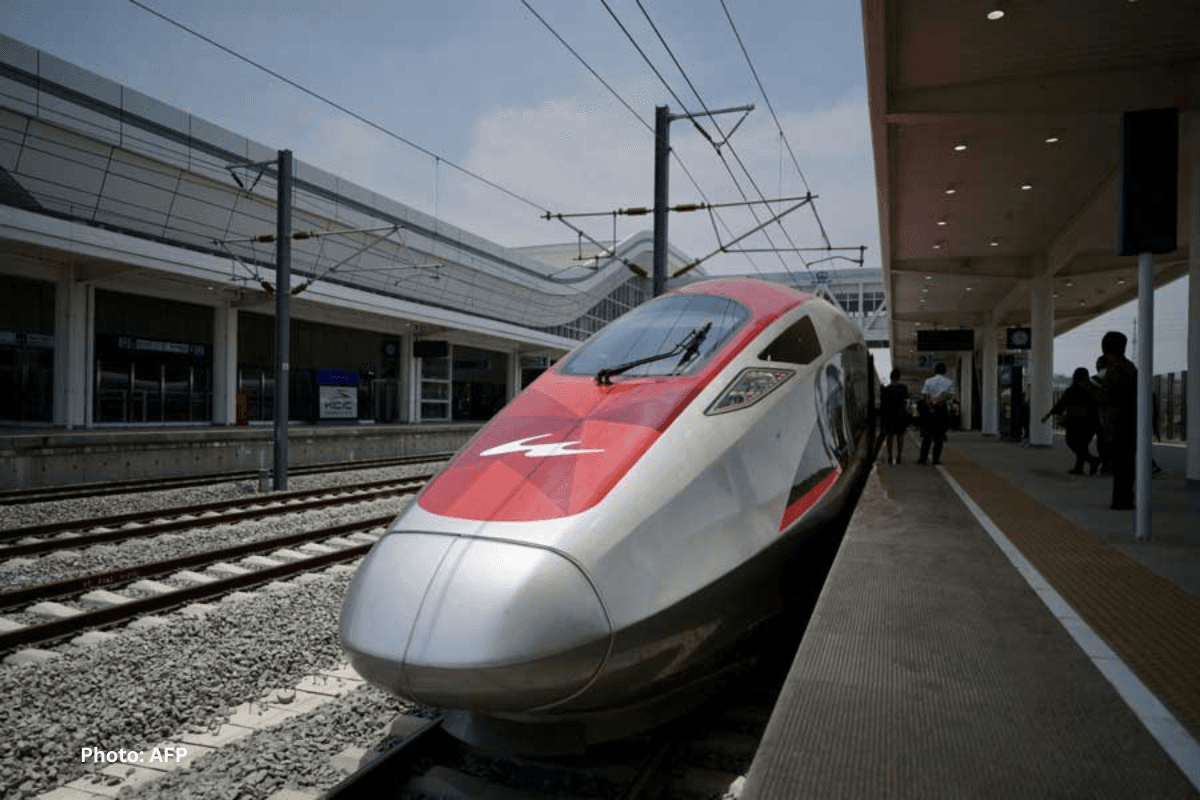
Technology development is another focus, particularly the CR450 high-speed EMU. The train is undergoing operational assessment after completing testing at speeds of up to 450 km/h. Before commercial passenger service, the train is required to accumulate 600,000 kilometres of operation while meeting technical and reliability requirements.
China State Railway Group plans to complete 520 billion yuan in infrastructure investment during 2026 and place more than 2,000 kilometres of new railway into operation. The investment strategy prioritises corridors serving Xinjiang and Tibet, border and coastal regions, as well as projects designed to strengthen network connectivity and supply-chain capacity.
Source: BigGo Finance

China State Railway Group Reports Stronger H1 2026 Performance

Journalism & Media
Share this story
China’s railway sector is combining record passenger and freight volumes with sustained infrastructure investment as China State Railway Group strengthens network capacity and financial performance. The operator reported higher revenue and profit in the first half of 2026, alongside continued progress on major railway projects and next-generation rolling stock.