FREIBURG, June 2026 — The Karlsruhe–Basel corridor serves as a vital artery for European trade, yet it has long suffered from capacity constraints that limit the efficiency of the Rotterdam–Genoa axis. By investing in dedicated infrastructure, the project aims to resolve these historical bottlenecks while modernizing the regional network to meet future demand.
Initial works are currently focused on the plan approval section between Riegel and March, situated just north of Freiburg. Rather than immediate tracklaying, the current phase involves essential civil engineering and preparatory structures, including the construction of bridges and crossings over the Feuerbach near Teningen-Nimburg. These foundational elements are necessary precursors to the larger scale rail installation scheduled for the coming years.
For rail freight operators, the completion of this bypass will provide a reliable, high-capacity route that avoids the congestion of the existing Rhine Valley Railway. Simultaneously, the separation of traffic flows allows for the modernization of passenger sections, which are projected to support speeds of up to 250 km/h, significantly improving regional and long-distance transit times.
This development is part of a broader infrastructure program that includes the construction of tunnels, station modernizations, and a full freight bypass around the city of Freiburg. While the current works are localized, they represent the first tangible steps toward a target completion date of 2035 for the new-build sections, aligning with Germany's long-term commitment to shifting more transit from road to rail.
As European logistics networks increasingly prioritize decarbonization and resilience, the expansion of the Rhine Valley axis serves as a blueprint for cross-border infrastructure integration. By enhancing the throughput of the Rhine-Alpine corridor, this project reinforces the strategic role of rail in maintaining the fluidity of the continent's most critical supply chains.
Source: Latest Railway News
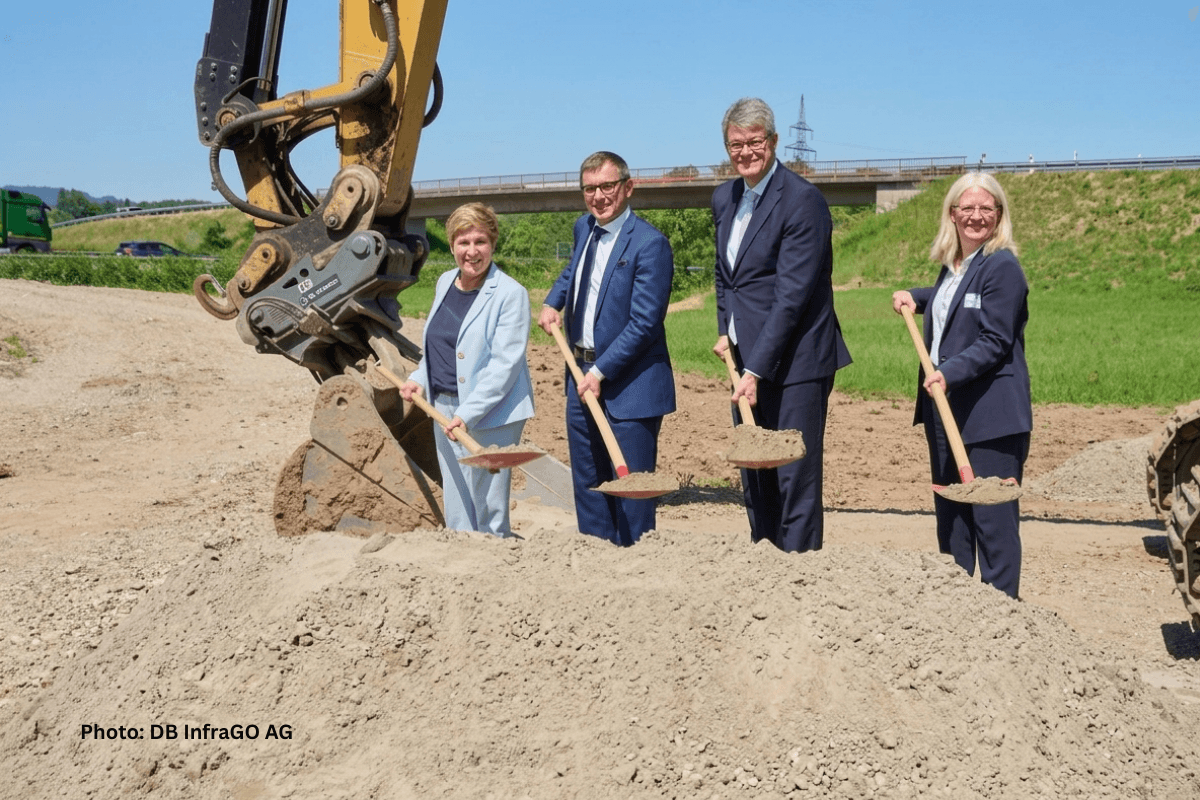
DB Commences Civil Works on Rhine Valley Freight Bypass Near Freiburg

Engineering Business Management
Share this story
The expansion of the Rhine-Alpine corridor represents a critical step in de-bottlenecking European rail freight by separating heavy goods traffic from high-speed passenger services. Deutsche Bahn has officially launched preparatory construction for a new dedicated freight line running parallel to the A5 motorway, marking a significant milestone in the comprehensive Karlsruhe–Basel four-track upgrade.


