OMAN, April 2026 — The Hafeet Rail project, a strategic cross-border railway linking the United Arab Emirates and Oman, has reached 40% completion as construction advances across its main alignment.
The 238-kilometre railway is being developed as a joint initiative between Etihad Rail, Oman Rail, and Mubadala Investment Company, with the objective of establishing a high-capacity freight and passenger corridor between Abu Dhabi, Al Ain, and Sohar. The route is designed to integrate ports, industrial zones, and logistics hubs across both countries into a unified transport network.
Construction works are progressing across key sections including Al Ain, Al Buraimi, Sohar, and Wadi Al Jizzi, with engineering activity spanning diverse terrain such as desert landscapes, mountainous areas, and deep wadis. The complexity of the corridor has required extensive earthworks, major bridge and tunnel structures, and integrated flood protection systems to ensure long-term operational resilience.
According to project updates, more than 27 million cubic metres of earthworks have already been completed, alongside significant progress in structural works including concrete foundations, piles, and culverts across multiple sites. These developments indicate steady advancement toward the line’s future role as a high-capacity logistics artery.
Beyond construction milestones, the project is expected to significantly reduce travel times and improve freight efficiency between the UAE and Oman while enabling future passenger services. It also supports broader national strategies focused on economic diversification, sustainability, and reduced reliance on road-based transport, reinforcing the Gulf region’s shift toward integrated rail connectivity as a backbone for trade and mobility.
Source: Gulf News
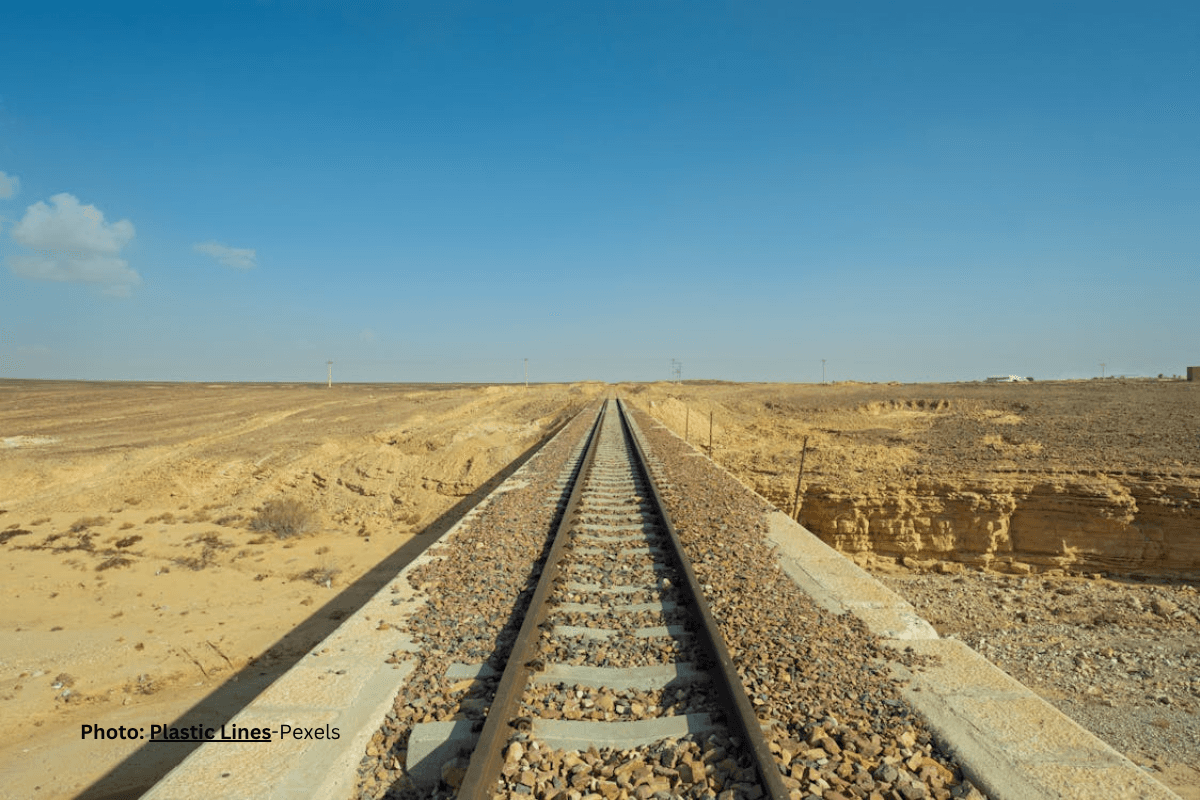
Hafeet Rail Cross-Border Link Reaches 40% Completion Milestone

Engineering Business Management
Share this story
Cross-border rail infrastructure in the Gulf is accelerating as countries invest in integrated freight and passenger connectivity. The Oman–UAE Hafeet Rail project has now reached 40% completion, marking a major construction milestone on the 238-kilometre corridor.


