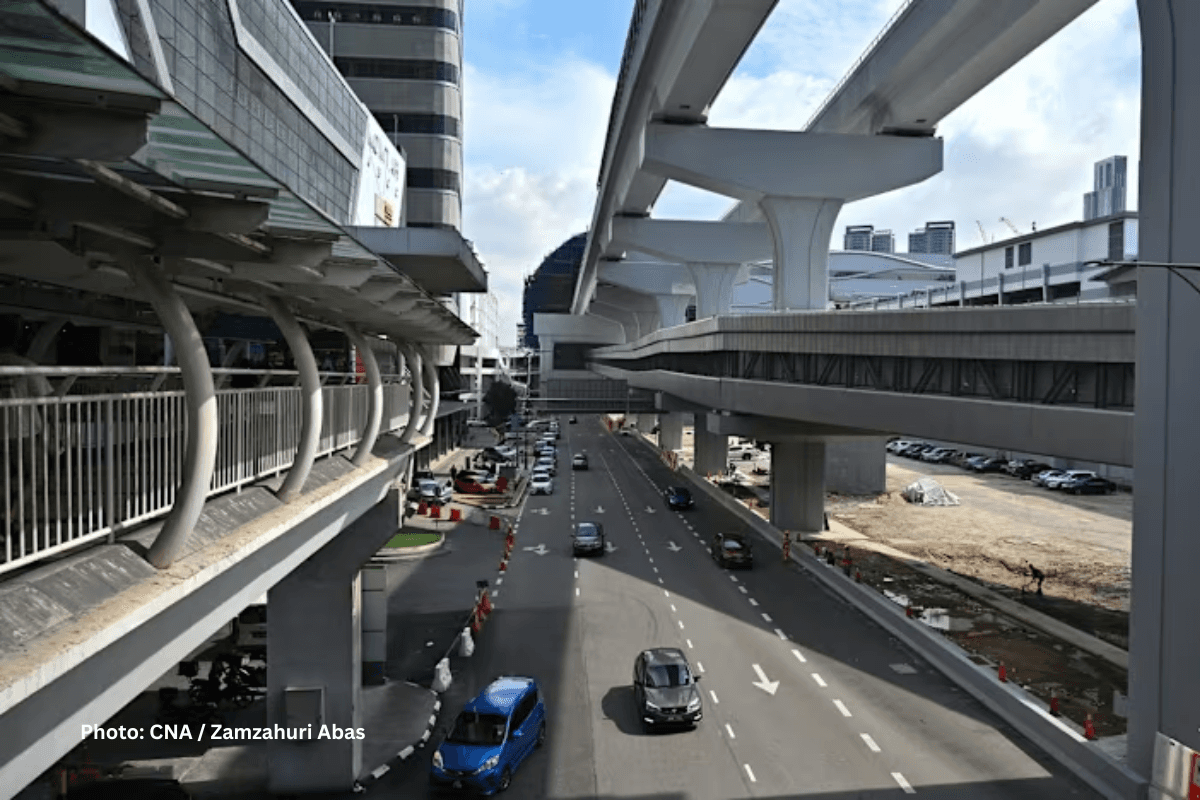
JOHOR BAHRU, June 2026 — Questions are mounting over Johor’s plans to improve urban mobility ahead of the RTS Link launch, with transport experts and commuters highlighting the lack of clarity surrounding the proposed RM10 billion elevated Autonomous Rapid Transit (ART) project. The system is intended to distribute passenger traffic from the RTS Link and reduce congestion across Johor Bahru and surrounding areas.
The concern stems from reports that the winning consortium's proposal may be based on an automated people mover or light rail-type system rather than the elevated ART concept originally outlined in government tender documents. Industry observers have questioned whether changes in technical specifications could affect project timelines, transparency and the overall suitability of the selected solution for Johor’s long-term transport needs.
The urgency is heightened by the RTS Link's scheduled opening in January 2027. The cross-border service is expected to carry approximately 10,000 passengers per hour in each direction between Johor Bahru and Singapore. Without a high-capacity feeder network, transport analysts warn that passengers arriving at Bukit Chagar could face significant delays when travelling onwards to residential and commercial districts across the city.
Authorities have proposed interim measures, including additional bus services, pedestrian connections and park-and-ride facilities. However, transport experts argue that these solutions may not adequately address long-term mobility requirements, particularly as the Johor-Singapore Special Economic Zone (JS-SEZ) drives greater cross-border movement of workers, businesses and investments. Concerns over first- and last-mile connectivity remain a recurring theme in discussions about Johor's transport future.
The debate reflects broader challenges facing rapidly growing metropolitan regions, where major rail investments must be supported by integrated urban transport networks. As Johor prepares for the RTS Link era, stakeholders are calling for greater clarity on the ART project, timely implementation and a comprehensive mobility strategy to ensure that improved cross-border connectivity does not simply shift congestion from the Causeway to the streets of Johor Bahru.
Source: Channel News Asia
Johor Rail Uncertainty Raises Concerns Over RTS Readiness

Engineering Business Management
Share this story
Major cross-border rail projects depend on effective feeder networks and integrated transport planning to maximise their benefits. In Johor, uncertainty surrounding the proposed urban rail system is raising concerns that congestion could worsen when the Johor Bahru–Singapore Rapid Transit System (RTS) Link begins operations in 2027.