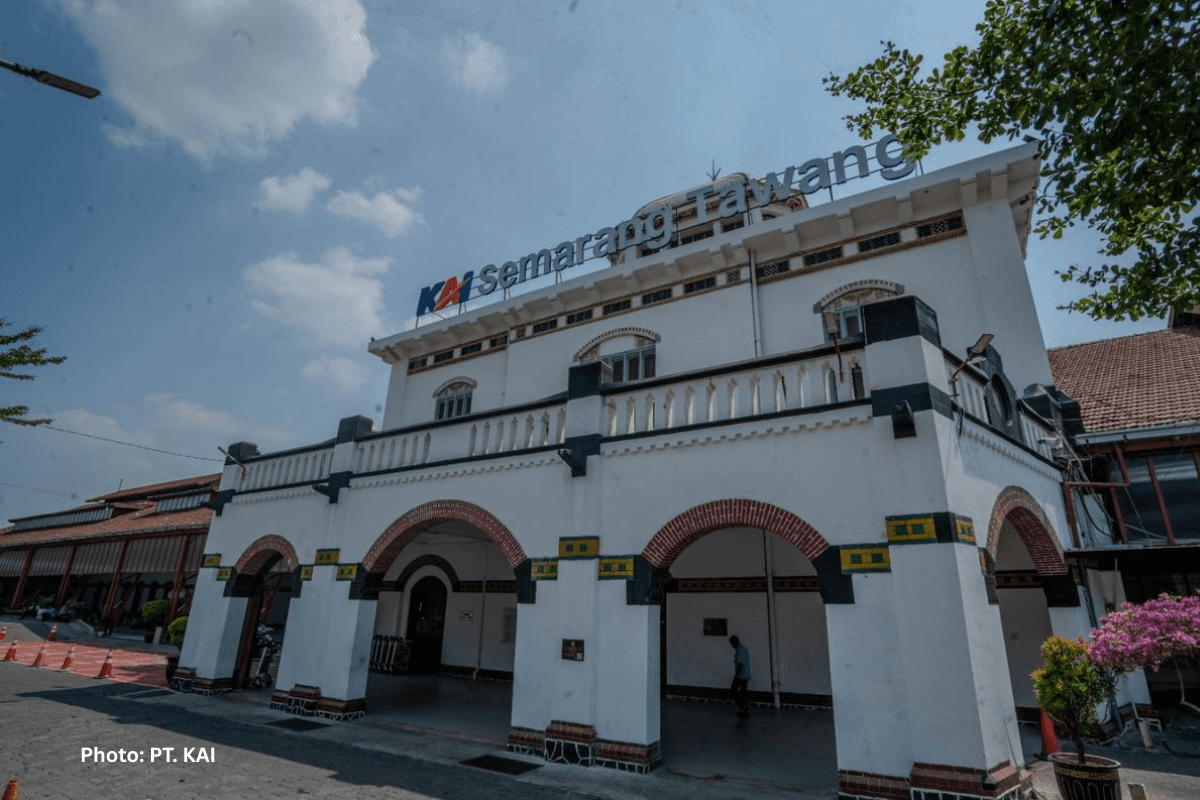
Speaking at the reopening ceremony, President Prabowo described the station as more than a transport hub. He noted that Semarang Tawang once served as a departure point for officials carrying out state duties during the early years of Indonesia's independence, arguing that preserving the station also preserves a part of the nation's collective memory.
Fixing decades-old problems, not just the paint job
Behind the heritage narrative sat a more practical one. Semarang Tawang has flooded annually for years, hampered by platforms that sat too low and drainage that couldn't keep pace with the rains. The revitalization tackled all three: platforms were raised, drainage was overhauled, and the project added retention ponds and pumping systems to keep water out. PT KAI's message was that heritage conservation and operational resilience aren't a trade-off , this project was built to prove both can happen at once.
One station in a 600-building program
Semarang Tawang turns out to be a pilot case for something much larger. PT KAI says it oversees more than 600 heritage railway buildings nationwide, with roughly 120 currently inside an active revitalization program. Jakarta, Tanjung Priok, and Bogor stations are next in line for façade restoration, suggesting Indonesia's railway heritage push is now a standing national program rather than a one-off project tied to a single anniversary or city.
Railways as public service, not just business
President Prabowo used the platform to press a policy point he has made before: that railways should be judged by their public value, not their balance sheet. He argued that trains are especially important to lower-income communities and that service to smaller cities should continue even where it isn't commercially profitable, positioning rail as an equalizing piece of infrastructure rather than a purely commercial enterprise.
He tied that argument to tourism, describing how a single tourist's purchase, a cup of coffee, ripples outward to farmers, logistics providers, processors, cafés, and hotels. The implication for stations like Semarang Tawang: they should be designed as destinations in their own right, not just places passengers pass through.
The President widened the lens further, linking rail revitalization to broader ambitions around waste management, river conservation, tree planting, and clean public spaces — arguing that attractive, well-kept cities are what make tourism-driven growth possible in the first place. He also connected the project to Indonesia's clean-energy transition, describing a future where rail sits alongside electrified buses, trucks, and private vehicles as part of a greener national transport system.
Looking beyond Semarang
The most forward-looking moment of the ceremony was Prabowo's mention of long-term expansion plans, including a Trans-Sumatra Railway running the length of the island and a longer-term ambition for a Trans-Kalimantan line. No timeline or technical detail accompanied the announcement, but the statement signals that Thursday's ceremony was intended as more than a ribbon-cutting. It was pitched as one data point in a much larger vision for Indonesia's rail network.
Why it matters
The reopening of Semarang Tawang Station represents more than the restoration of a historic building. It reflects Indonesia's evolving approach to railway development, one that combines heritage preservation, climate resilience, operational improvement, tourism development, and public service into a single strategic vision.
For railway operators, policymakers, and infrastructure stakeholders across Asia, the project offers an example of how historic stations can remain relevant in modern transport systems through thoughtful engineering, conservation, and long-term asset management.
If replicated consistently across Indonesia's wider heritage railway portfolio, Semarang Tawang may ultimately be remembered not simply as a restored station, but as the model for how the country intends to balance preservation, resilience, and railway modernization in the decades ahead.
Source: Sekretariat Presiden