Selangor has spent decades building its reputation as Malaysia’s industrial powerhouse. From automotive manufacturing to aerospace, electrical and electronics, logistics and advanced engineering, the state has repeatedly demonstrated its ability to develop industrial clusters around infrastructure, investment and talent.
Its next ambition is taking shape on the railway tracks.
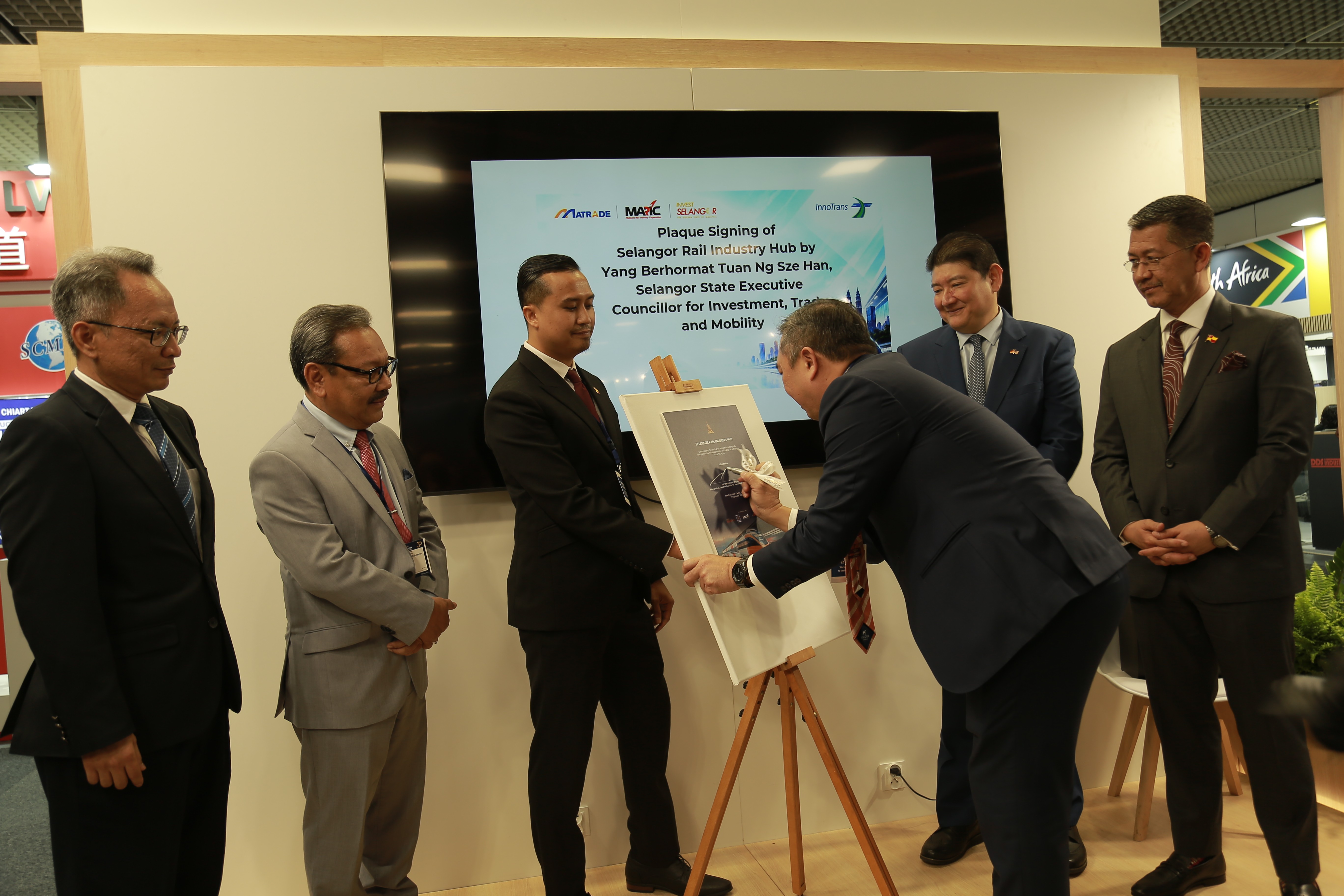
The launch of the Selangor Rail Industry Hub at InnoTrans 2026 in Berlin on 22 September marks an important step in the state’s effort to establish a stronger and more self-sufficient rail industry.
The choice of venue was significant. InnoTrans is the world’s leading transport technology exhibition, bringing together global train manufacturers, system suppliers, infrastructure companies, operators and policymakers. By introducing the hub in Berlin, Selangor was not simply announcing another industrial development. It was presenting its rail ambitions directly to the international market.
The hub will be developed at Taman Perindustrian Zurah in Rasa, Hulu Selangor, an area already connected to Malaysia’s established manufacturing and railway ecosystem.
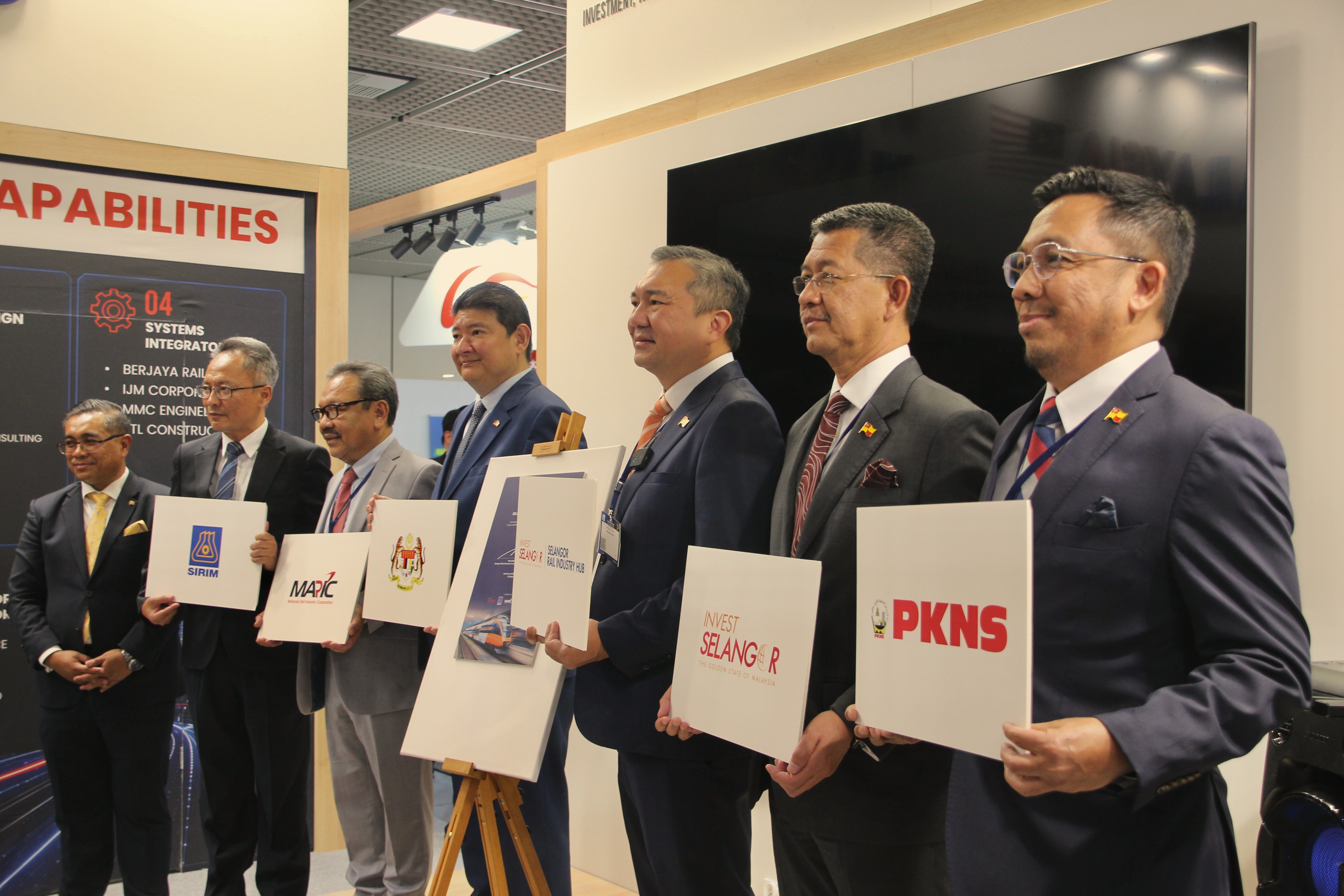
Led through Invest Selangor Berhad, the initiative is intended to bring together train assembly, testing, system integration, technology development, certification, workforce training and local supplier participation within a single industrial ecosystem.
Its central proposition is clear: Malaysia should not remain primarily a buyer of foreign railway technology. It must progressively build the capabilities to assemble, test, maintain, improve and eventually develop more of that technology locally.
Why Rasa Matters
Rasa is more than a location selected for available industrial land.
Hulu Selangor sits within one of Malaysia’s most established manufacturing corridors. The wider region is supported by automotive production, engineering companies, skilled workers, logistics networks and existing railway infrastructure.
It is also home to an established rolling-stock manufacturing presence, providing Selangor with an industrial foundation that few other locations in the country can immediately replicate.
This means the state is not attempting to create a rail industry from nothing. The knowledge, facilities and supplier relationships already exist in different forms. The purpose of the hub is to connect them, strengthen them and give the ecosystem a clear centre of gravity.
For Selangor, this is an industrial strategy that has worked before.
The state’s aerospace development has shown how an anchor facility can attract precision-engineering companies, maintenance providers, technology partners and training institutions. The Rail Industry Hub applies a similar principle: begin with a strategic industrial location, bring together government, industry and academia, and build the surrounding supply chain over time.
A Three-Phase Industrial Development
Unlike an industrial announcement built solely around long-term aspirations, the Selangor Rail Industry Hub has been structured around three development phases.
The first phase begins immediately with a 36,000-square-foot facility at SIRIM Berhad’s premises. This initial site will provide the technical foundation for testing, verification and standards compliance.
The second phase will expand the hub onto a 19-acre parcel of land adjacent to SIRIM, allowing for larger-scale train assembly, testing and related industrial activities.
The third and most ambitious phase involves the development of a dedicated 125-acre rail industrial park, located approximately two kilometres from the first two sites.
Together, the three phases illustrate the intended evolution of the project. It begins with technical validation and proof-of-concept activities before expanding into larger industrial operations, train assembly and a broader rail supply chain.
The phased approach is also commercially practical. It allows the hub to begin operating while larger facilities, investors and partnerships are progressively secured.
More Than a Train Assembly Plant
The success of the Selangor Rail Industry Hub will depend on whether it can develop capabilities beyond assembling trains designed and engineered elsewhere.
Its operating model therefore covers four principal areas: local train assembly and testing, proof-of-concept and system integration, train-simulator development, and the localisation of the rail supply chain.
These activities recognise that a modern railway is not defined by rolling stock alone.
Behind every train is a network of signalling equipment, braking systems, doors, bogies, communications technology, passenger information systems, software, electrical components, maintenance services and specialised engineering expertise.
Bringing these capabilities into one ecosystem could shorten supply chains, reduce dependence on imported components and create more opportunities for Malaysian businesses to participate in major railway projects.
It could also provide international companies with a platform to test, adapt and manufacture products for Malaysia and the wider Southeast Asian market.
This is where Selangor’s industrial density becomes an important advantage. The state already has manufacturers serving the automotive, aerospace, electronics and machinery sectors. Many of these companies possess capabilities that could be adapted for railway applications, provided they receive the necessary certification, technology transfer and access to procurement opportunities.
SIRIM’s Strategic Role
SIRIM Berhad will be one of the most important components of the hub’s early development.
The first phase is expected to provide technical verification and compliance services based on the Malaysian Railway Industry Standards, or MRIS. SIRIM has previously been involved in developing standards for railway components and systems, giving the organisation a strategic role in ensuring locally produced technologies meet the required safety, performance and quality benchmarks.
This places the hub in a position to support more than manufacturing.
It could become part of a complete industrial pathway covering testing, verification, certification and standardisation—all of which are necessary if Malaysian railway products are to compete credibly at home and abroad.
Localisation cannot be achieved simply by producing a component within Malaysia. The product must be tested, certified and accepted by operators, regulators and international customers.
By integrating these functions into the hub, Selangor can help companies move more efficiently from product development to testing, certification and commercial deployment.
Opening the Supply Chain to Malaysian Companies
Malaysia’s railway sector has historically depended heavily on international manufacturers and imported technologies. While overseas expertise remains important, major infrastructure spending should also create lasting industrial capability within the country.
The federal government has already signalled its intention to increase local participation in railway projects. Previous industrial collaboration programmes connected to Klang Valley rail projects have helped Malaysian companies enter areas such as component production, assembly, maintenance and engineering services.
The next challenge is to help more of those companies move beyond project-based participation.
A concentrated industrial hub could give Malaysian small and medium-sized enterprises better access to original equipment manufacturers, testing facilities, technical knowledge and technology-transfer programmes.
For some suppliers, the opportunity may begin with relatively specialised products such as train doors, braking components, carriage interiors or fabricated parts. Over time, stronger companies could progress into systems integration, advanced maintenance and Tier 1 supplier roles.
The broader objective should not be localisation for its own sake. It should be the creation of Malaysian companies capable of meeting international standards and exporting their products and expertise.
Building the Workforce Behind the Industry
Factories and testing facilities alone will not make Selangor a regional rail centre. The hub will require engineers, technicians, software specialists, system integrators, maintenance professionals and skilled production workers.
This makes collaboration with universities, technical institutions and industry partners essential.
Rail engineering requires a wide range of specialised competencies, from bogie and wheel engineering to signalling software, precision manufacturing, testing, safety assurance and systems integration. Many of these capabilities cannot be developed through general engineering programmes alone.
Selangor has already developed skills initiatives connecting vocational education with the needs of strategic industries. The Rail Industry Hub provides an opportunity to apply that experience to a new generation of rail professionals.
Training should be developed alongside the industry, not after the factories are completed. Partnerships with manufacturers and railway operators can help ensure that curricula reflect actual technologies, standards and workplace requirements.
If implemented effectively, the hub could become not only a manufacturing centre but also a national training ground for Malaysia’s future railway workforce.
From Domestic Demand to Export Ambition
Malaysia’s continued investment in urban rail, intercity services, freight infrastructure and railway modernisation provides the hub with an immediate domestic market. However, its long-term potential extends beyond Malaysia.
Rail networks across Southeast Asia, South Asia, the Middle East and Africa are undergoing expansion and renewal. Many of these markets require cost-competitive rolling stock, maintenance services, training systems and railway technologies adapted to local operating conditions.
Malaysia already has experience exporting locally manufactured rail products, including locomotives supplied to overseas markets. Selangor’s task is to turn individual successes into a sustainable industrial pipeline.
The hub could provide international manufacturers with a base for serving ASEAN while enabling Malaysian suppliers to participate in overseas projects through established global partnerships.
Its location strengthens that proposition. Selangor offers access to Port Klang, Kuala Lumpur International Airport, major highways, universities, engineering talent and Malaysia’s largest concentration of industrial companies.
Few locations in the region combine manufacturing depth, connectivity and access to the domestic rail market on the same scale. The Selangor Rail Industry Hub has the foundations to succeed, but its ambition must now be matched by execution. With the right investment, technology partners and local capabilities, Rasa could become the place where Malaysia builds its rail future and takes it to the world.