NORTH CAROLINA, April 2026 — Siemens Mobility held a ribbon-cutting ceremony on 3 April 2026 to open a new $220 million rail manufacturing facility on a 200-acre greenfield site. The plant is designed to produce passenger coaches and provide maintenance services for rolling stock, advancing U.S. rail manufacturing capacity.
The Lexington facility serves as Siemens Mobility’s primary East Coast rail production and services hub, with production now underway and the first locally built coaches scheduled for delivery in summer 2026. It will manufacture modern passenger coaches — including those for Amtrak’s Airo fleet — and is equipped to carry out locomotive and coach overhauls, as well as maintenance of bogies and potentially light rail vehicles.
Initial staffing at the plant has reached more than 375 employees, with plans to expand to over 500 jobs by 2028, supporting the regional economy and strengthening the domestic supply chain through partnerships with more than 75 local suppliers. A dedicated rail bridge connects the facility to the national network, enabling efficient shipment of finished rolling stock across the East Coast and beyond.
State and industry leaders have highlighted the strategic importance of the new facility in enhancing U.S. passenger rail infrastructure and manufacturing resilience. The investment reflects broader sector trends toward reshoring production, increasing capacity for modern intercity and regional rail equipment, and delivering reliable vehicles to meet rising demand across key corridors.
Source: Siemens Mobility (Press Release)
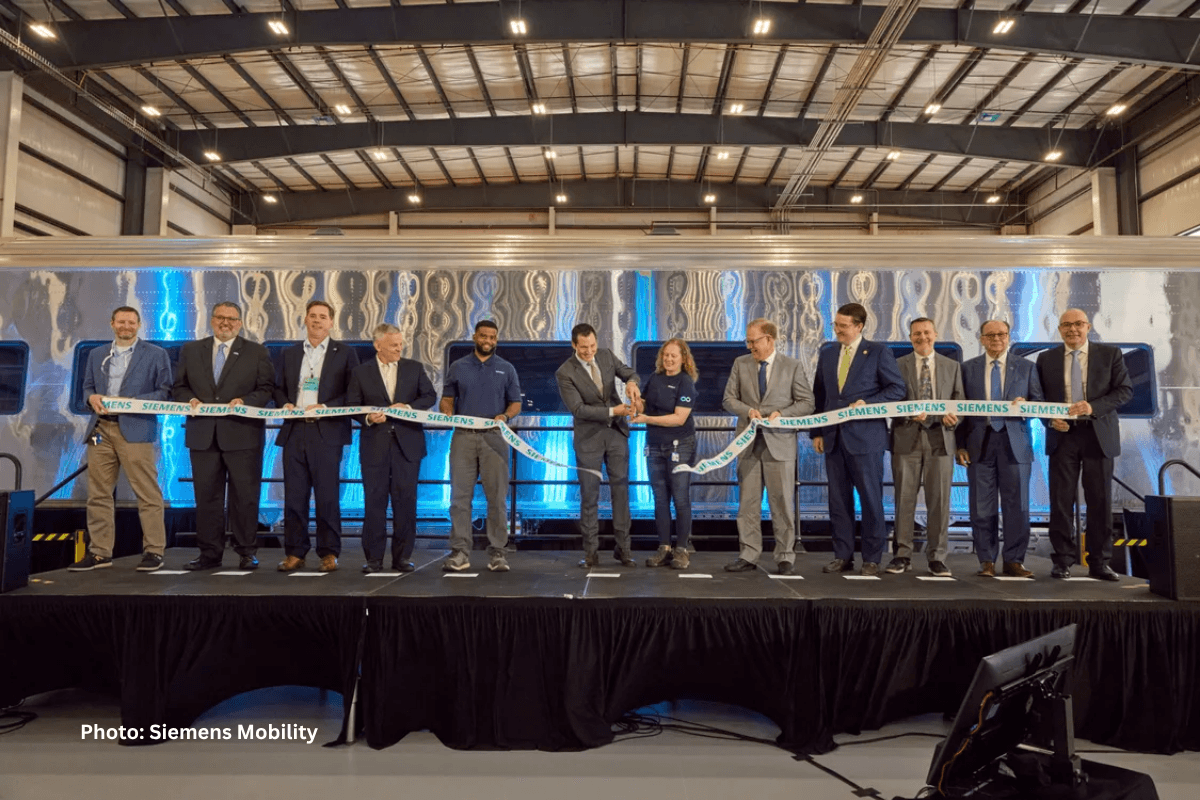
Siemens Opens Major Rail Manufacturing Hub in North Carolina

Engineering Business Management
Share this story
The global rail supply chain is shifting toward increased domestic production amid growing demand for modern rolling stock and resilient infrastructure. Siemens Mobility has officially inaugurated its new passenger rail manufacturing and services facility in Lexington, North Carolina, marking a significant expansion of U.S. rail industry capabilities. This development supports long-distance and regional rail equipment delivery while creating hundreds of skilled jobs.


