A recent test journey from Dubai to Fujairah provided a glimpse of the passenger service, traversing scenic mountain tunnels. The trial involved senior officials, including Lt Gen Dhahi Khalfan Tamim, and showcased the planned initial routes connecting Abu Dhabi, Dubai, and Fujairah, with stations designated in Mohamed bin Zayed City, Jumeirah Golf Estates, and Sakamkam. The trains are engineered for speeds up to 200 kph with a capacity of 400 passengers.
This new rail link is poised to significantly reduce travel times between major cities, with an estimated 57 minutes for the Abu Dhabi-Dubai route and 105 minutes for Abu Dhabi to Fujairah. The service aims to offer a reliable, high-capacity alternative to road travel, improving commuter convenience and facilitating greater integration across the UAE's economic landscape.
The project has garnered significant praise, with Lt Gen Dhahi Khalfan Tamim, Dubai's Deputy Chief of Police and Public Security, describing it as one of the nation's most vital infrastructure achievements. This recognition highlights the project's importance in the UAE's development agenda.
The successful completion of test runs and the anticipated launch of the Etihad Rail passenger service underscore the UAE's commitment to building a world-class transportation ecosystem. This initiative aligns with broader regional efforts to invest in advanced rail infrastructure, driving economic growth and enhancing inter-city mobility.
Source: The National
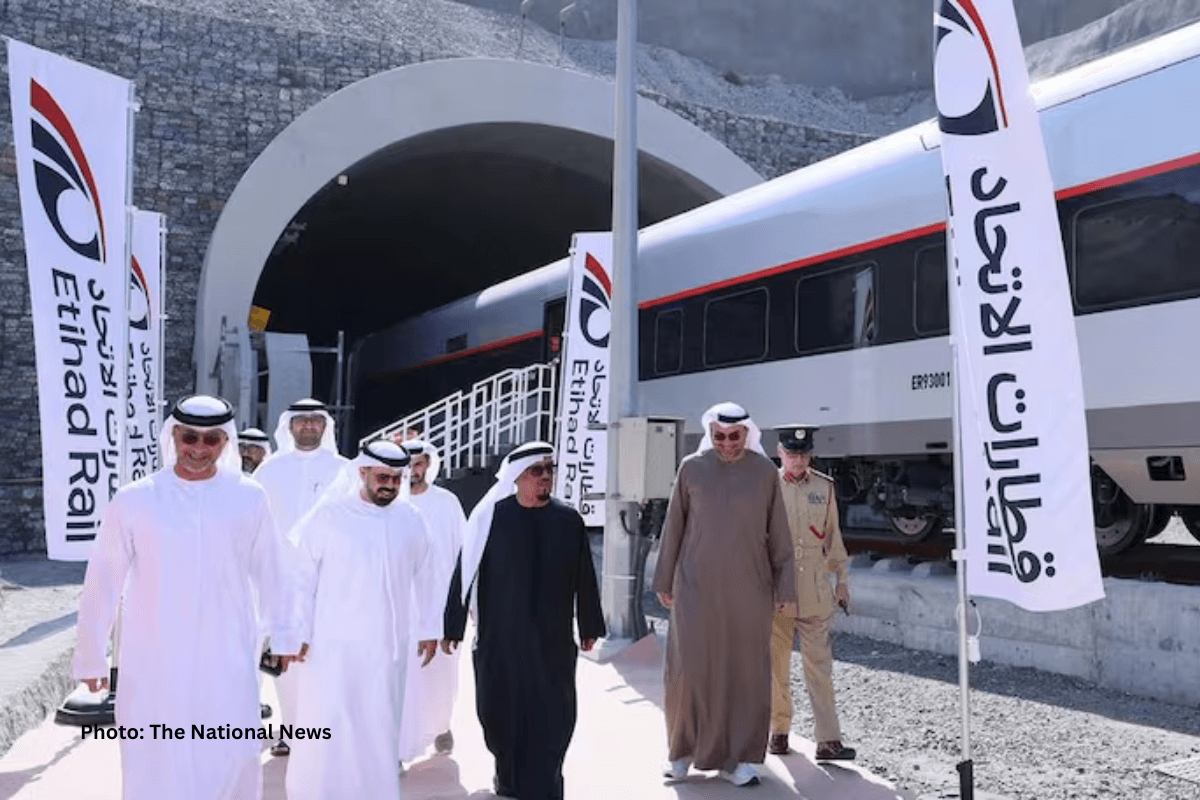
UAE Advances Inter-Emirate Connectivity with Etihad Rail Passenger Service Test

Engineering Business Management
Share this story
The United Arab Emirates is advancing its strategic infrastructure goals with the imminent launch of the Etihad Rail passenger network. This comprehensive system is designed to link the nation's key emirates, fostering enhanced connectivity and supporting economic diversification through modern, efficient transportation.


