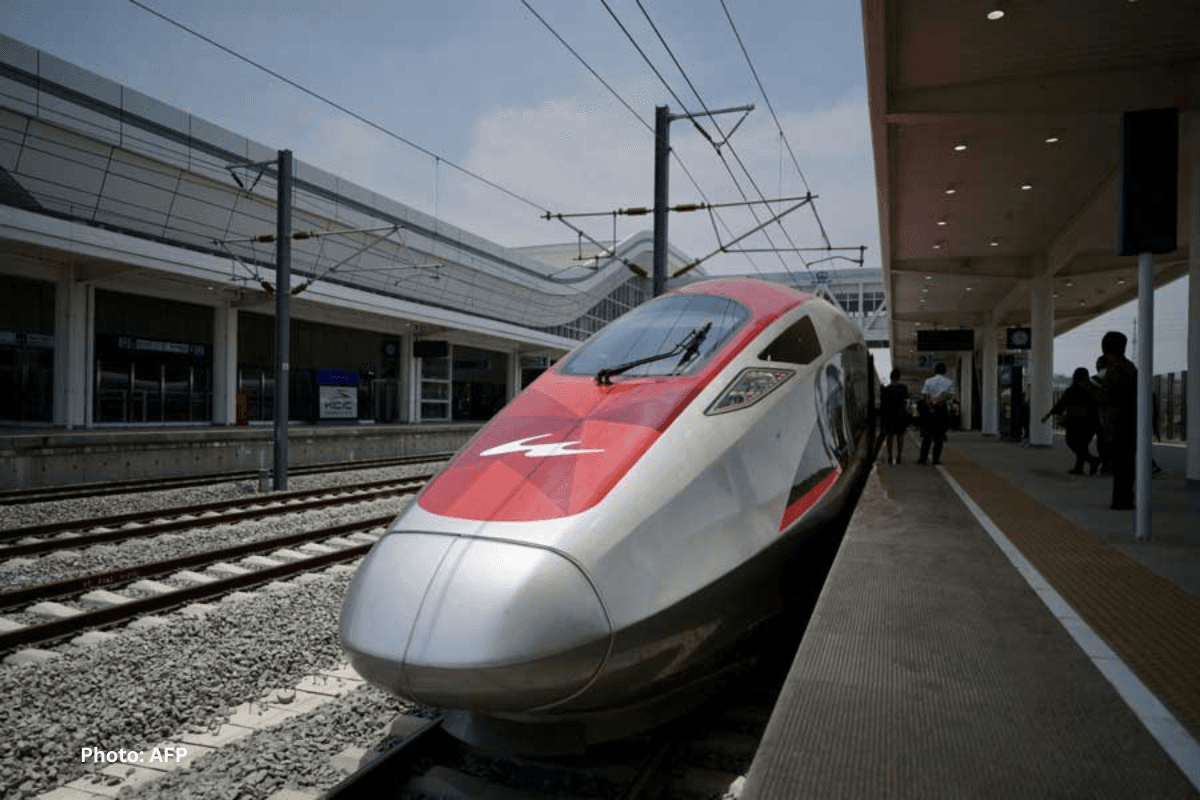
Indonesia, August 2026 – The Jakarta–Bandung high-speed railway, known as Whoosh, recorded a net loss of Rp5.13 trillion (about US$320.6 million) in the first half of 2026, exceeding its full-year loss of Rp4.99 trillion in 2025. The results were reported in the interim financial statements of state-owned railway operator PT Kereta Api Indonesia (KAI).
The financial impact has extended to KAI through its involvement in PT Pilar Sinergi BUMN Indonesia (PSBI), the Indonesian consortium holding a 60% stake in the joint-venture operator PT Kereta Cepat Indonesia China (KCIC). KAI absorbed approximately Rp3 trillion (US$187.5 million) in equity-accounted losses during the first half, compared with Rp948 billion during the same period in 2025. KAI’s consolidated net profit consequently fell 73% year on year to Rp314 billion, despite growth in its core passenger and freight revenue.
The financial pressure is also evident at PSBI, which reported liabilities of Rp21.55 trillion against assets of Rp21.53 trillion as of June 2026. KAI has reduced the carrying value of its investment in PSBI from Rp4.79 trillion at the end of 2025 to Rp1.79 trillion, following an impairment charge of Rp1.55 trillion. The figures underline the challenge of managing a debt-intensive high-speed rail asset within a wider state-owned railway group.
To contain the risks, Indonesia is maintaining a joint-guarantee structure involving the Ministry of Finance and state-owned infrastructure guarantee company PT Penjaminan Infrastruktur Indonesia. The mechanism is designed to provide protection against project-related debt defaults, with PT PII acting as the first-loss guarantor before potential liabilities reach the state treasury. The government has classified the likelihood of the guarantees creating an immediate budget claim as very low.
The government is also developing a broader balance-sheet restructuring for KCIC, including the planned transfer of the project's assets from BPI Danantara to the Ministry of Finance's portfolio. Finance Minister Purbaya Yudhi Sadewa said the proposed settlement would use Special Mission Vehicles and targeted financing instruments rather than direct state-budget equity injections. The development highlights the importance of sustainable financing structures as Indonesia considers the longer-term future of its high-speed rail network.
Source: Investortrust.id

Whoosh Losses Intensify Financial Pressure On Indonesia’s Rail Sector

Journalism & Media
Share this story
Financial sustainability is becoming an important consideration for high-speed rail projects as operators balance large capital costs, debt obligations and passenger demand. Indonesia’s Jakarta–Bandung high-speed railway has recorded substantially higher losses in 2026, prompting the government to advance financial restructuring measures while maintaining guarantees on project-related debt.