CHINA, March 2026 — The successful completion of a major underwater tunnel section by a record-breaking tunneling machine underscores the ongoing development and capacity of large-scale infrastructure projects within the global rail sector. These advancements are vital for overcoming geographical challenges and enabling high-speed transit expansion.
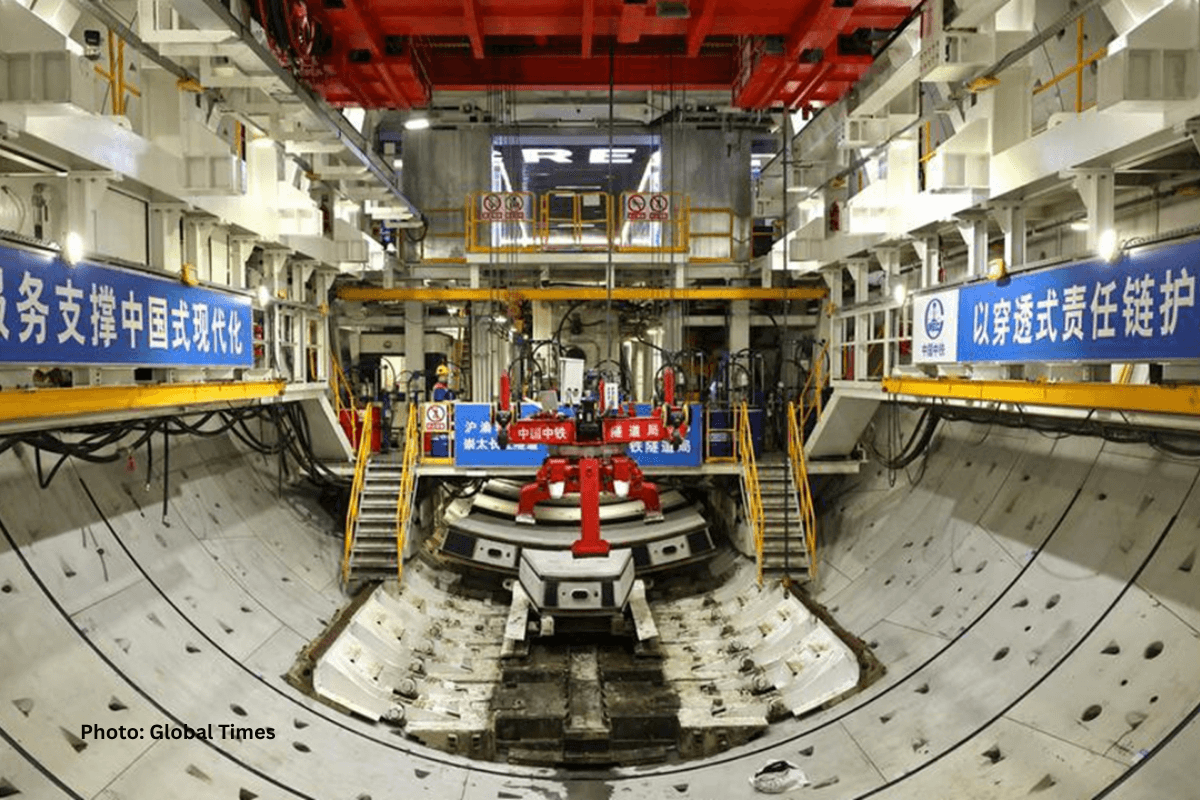
China's domestically developed 'Linghang' shield tunneling machine, recognized as the world's largest in diameter, has achieved a significant milestone by completing the 11,180-meter underwater segment of the Chongming-Taicang Yangtze River Tunnel. The machine has now made landfall in Taicang, Jiangsu Province, after 23 months of safe operation.
This project sets new benchmarks for high-speed rail infrastructure, featuring the world's longest single-head tunneling distance at 11,325 meters. Its record-breaking cutterhead diameter, operating speed for underwater tunnels, and depth beneath the river highlight the engineering capabilities being deployed for critical transport links.
The Chongming-Taicang tunnel, with a total length of 14,250 meters, is notable for its unprecedented scale and operational parameters. These specifications position it as a leading example of modern tunnel construction, showcasing technological progress in specialized heavy machinery for complex subterranean and subaqueous environments.
Developments like the 'Linghang' machine's success are indicative of a broader industry trend towards more ambitious and technologically advanced rail infrastructure projects, essential for enhancing connectivity and supporting economic growth in rapidly developing regions.
Source: Global Times
World's Largest-Diameter Tunneling Machine Completes Yangtze River Crossing for High-Speed Rail

Engineering Business Management
Share this story
Advancements in tunneling technology are crucial for expanding high-speed rail networks. China's 'Linghang' machine has successfully completed a significant underwater section of the Chongming-Taicang Yangtze River Tunnel, marking a milestone for large-diameter shield tunneling in critical infrastructure projects.