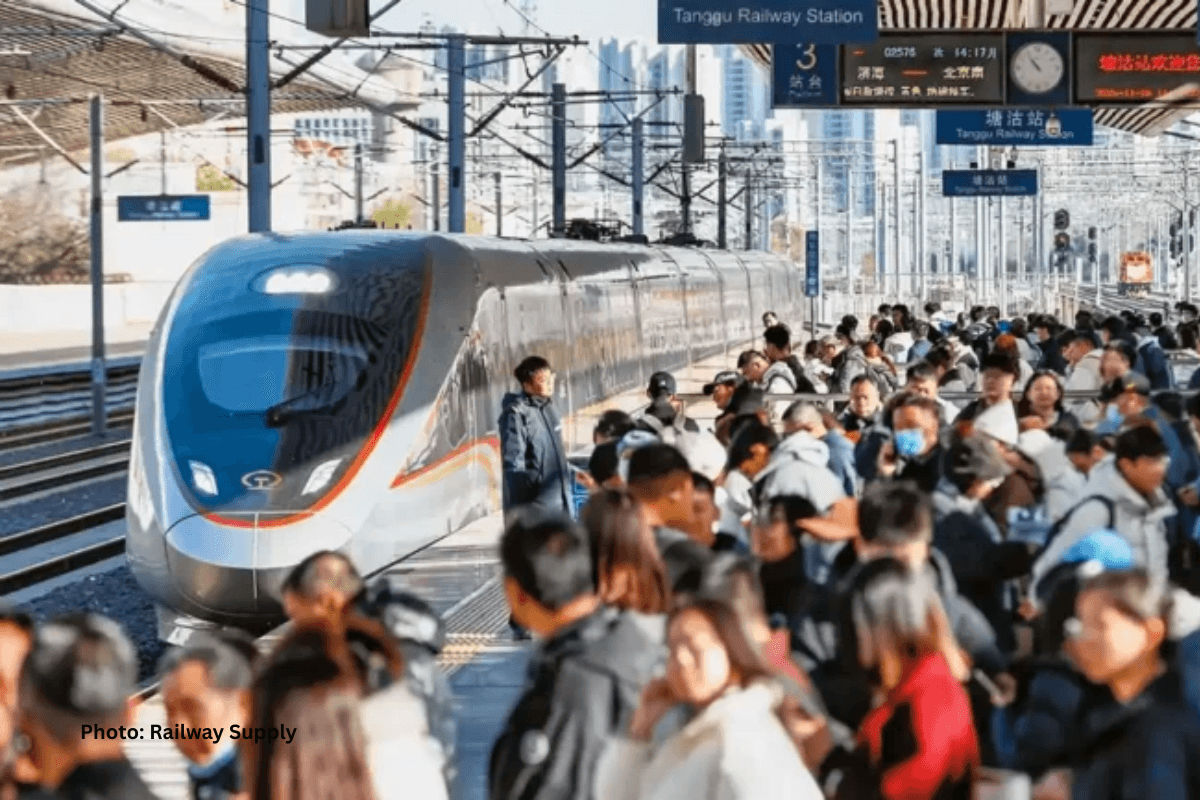
China's railway network reached 165,000 km in 2025, with over 50,000 km of high-speed lines. The system handled nearly 4.59 billion passenger trips, a 6.4% year-on-year increase, and over 5.27 billion tonnes of freight, up 2%. These figures underscore the network's critical role in supporting China's economic development and its leadership in advanced rail technologies.
Innovative intermodal services are expanding reach, such as the rail-road freight route from Zhejiang to Xizang, facilitating transport to South Asia. This service, which saw a cumulative cargo value exceeding 230 million yuan in 2025, improves efficiency by over 30% and reduces costs by approximately 20%. New energy vehicles are emerging as a key export category on these routes.
Across Asia, rail development is accelerating. The Philippines is advancing its North-South Commuter Railway project with significant Japanese interest, while South Korea has completed its 370 km/h high-speed trainset development program. China continues to deploy advanced technologies, with fully automated GoA4 metro lines entering service in Chengdu.
The strategic importance of rail freight for international logistics is increasingly evident. As Chinese New Year approaches, rail offers a more predictable alternative to sea and air freight disruptions. Furthermore, routes like the China-Europe rail corridor via Iran and services connecting China to Central Asia and Azerbaijan highlight the growing role of rail in global supply chains.
These developments collectively point to a future where Asia's rail infrastructure plays an even more pivotal role in driving economic integration, facilitating trade, and enabling sustainable transport solutions across the continent.
Source: China Daily
China's Rail Network Expansion Drives Regional Connectivity and Trade

Engineering Business Management
Share this story
China's railway system achieved significant milestones in 2025, handling a record 4.59 billion passenger trips and expanding its high-speed network. This growth is fostering enhanced regional connectivity and trade, exemplified by new intermodal services connecting China to South Asia and advancements in high-speed and automated rail technologies across the continent. These advancements signal a dynamic future for Asian rail infrastructure and logistics.