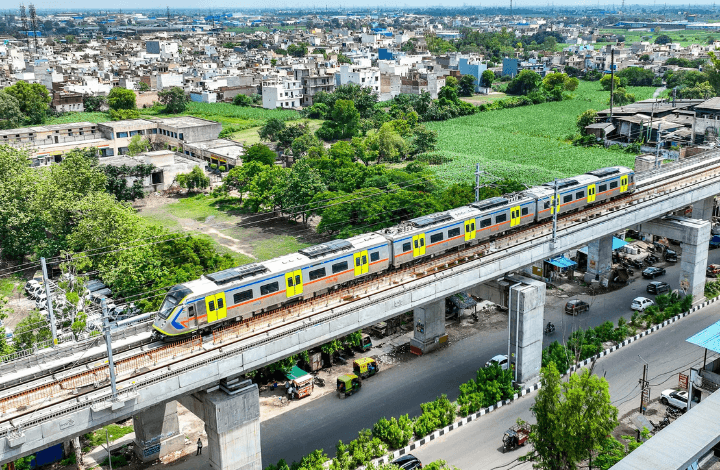

Since 2014, India’s metro network has grown significantly, expanding from a limited presence in just five cities to operations across 26 urban centres. The network has now surpassed 1,000 kilometres, making it the third largest globally.
Government-backed investments have played a key role in this growth, with 38 metro rail projects spanning 1,051 km approved at an estimated cost of Rs 3.44 lakh crore. Annual budget allocations for metro development have also increased sharply, rising from Rs 5,798 crore in 2013–14 to Rs 29,550 crore in 2025–26.
According to the study, metro systems have transformed urban mobility by offering faster, more reliable and environmentally sustainable transport options. This has not only reduced travel costs and road congestion but also improved access to employment, education and healthcare.
Beyond mobility, metro connectivity is also contributing to improved household financial stability. Lower transport costs have been linked to reduced loan repayment delays and increased early repayments of home loans. Cities such as Delhi, Bengaluru and Hyderabad have reported measurable improvements in repayment patterns following metro expansion.
Metro services are now operational in major cities including Mumbai, Kolkata, Chennai, Pune and Ahmedabad, among others, reflecting the scale and reach of the country’s urban transit transformation.
India has also introduced innovative transport solutions, including the launch of the Kochi Water Metro in 2023 — the country’s first water-based metro system connecting multiple islands using electric-hybrid vessels.
In parallel, the development of the Namo Bharat Regional Rapid Transit System (RRTS) is further advancing the country’s transport landscape. The Delhi–Meerut corridor has introduced a Hybrid Level-III radio-based signalling system built on Long Term Evolution (LTE) technology, marking a global first and enhancing both operational efficiency and passenger safety.
The findings underscore the growing role of metro rail as a catalyst for sustainable urban development, positioning it as a cornerstone of India’s long-term transport and economic strategy.