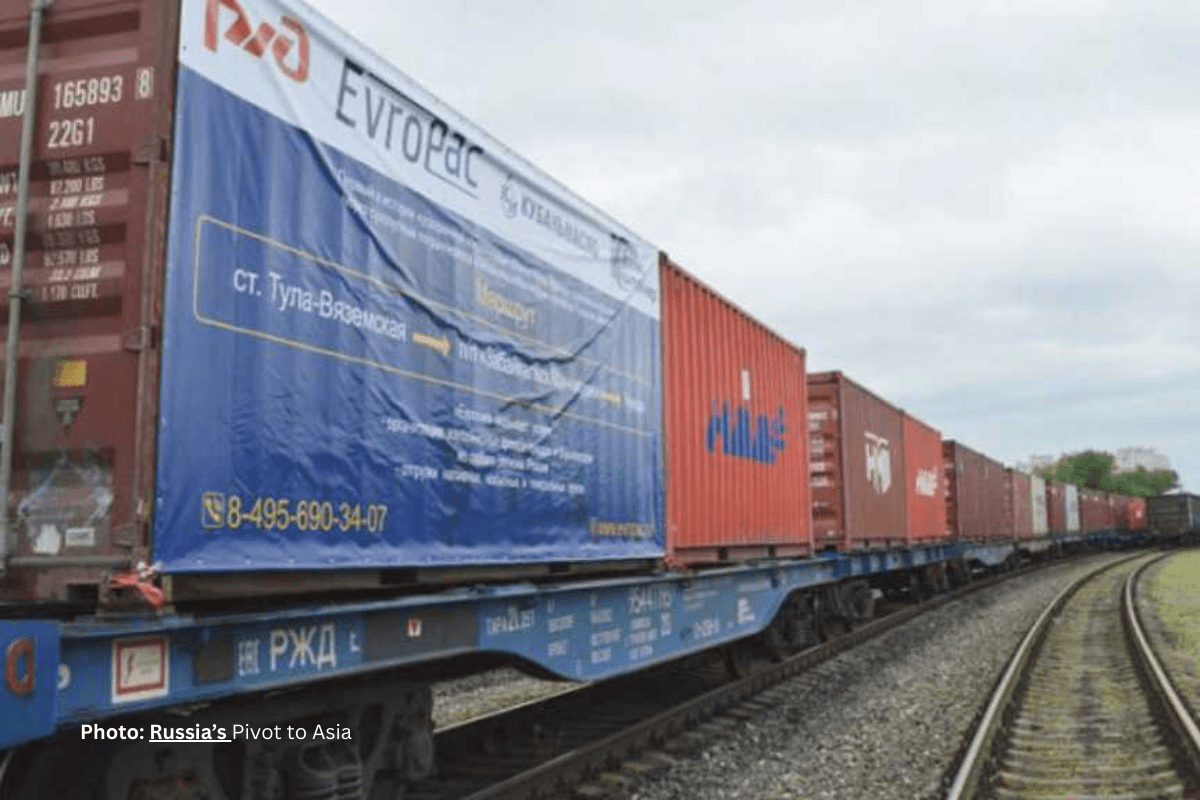
ASTANA, Feb 2026 — A singular railway line traversing the Kazakh steppe is poised to significantly alter the logistics landscape between Asia and Europe. The World Bank has authorized a $846 million guarantee and a $564 million co-guarantee from the Asian Infrastructure Investment Bank (AIIB) to facilitate $1.41 billion in long-term commercial financing for the enhancement of Kazakhstan’s rail network.
This investment will support a major upgrade to the Trans-Caspian International Transport Route, commonly referred to as the “Middle Corridor,” which serves as an emerging overland trade route connecting China, Central Asia, and Europe.
Officially designated as the Transforming Rail Connectivity in Kazakhstan project, this initiative aims not only to develop infrastructure but also to reposition Kazakhstan as a pivotal transit hub on the continent. Through improvements in network efficiency and the financial fortification of Kazakhstan Temir Zholy (KTZ), the project is expected to foster deeper regional integration and stimulate economic growth.
A central component of this initiative is the construction of a 322.3-kilometer greenfield railway between Mointy and Kyzylzhar. This new alignment eliminates a major detour, reduces the corridor's length by 149 kilometers, mitigates congestion, and facilitates double-stack container operations, thereby enhancing the competitiveness of intercontinental freight transportation. Additionally, modern signaling and telecommunications systems will be integrated, with provisions for future electrification and expansion.
Furthermore, the ramifications of the project extend beyond civil engineering. It encompasses tariff reforms, innovative financing mechanisms, and improvements in financial management within KTZ, while also preparing for a potential initial public offering.
Operationally, the anticipated impact is substantial. Freight volumes along the Middle Corridor are expected to triple, while end-to-end transit times may be reduced by 50 percent by the year 2030. By transitioning cargo transportation from trucks to rail, the project is projected to decrease transport emissions, lower trade costs, and improve market accessibility and employment opportunities along the route.
The timing of this initiative is particularly strategic. As shippers begin to diversify away from traditional northern Eurasian routes, the Middle Corridor has gained geopolitical and commercial significance. The strengthening of Kazakhstan’s rail infrastructure will be instrumental in determining whether this corridor functions as a viable alternative or remains merely a theoretical designation on a map.
This investment represents a transformation of Kazakhstan from a mere transit territory into a comprehensive logistics infrastructure hub, distinguishing between trains that pass through a country and an economy that is fundamentally built around rail transportation.
Kazakhstan Rail Upgrade to Reshape Asia–Europe Trade as World Bank Backs Middle Corridor

Engineering Business Management
Published on: Feb 23, 2026
Share this story
Kazakhstan is moving to secure its place at the center of Eurasian freight flows after the World Bank approved a financing package designed to modernise the country’s rail backbone and unlock more than $1.4 billion in investment.