BANGKOK, May 2026 – Urban rail development remains a central pillar of Bangkok’s mobility strategy as authorities continue expanding the mass rapid transit network to support rising commuter demand and reduce road congestion. The latest pipeline of projects reflects a shift toward integrated feeder systems and airport-linked connectivity.
The Mass Rapid Transit Authority of Thailand (MRTA) is advancing four major rail projects: the Brown, Silver, Grey, and Blue lines. The 22.1-kilometre Brown Line will connect Khae Rai and Lam Sali in Bueng Kum, serving as a key northeast Bangkok corridor. The 19.7-kilometre Silver Line will link Bang Na to Suvarnabhumi Airport, strengthening airport access and intermodal connectivity.
The Grey Line, a 16.3-kilometre monorail between Watcharaphon and Thong Lo, is undergoing design revisions to align with updated urban conditions, while the 6.7-kilometre Blue Line monorail connecting Din Daeng and Sathorn remains in early planning stages, with studies expected to begin after 2029 under the M-MAP2 transport framework.
The projects are part of a broader restructuring of Bangkok’s rail development programme, which includes updated environmental assessments, revised feasibility studies, and coordination with expressway and airport infrastructure. The Silver Line in particular is undergoing redesign to improve integration with Suvarnabhumi Airport terminals, while older environmental impact assessments are being renewed to reflect current planning standards.
For Thailand’s rail sector, the expansion highlights the continued evolution of Bangkok’s network from radial mass transit lines to a more distributed system of feeder routes and orbital connections. These developments are closely linked to national transport policies aimed at fare integration and network consolidation under a unified operational structure.
More broadly, the projects reflect a regional trend across Asia toward dense urban rail expansion supported by long-term master planning frameworks. As cities integrate suburban growth zones and transport hubs, monorail and light rail systems are increasingly being used to complement heavy metro corridors and improve last-mile connectivity.
Source: Khaosod English
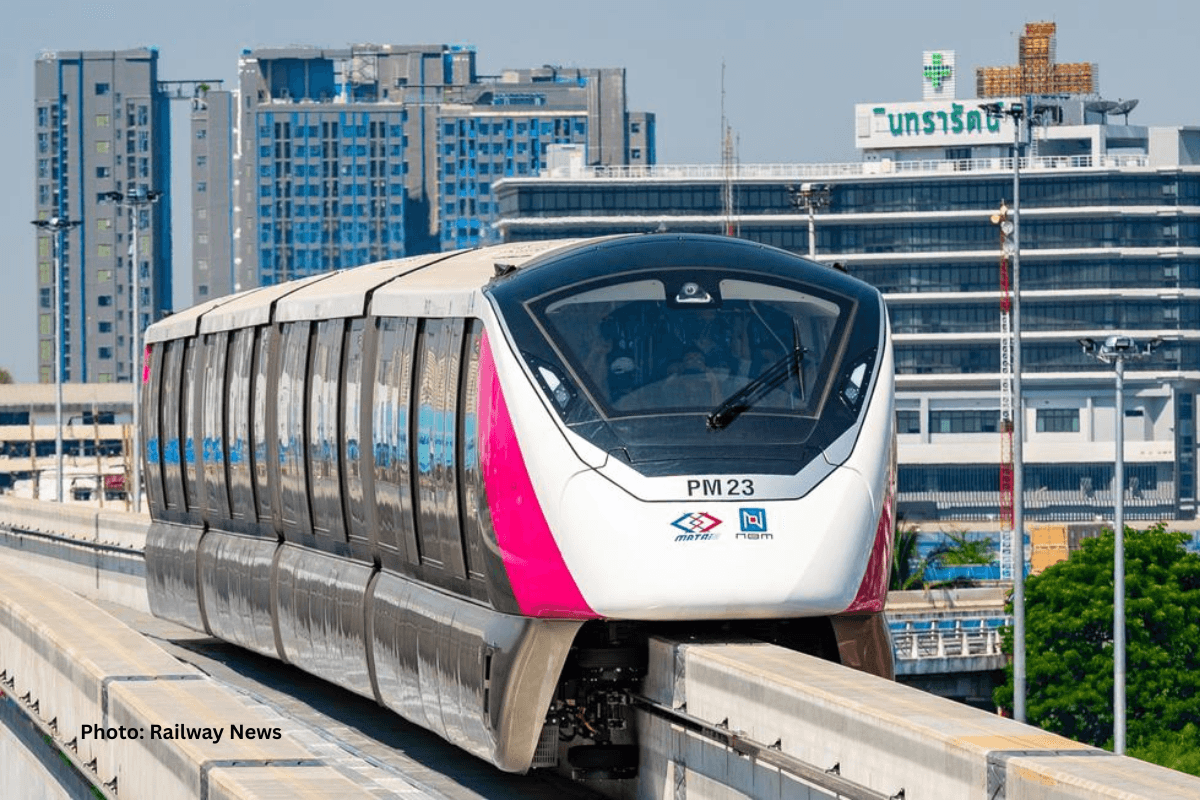
MRTA Advances Four New Bangkok Rail Transit Lines Under Long-Term Expansion Plan

Engineering Business Management
Share this story
Urban rail expansion is accelerating across major Southeast Asian cities to address congestion and improve connectivity. Bangkok’s MRTA is progressing four new rail lines as part of its long-term metropolitan transport strategy.