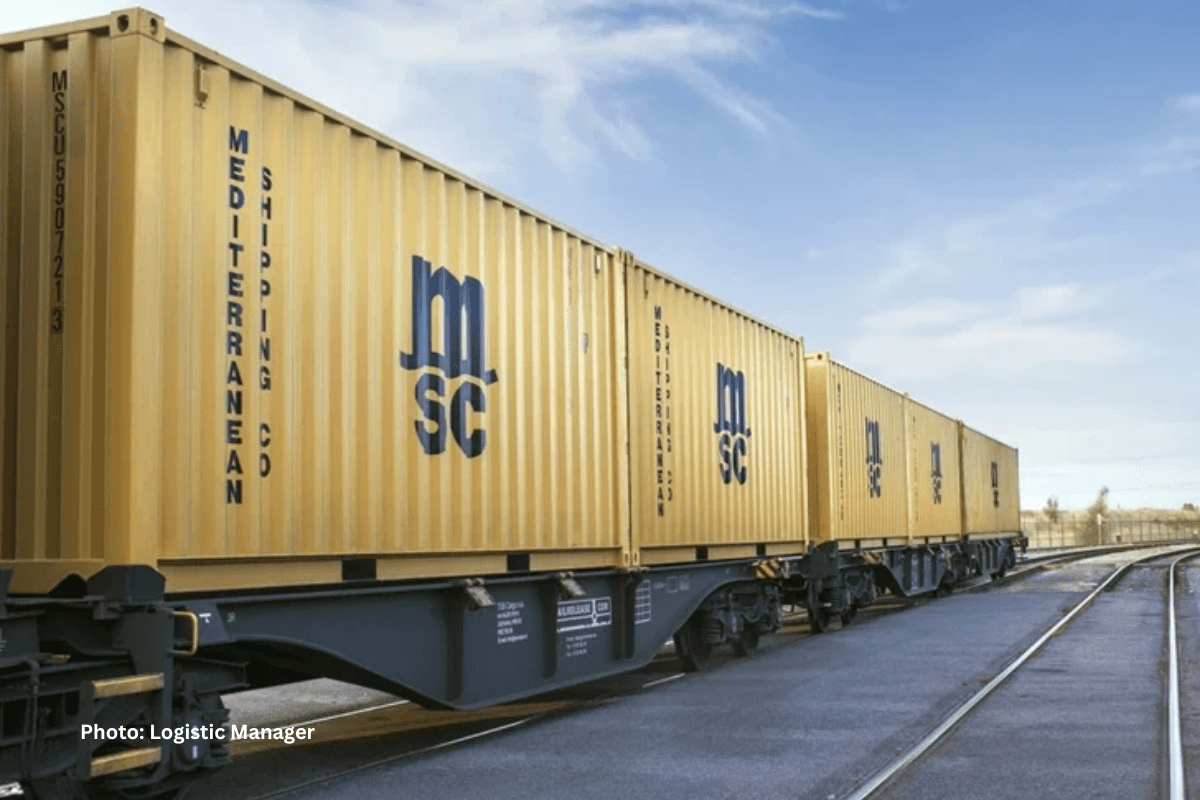
SYDNEY, May 2026 — Mediterranean Shipping Company (MSC) Australia has introduced a new inland rail logistics solution aimed at improving freight connectivity between Australia’s coastal container terminals and inland industrial and agricultural regions. The service integrates maritime shipping with rail-based inland distribution to create a streamlined intermodal freight network.
The rail solution currently connects Sydney container terminals with the industrial hub of Minto, while Melbourne terminals are linked to regional centres including Ettamogah, Griffith, and Bomen. Under the model, containers are transferred directly by rail from ports to inland depots, where customers can collect import cargo and manage container returns through consolidated facilities.
MSC stated that the system is designed to reduce dependence on long-distance trucking and alleviate congestion on coastal road corridors. By shifting more container movements onto rail, the company aims to improve delivery predictability, shorten cargo turnaround times, and lower overall transport costs for long-haul inland freight movements.
A key feature of the service is its single-booking structure, allowing customers to arrange both maritime and inland transport under one integrated logistics framework. MSC assumes responsibility for the entire journey from port discharge to inland delivery point, reducing the need for coordination with multiple third-party haulage providers.
The development aligns with broader shifts in the Australian freight sector, where intermodal transport is increasingly viewed as essential for improving supply chain efficiency and reducing infrastructure pressure on road networks. Industry discussions around freight sustainability have also intensified following ongoing debate over the future of large-scale national rail projects such as Inland Rail.
More broadly, MSC’s inland rail expansion reflects a global trend among shipping and logistics companies toward integrated port-to-door transport ecosystems. As freight volumes continue to grow and supply chains become more complex, rail-based intermodal networks are playing an increasingly important role in supporting resilient, lower-congestion freight distribution strategies.
Source: Logistics Manager
MSC Australia Expands Inland Rail Logistics to Strengthen Supply Chain Connectivity

Engineering Business Management
Share this story
Freight operators are increasingly integrating rail into end-to-end logistics strategies to reduce congestion and improve supply chain resilience. MSC Australia has launched an integrated inland rail solution linking major port terminals with regional logistics hubs across New South Wales and Victoria. The initiative reflects growing demand for intermodal freight systems that combine maritime and rail transport under unified operational models.