JAPAN, April 2026 — JR East’s recent decision to discontinue the provision of toilet paper in lavatories at a number of unmanned rural stations has drawn attention as a tangible indicator of the cost pressures confronting regional rail services. Observers and local users have interpreted the move as symptomatic of broader operational constraints facing low-usage parts of the rail network.
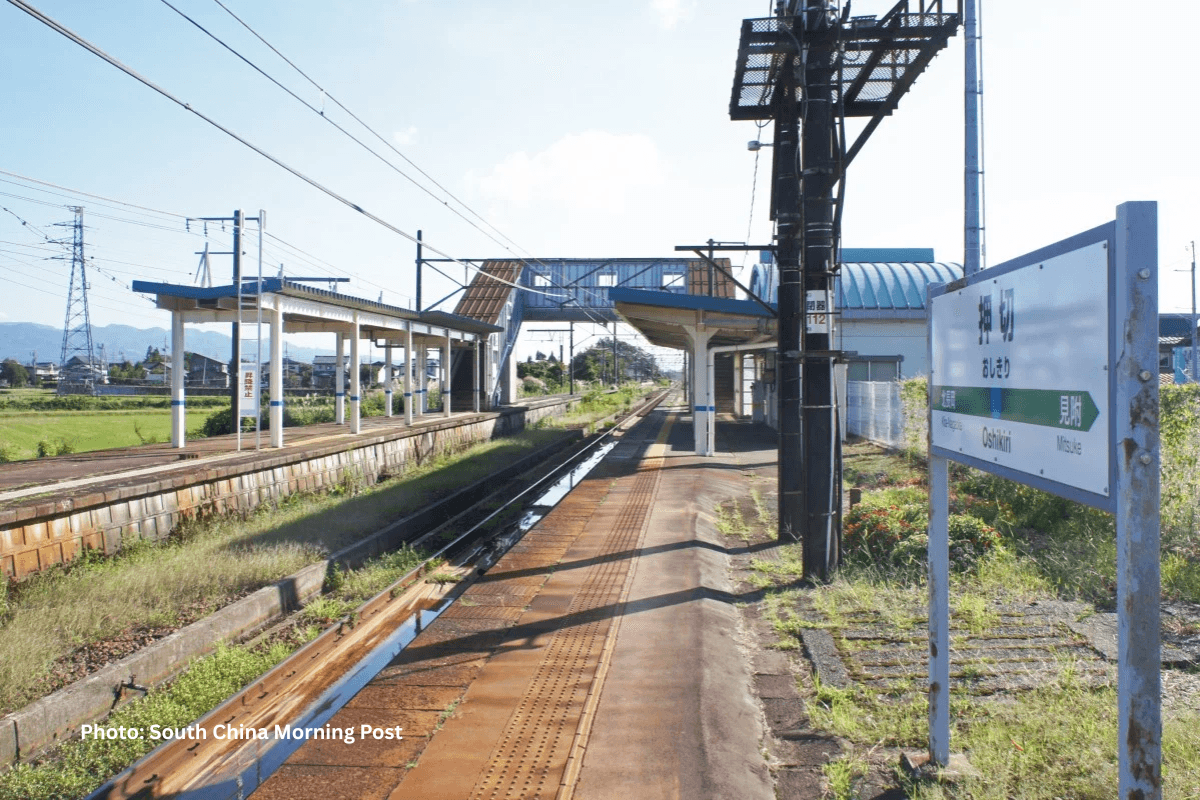
The affected stations, such as Oshikiri in Niigata prefecture, now display notices that essential amenities like toilet paper are no longer supplied, prompting frustration among some passengers and highlighting the limited resources allocated to unmanned stops. The reduction in station services underscores the tight balance operators face between maintaining minimal service standards and controlling costs where ridership is sparse.
Japan’s rural rail network has been shrinking for decades due to demographic decline and falling demand. Over the past three decades, approximately 1,366 km of track equivalent to about 5 % of the national network has been decommissioned, with the pace of closures accelerating in recent years. Many underused lines have been replaced with bus rapid transit or third-sector services, though some of these have also struggled to attract sufficient patronage.
For operators like JR East, managing a financially viable network increasingly involves prioritising resources toward high-demand corridors while reassessing services on lightly used sections. Reductions in non-essential offerings at unmanned stations can be seen as part of these tighter operational strategies, but they also risk eroding passenger confidence in rural rail’s viability over the long term.
The episode reflects broader trends in mature rail markets challenged by depopulation and modal shifts, where sustaining comprehensive rural operations requires balancing economic realities with social expectations and regional mobility needs.
Source: South China Morning Post
Rural Rail Strain Amplifies As JR East Reduces Station Services

Engineering Business Management
Share this story
Declining populations and financial pressures are forcing rail operators to reassess service provision across low-demand corridors in developed markets. In Japan, JR East has begun removing ancillary services such as toilet paper at unmanned stations reflecting deeper challenges in sustaining rural rail operations amid ongoing network contraction and cost-control efforts.