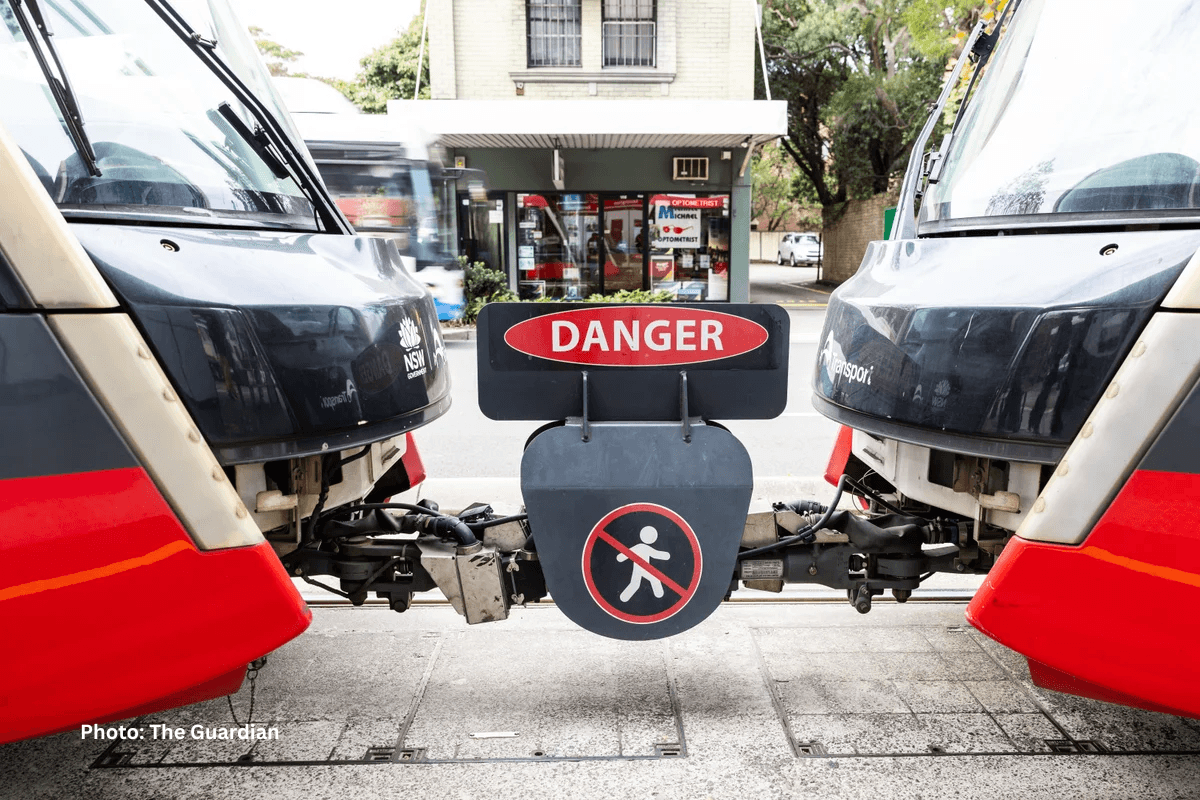
SYDNEY, April 2026 — A whistleblower claim has emerged that a series of safety enhancements previously planned for Sydney’s light rail network were cancelled despite costing just AU$22 million, shortly before a sequence of serious accidents occurred. The issue has sparked debate over how safety investments are evaluated and programmed in major city rail systems.
According to internal sources cited by The Guardian, the upgrades would have included enhancements to tram stop safety features and track interface improvements intended to reduce collision risks at key locations. The deferred works were part of a broader safety action plan that had been developed following earlier incidents on the network.
Since then, Sydney’s light rail has experienced multiple fatalities involving pedestrians and cyclists at locations where vehicles and tramways intersect. Safety advocates and transport professionals have drawn a line between the cancelled upgrades and the continued vulnerability of certain intersections, arguing the relatively low cost of the works did not match the potential benefits in risk reduction.
Transport authorities have defended their prioritisation decisions, noting budget constraints and competing project commitments across the city’s wider public transport system. However, the timing of the cancellations and subsequent accidents has prompted calls from industry stakeholders and families of victims for an independent review of safety governance and infrastructure planning processes.
This episode highlights an ongoing challenge for urban rail operators globally: balancing capital investment decisions against evolving safety risks, public expectations, and the imperative to maintain trust in rail as a safe and dependable mode of transport.
Source: The Guardian
Safety Investment Deferrals Raise Questions After Sydney Light Rail Fatalities

Engineering Business Management
Share this story
Transport infrastructure safety standards are increasingly scrutinised when incidents expose shortcomings in planned upgrades. In Sydney, deferred safety improvements on the light rail system that may have cost a modest sum have come under criticism following fatal accidents, raising broader concerns about maintenance prioritisation and risk management in urban rail networks.