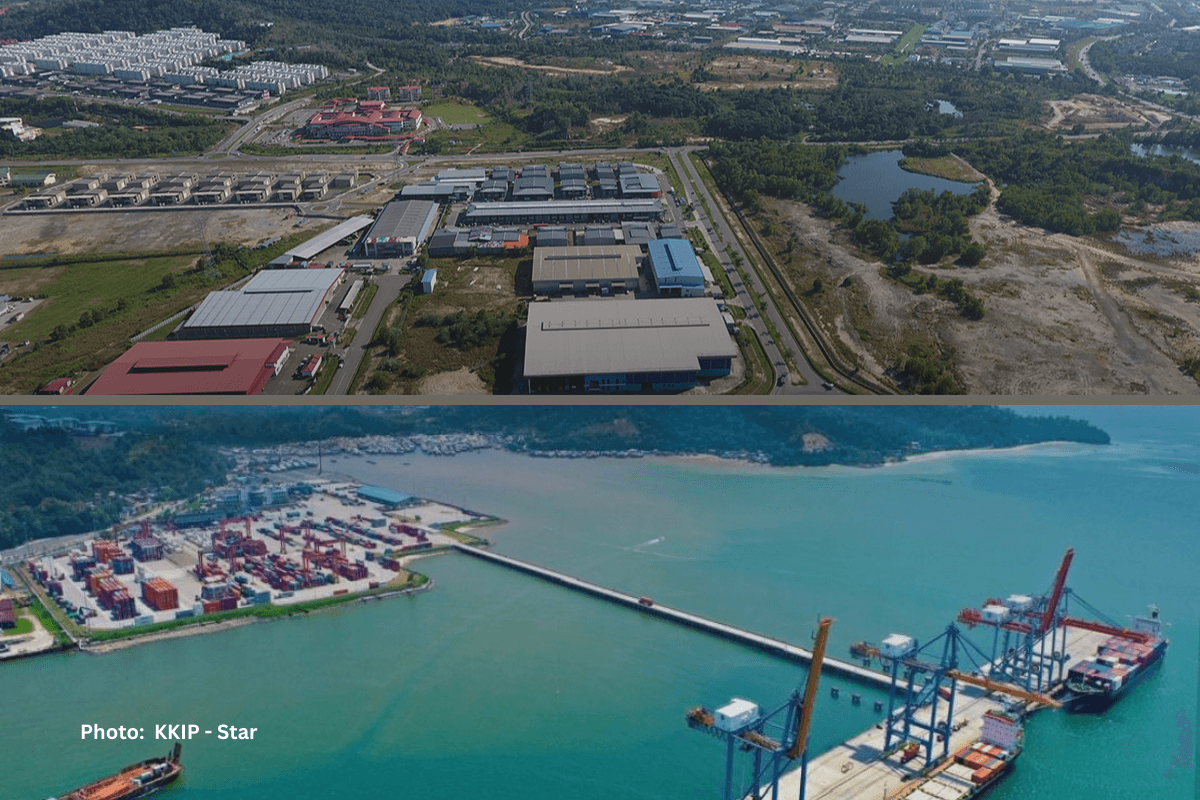
KOTA KINABALU, April 2026 — The Sabah state government is currently undertaking a comprehensive feasibility study for a proposed modern rail connection that aims to link the Kota Kinabalu Industrial Park (KKIP) with Sepanggar Port. This initiative is designed to significantly enhance industrial logistics and improve the overall efficiency of freight movement throughout the region, addressing the growing demands of both local and international markets.
The proposed rail alignment is meticulously planned to facilitate seamless cargo transport between key economic zones, with particular emphasis on the industrial hub located at KKIP and the deep-water port facilities at Sepanggar. These facilities serve as a vital maritime gateway for northern Sabah, handling a substantial volume of cargo essential to the region’s economy. The current feasibility study will comprehensively evaluate factors such as route viability, engineering requirements, potential environmental impacts, and economic viability. This assessment is conducted to provide informed recommendations before any construction decisions are finalised.
The initiative reflects Sabah’s broader infrastructure strategy, which aims to bolster the state's logistics framework and mitigate the reliance on road-based freight transportation. Currently, road transport dominates cargo movement between industrial zones and port facilities, leading to congestion, longer transit times, and operational inefficiencies. By enhancing rail connectivity, the government anticipates considerable improvements in the efficiency of goods-handling processes, reduced shipping times, and greater support for export-oriented industries, ultimately fostering a more competitive economic environment.
From an industry perspective, the KKIP–Sepanggar rail link aligns with prevailing regional trends in Southeast Asia, where numerous governments are committed to integrating ports and industrial parks through dedicated rail freight corridors. Similar initiatives in neighbouring countries have demonstrated that establishing rail-linked port infrastructure can drastically improve supply chain performance, reduce logistics costs, and attract significant foreign direct investment in the manufacturing and logistics sectors.
If the KKIP–Sepanggar rail link is implemented, it would mark a strategic advancement in Sabah’s long-term economic development planning. This project has the potential to position the region more effectively within ASEAN’s expanding industrial and maritime logistics network while also advancing sustainable transport objectives through a systematic shift from road to rail transport. By achieving these goals, Sabah could enhance its global competitiveness and ensure a robust framework for future economic growth.
Sabah Studies Rail Link to Kota Kinabalu Industrial and Port Zone

Engineering Business Management
Share this story
Rail connectivity is increasingly being explored in Southeast Asia to support industrial growth and port-linked logistics. Sabah authorities are conducting a study on a modern rail line connecting Kota Kinabalu Industrial Park with Sepanggar Port.


