SOUTH KOREA, April 2026 — South Korea’s national rail system recorded its highest quarterly ridership on record in the first quarter of 2026, with total passenger volumes reaching approximately 42 million. The increase represents a year-on-year expansion driven by a combination of service enhancements and macroeconomic factors affecting competing transport modes.
Data released by Korea Railroad Corporation indicates that growth was concentrated in intercity and high-speed segments, where capacity additions and frequency adjustments have been implemented over the past year. The performance reflects a continuation of post-pandemic demand normalisation, but with additional structural support from changes in relative transport costs.
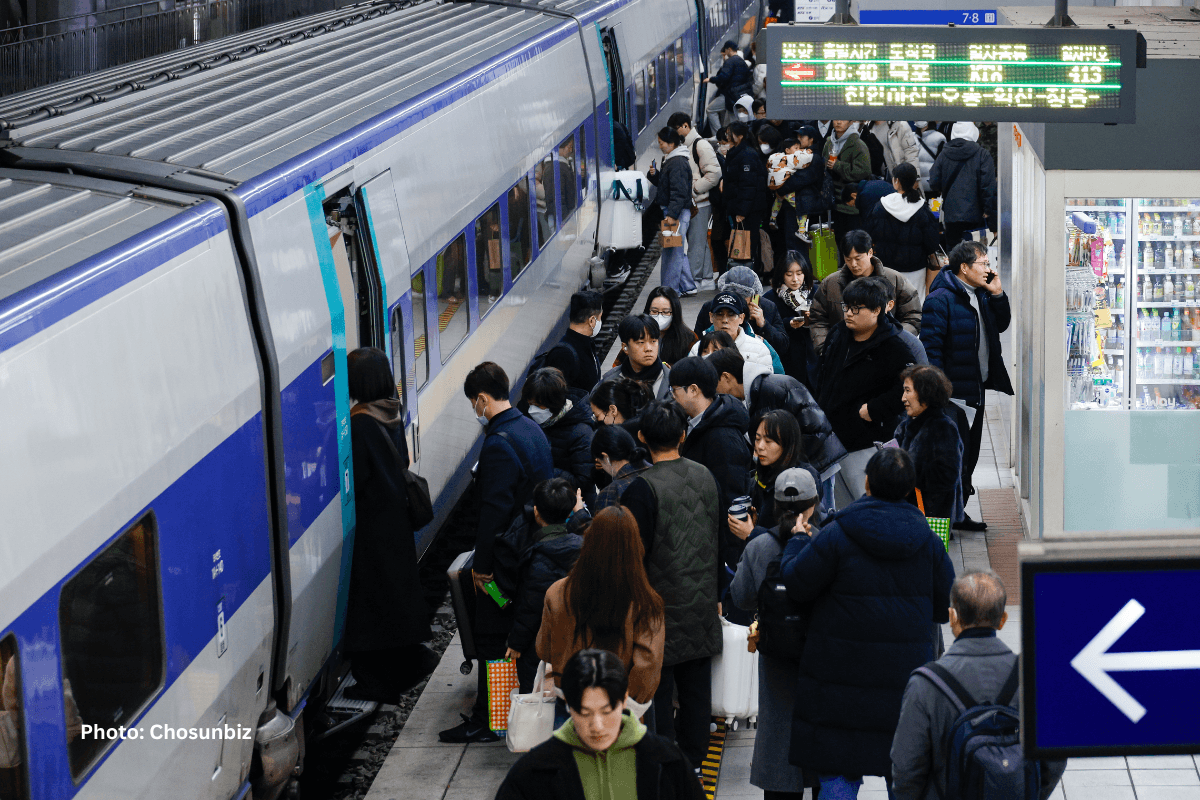
A key driver of the increase has been a modal shift from private vehicles to rail, linked to elevated fuel prices during the quarter. Higher road transport costs have improved rail's cost competitiveness on medium- and long-distance corridors, particularly those connecting major urban centres. This shift has been most visible on services operated under the Korea Train Express network, which forms the backbone of the national intercity system.
High-speed routes linking Seoul to the southern and southwestern regions, including Busan and Gwangju, have absorbed a significant share of incremental demand. These corridors offer competitive journey times relative to both highway and domestic aviation, allowing rail to capture additional market share amid rising fuel costs.
Operationally, the increase to approximately 42 million passengers in a single quarter implies a sustained rise in network utilisation. Korail has responded through incremental timetable optimisation and increased service frequency on core corridors, enabling higher throughput without the need for immediate large-scale infrastructure expansion. This approach leverages the existing capacity of high-speed lines, particularly the Gyeongbu corridor, where signalling systems and operational practices support high-frequency operations.
The rise in ridership also suggests elevated load factors across both high-speed and conventional rolling stock. While this supports improved farebox recovery, it introduces constraints in fleet availability, maintenance scheduling, and station handling capacity. Sustained demand at this level will require careful asset management to avoid degradation in punctuality and service reliability.
From a policy and investment perspective, the Q1 performance underscores the sensitivity of passenger demand to external cost variables and the role of high-speed rail in providing scalable capacity. The ability of the network to accommodate a significant increase in passengers without major infrastructure additions highlights the operational flexibility embedded in South Korea’s rail system.
Looking ahead, the durability of this growth trajectory will depend on whether current fuel price conditions persist and whether service quality can be maintained under higher utilisation levels. Continued investment in rolling stock, traffic management systems, and station infrastructure is likely to be required if elevated demand is sustained beyond the short term.
South Korea Rail Ridership Reaches Record High in Q1 2026

Engineering Business Management
Share this story
South Korea’s rail network carried approximately 42 million passengers in the first quarter of 2026, the highest quarterly total on record, according to Korea Railroad Corporation. The increase was driven by higher utilisation of intercity and high-speed services, supported by expanded service frequency and a modal shift from road transport as fuel costs rose during the period.


