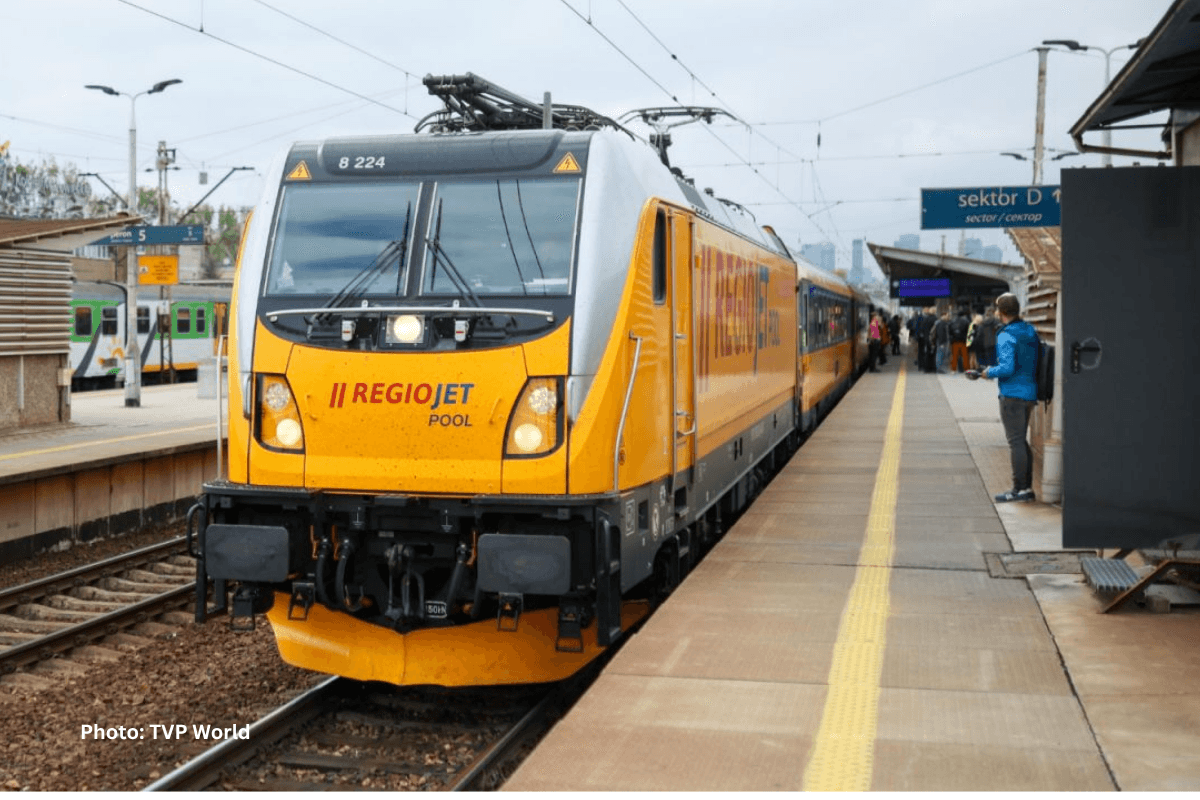
POLAND, April 2026 — RegioJet confirmed on 9 April that it will discontinue all domestic Polish rail services on 3 May 2026, less than eight months after launching operations aimed at competing with the incumbent state-owned provider.
RegioJet’s entry into Poland included routes linking major urban centres such as Kraków, Warsaw, Gdynia, and Poznań. The operator asserted that it faced significant barriers, including infrastructure access challenges, restrictions on station sales and marketing, and very aggressive pricing from PKP Intercity. The company characterised these actions — including reported fare reductions of up to 70 % in response to RegioJet’s service launch — as “illegal, predatory practices” undermining fair competition.
PKP Intercity promptly rejected these allegations, stating it operates in full compliance with law and regulations and that decisions on infrastructure access lie with independent bodies, not the state incumbent. The Office of Rail Transport in Poland has also previously criticised RegioJet for service cancellations in late 2025, finding that the operator failed to run scheduled trains and potentially breached passenger rights.
RegioJet’s exit underscores the ongoing challenges for private operators entering markets dominated by national incumbents supported by public funds. While the carrier will maintain its international services through Poland — such as Warsaw and Prague connections — its broader domestic ambitions have been shelved. The company signalled its willingness to return should conditions improve and transparent, equitable access be ensured.
The withdrawal highlights broader industry tensions around open-access competition, regulatory enforcement, and the balance between state-backed service provision and market liberalisation, trends that will continue to influence cross-border and domestic rail investment decisions in Central Europe.
Source: Notes From Poland
RegioJet Exits Polish Domestic Rail Market Citing Unfair Competitive Practices

Engineering Business Management
Share this story
Private open-access rail operators in Europe face a challenging competitive landscape amid entrenched state incumbents and regulatory complexity. Czech operator RegioJet has announced its withdrawal from Poland’s domestic passenger rail market, attributing the decision to what it describes as “predatory” conduct by the state-owned PKP Intercity. The development raises questions about market access and competition in liberalised rail corridors.