CZECH REPUBLIC, April 2026 — The first Stadler Eurolight Dual locomotive for Trenitalia has arrived at the VUZ Velim test centre in the Czech Republic, where it has commenced a rigorous program of type and performance testing prior to its deployment in Italy.
This locomotive is part of a larger framework agreement signed in 2023, which allows for the potential acquisition of up to 50 dual-mode units, with the initial firm order consisting of 13 locomotives and a long-term maintenance package extending over ten years. These locomotives are designed for mixed-traffic operations, including train rescue and push-pull passenger services across Italy’s rail network.
At the Velim facility, the locomotive will undergo essential evaluations to validate traction performance, assess braking capabilities, and conduct anti-derailment tests, all of which are required for homologation before entering service. The testing campaign will continue before trials on the Italian network later this year.
Technically, the Eurolight Dual is classified as a Bo’Bo’ bi-mode locomotive, featuring 3 kV DC electric and diesel traction systems, allowing seamless transitions between electrified and non-electrified sections. With a maximum speed of 160 km/h, it is optimised for both mainline and secondary routes, providing operational flexibility, especially in rescue and last-mile operations.
This introduction reflects a broader European trend toward modular, dual-power rolling stock that reduces reliance on full-route electrification while ensuring efficiency and interoperability. For Trenitalia, these platforms are vital in balancing sustainability goals with network constraints and service reliability demands.
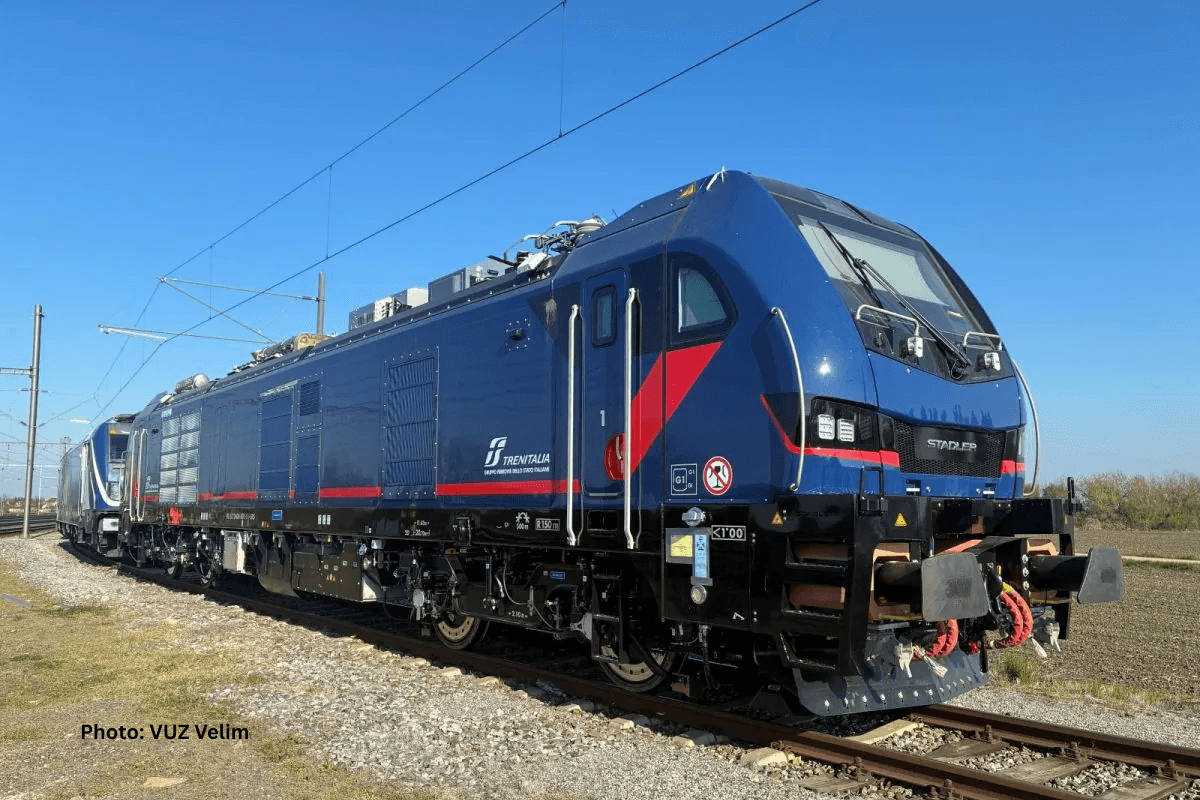
Stadler Eurolight Dual Locomotive Begins Velim Test Programme for Trenitalia

Engineering Business Management
Share this story
European rail operators are increasingly adopting dual-mode locomotives to improve operational flexibility across electrified and non-electrified routes. Stadler has now delivered its first Eurolight Dual unit for Trenitalia, which has entered testing at the Velim test circuit in the Czech Republic.