As Asian nations continue to prioritize sustainable development and enhance urban and intercity connectivity, Alstom S.A.’s comprehensive approach to rail technology is becoming increasingly relevant. The company is evolving beyond traditional rolling-stock manufacturing to offer a full-stack rail technology platform, integrating trains, signaling, services, and software to manage entire rail ecosystems. This strategic shift aligns with Asia’s growing demand for advanced, efficient, and environmentally conscious transportation solutions.
Alstom’s diverse portfolio addresses key challenges faced by Asian transport authorities. High-speed rail platforms, such as the Avelia family, are designed for efficiency and interoperability, while regional and commuter trains, including the Coradia range, support local and intercity networks. Notably, Alstom is pioneering zero-emission traction with Coradia iLint hydrogen fuel-cell trains and battery-electric variants, providing practical decarbonization options for non-electrified lines common across the continent. Urban mobility solutions, including metros and tramways, are often delivered as turnkey systems, integrating signaling, power, and maintenance.
The implications for Asia’s rail sector are significant, particularly as countries aim to reduce transport emissions and ease urban congestion. Alstom’s ability to deliver integrated systems, from trains to advanced digital signaling such as ETCS and CBTC, offers a single point of responsibility for complex infrastructure projects. This positions Alstom as a major competitor alongside regional players like China’s CRRC, which is also expanding its global presence in high-speed and urban rail.
Alstom’s competitive advantage lies in its holistic approach: decarbonization as a core design principle, full-stack integration capabilities, modular and future-proof platforms, strong lifecycle services, and established regulatory and safety expertise. These factors are essential for long-term infrastructure investments in Asia, where reliability, maintainability, and adaptability are crucial for assets expected to operate for decades.
Ultimately, Alstom’s strategic pivot toward becoming an integrated rail ecosystem provider reflects a broader industry trend toward smart, sustainable mobility. As Asian cities grow and governments pursue net-zero targets, Alstom’s comprehensive technological offerings are poised to play a key role in shaping the future of rail transport across the region.
Source : Alstom S.A.
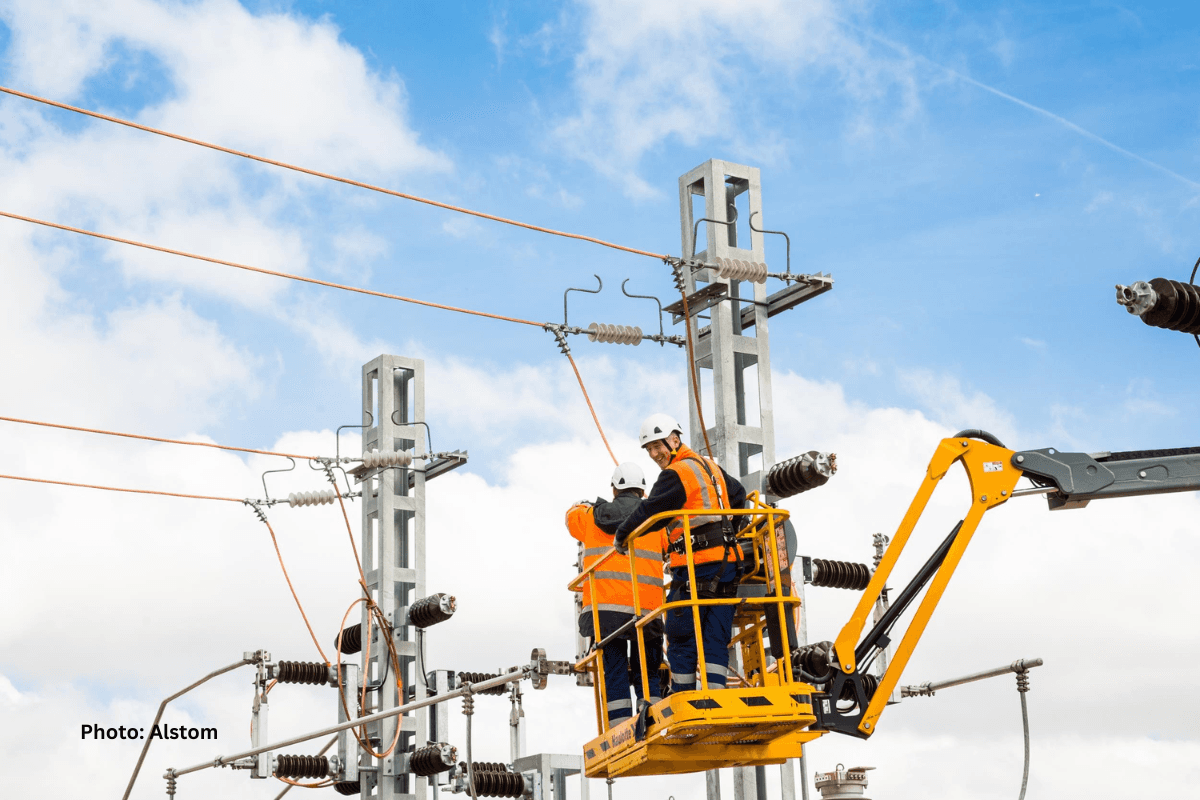
Alstom's Integrated Rail Technology Platform: Driving Asia's Sustainable Mobility Future.

Engineering Business Management
Share this story
The global rail sector is undergoing a significant transformation driven by decarbonization and digital innovation. Alstom S.A. is positioning itself as a full-stack rail technology provider, offering integrated solutions from trains to digital signaling. This strategic evolution is highly relevant to Asia's rapidly expanding and modernizing rail networks.