WASHINGTON D.C., May 2026 — As disruptions continue to affect shipping through the Strait of Hormuz, Iran has intensified efforts to utilize overland transport links with China. The move reflects the increasing strategic importance of Eurasian rail corridors during periods of maritime instability.
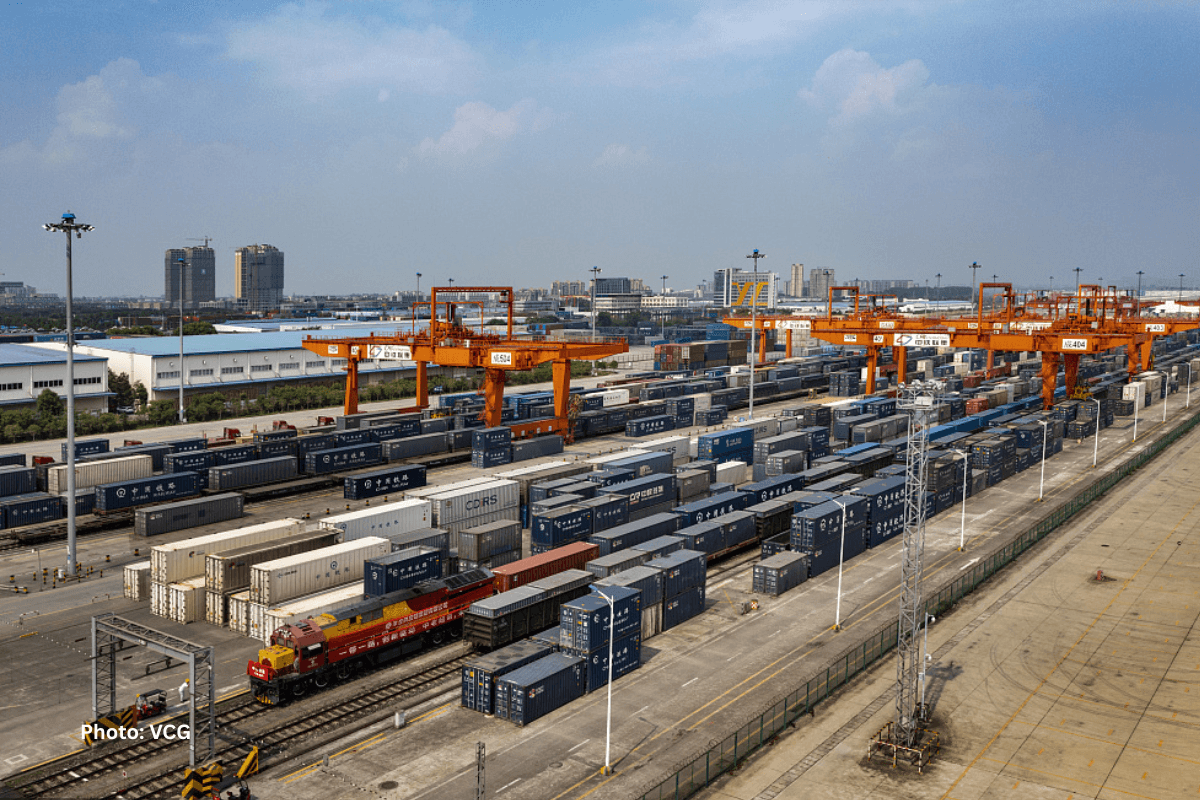
A key component of this strategy is the 10,400-kilometre China-Iran rail corridor connecting Xi’an and Tehran via Kazakhstan, Kyrgyzstan, Uzbekistan, and Turkmenistan. Operational since 2025, the route can move cargo between the two countries in approximately 15 days, significantly faster than traditional sea transport. Freight activity on the corridor has reportedly increased as Iran seeks alternative trade channels.
Recent infrastructure investments have strengthened regional rail connectivity. These include the development of the China-Kyrgyzstan-Uzbekistan railway, expanded freight services linking Russia and Iran through Central Asia, and ongoing upgrades at the Sarakhs border crossing between Iran and Turkmenistan. China and Iran are also cooperating on the electrification of a major east-west railway corridor across Iran.
Despite these developments, significant constraints limit the viability of large-scale oil transport by rail. Most Iranian oil production is concentrated in the country’s south, while many of China’s largest refining facilities are located along its eastern coast. Rail transport would require complex inland logistics and lacks the capacity of maritime shipping, where a single very large crude carrier can transport more than two million barrels of oil. By comparison, rail shipments typically move only a fraction of that volume.
The situation highlights both the growing strategic value of Eurasian rail corridors and their practical limitations. While rail can provide an important emergency trade lifeline during periods of geopolitical disruption, maritime transport remains the dominant mode for large-scale energy exports. For Iran, the Central Asia rail network may help sustain trade flows with China, but it is unlikely to fully offset the loss of seaborne export capacity.
Source: The Diplomat
Central Asia Rail Corridor Offers Limited Relief for Iran Oil Exports

Engineering Business Management
Share this story
Growing geopolitical tensions are prompting countries to explore alternative freight corridors beyond traditional maritime routes. Iran is now examining rail connections to China through Central Asia, although the route is unlikely to replace the scale and efficiency of seaborne oil exports.