China has accelerated construction of the 330 km Dali–Ruili Railway in Yunnan Province, pushing forward the technically complex 34.5 km Gaoligongshan Tunnel as the cross-border corridor toward Myanmar regains political attention. The Baoshan–Ruili section is scheduled for completion by 2028, with a design speed of 160 km/h, positioning the line as the final domestic leg before a planned connection to Myanmar’s Muse border town.
The Dali–Ruili Railway spans approximately 330 km, of which bridges and tunnels account for a majority of the civil works due to mountainous terrain. The Gaoligongshan Tunnel, the longest structure on the alignment at 34.5 km, represents the critical engineering bottleneck. Once operational, the railway will significantly reduce travel times between Kunming and Ruili and form part of China’s westward rail strategy linking Yunnan to Southeast Asia.
On the Myanmar side, the proposed Mandalay–Muse railway is planned as a 410 km standard-gauge electrified corridor designed for operating speeds of up to 160 km/h. The alignment would connect central Myanmar to the Chinese border at Muse, creating a continuous standard-gauge link from Kunming. However, financial terms for the Myanmar section have not been publicly disclosed, and construction progress remains uncertain amid ongoing security challenges in northern Shan State.
The Chinese section is being delivered through a domestic EPC framework led by state-owned rail contractors, with funding structured through internal sovereign financing channels. No multilateral financing arrangements have been confirmed for the Myanmar portion. The project remains strategically aligned with Beijing’s broader Trans-Asian Railway and Belt and Road connectivity objectives.
The acceleration of works on the Chinese segment signals a sustained commitment to overland access toward the Indian Ocean, reducing reliance on maritime routes through Southeast Asian chokepoints. For contractors and suppliers, the completion of the Gaoligongshan Tunnel will remove the principal geotechnical constraint and enable full installation of systems across the remaining alignment.
Next milestones include tunnel breakthrough, systems integration, and tracklaying toward Ruili ahead of the 2028 target. Cross-border interoperability, financing closure, and security stabilisation in northern Myanmar will determine whether the Mandalay–Muse link proceeds to the full construction phase.
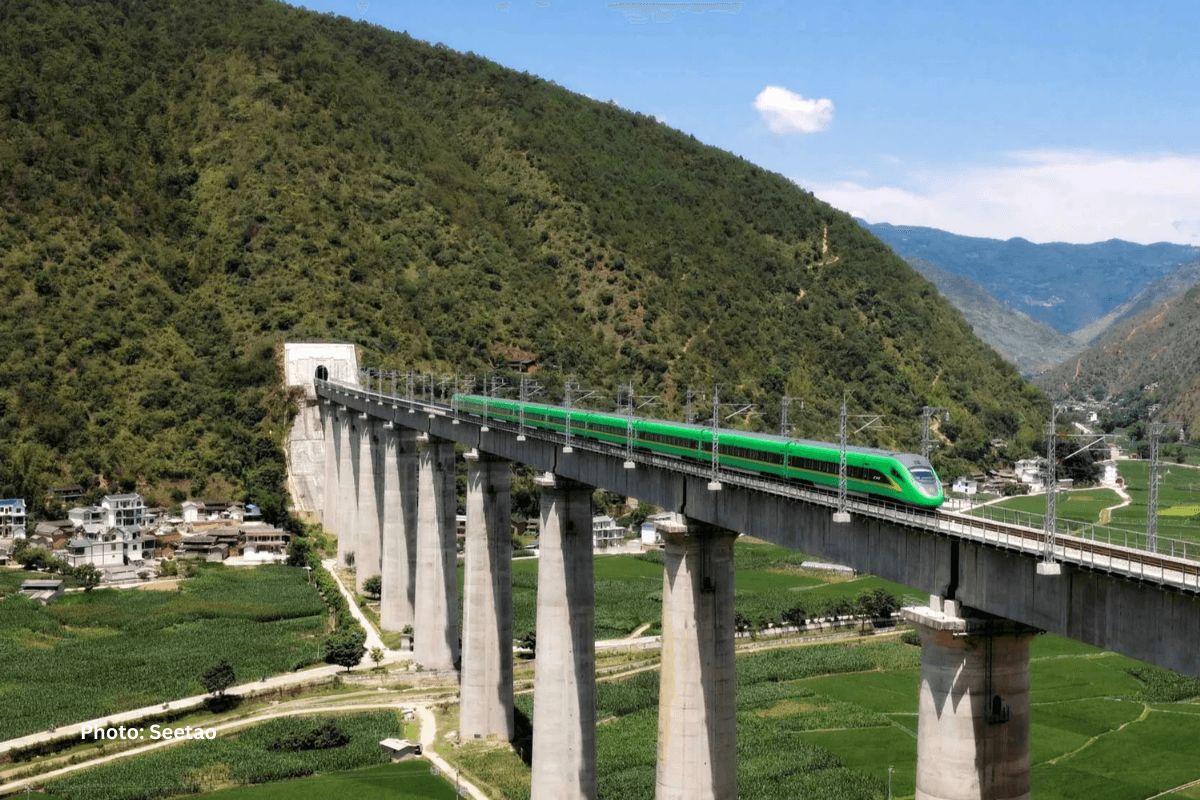
China Advances 330 km Dali–Ruili Railway Toward 2028 Completion

Engineering Business Management
Share this story
Early 2026 highlights a dynamic period for Asian rail infrastructure, marked by significant investment and strategic modernization initiatives. Key developments include major high-speed rail expansions, critical system upgrades, and new cross-border transit projects across the region.


