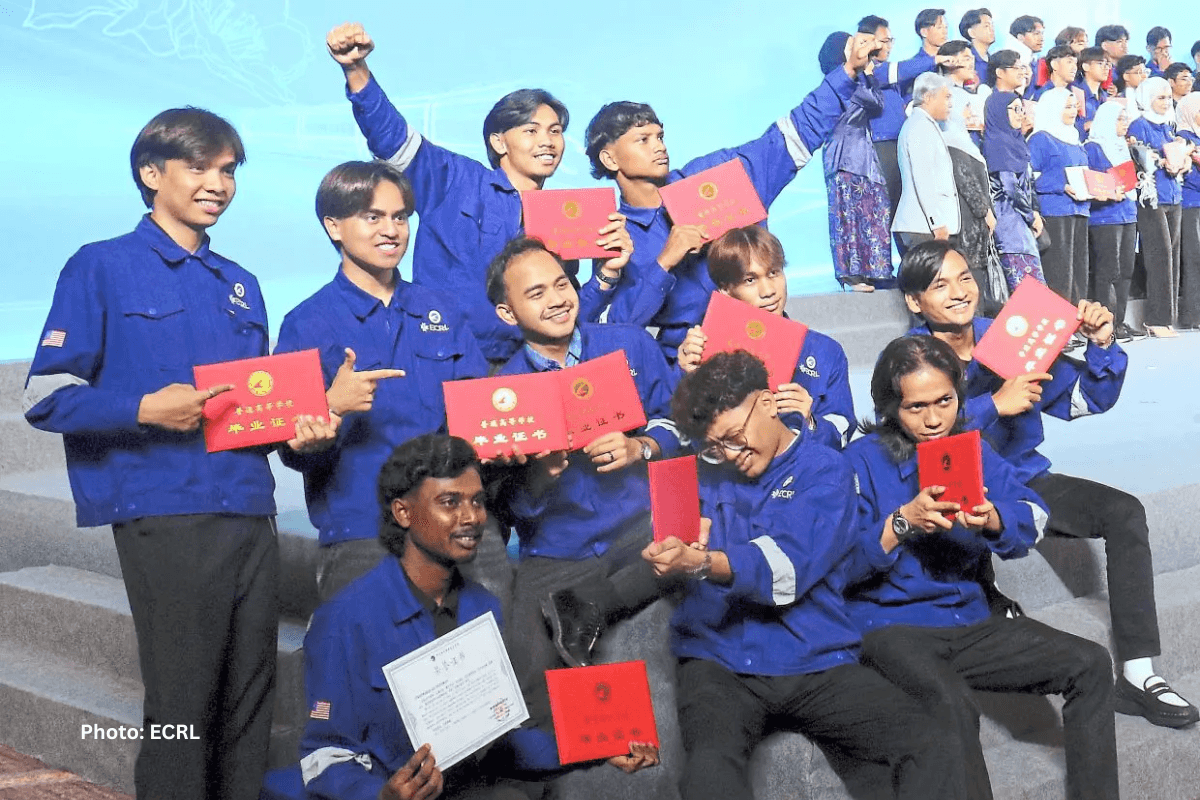

A total of 66 graduates, most of whom are in their 20s, are participants in the ECRL Industrial Skills Training Program (PLKI-ECRL). This program, which focuses on railway operations and maintenance, will see up to 259 Malaysians trained for key positions such as assistant station attendants, electrical multiple unit technicians, signaling technicians, and train drivers.
The historic convocation ceremony marking the Malaysia-China collaboration took place on Tuesday and was attended by Transport Minister Anthony Loke, Chief Executive Officer of Malaysia Rail Link Sdn Bhd Datuk Seri Darwis Abdul Razak, and representatives from the participating vocational institutions.
These institutions include Universiti Kuala Lumpur, Mara Higher Skills College, Mara Skills Institute, Sultan Mizan Zainal Abidin Polytechnic, Pahang Skills Development Center, UCYP University, and the Advanced Technology Training Center.
Also participating in the program were a group of older participants from the Malaysian Armed Forces who are preparing to retire, through the Perhebat initiative (Agency for Former Armed Forces Affairs).
In his remarks, Minister Loke emphasized that human capital development is the cornerstone of a major project’s success. “Infrastructure alone does not guarantee success. It is the people behind the system; trained, competent and dedicated individuals like all of you that will determine the reliability, safety and reputation of the ECRL. You are not just employees of a railway. You are custodians of a national asset,” he said.
PLKI-ECRL graduates will be hired by the company that will operate the ECRL when it begins commercial operations early next year. They will start as trainees and, depending on their performance, will be offered permanent positions with the ECRL.
With the first phase expected to open in January 2027, the ECRL aims to provide a four-hour non-stop journey for passengers between Kota Bharu and Gombak, while full service extending to Port Klang is expected to begin in early 2028 under the second phase. With critical testing scheduled to begin next month, construction progress on this 665-km standard-gauge railway line has now reached 93.66%.


