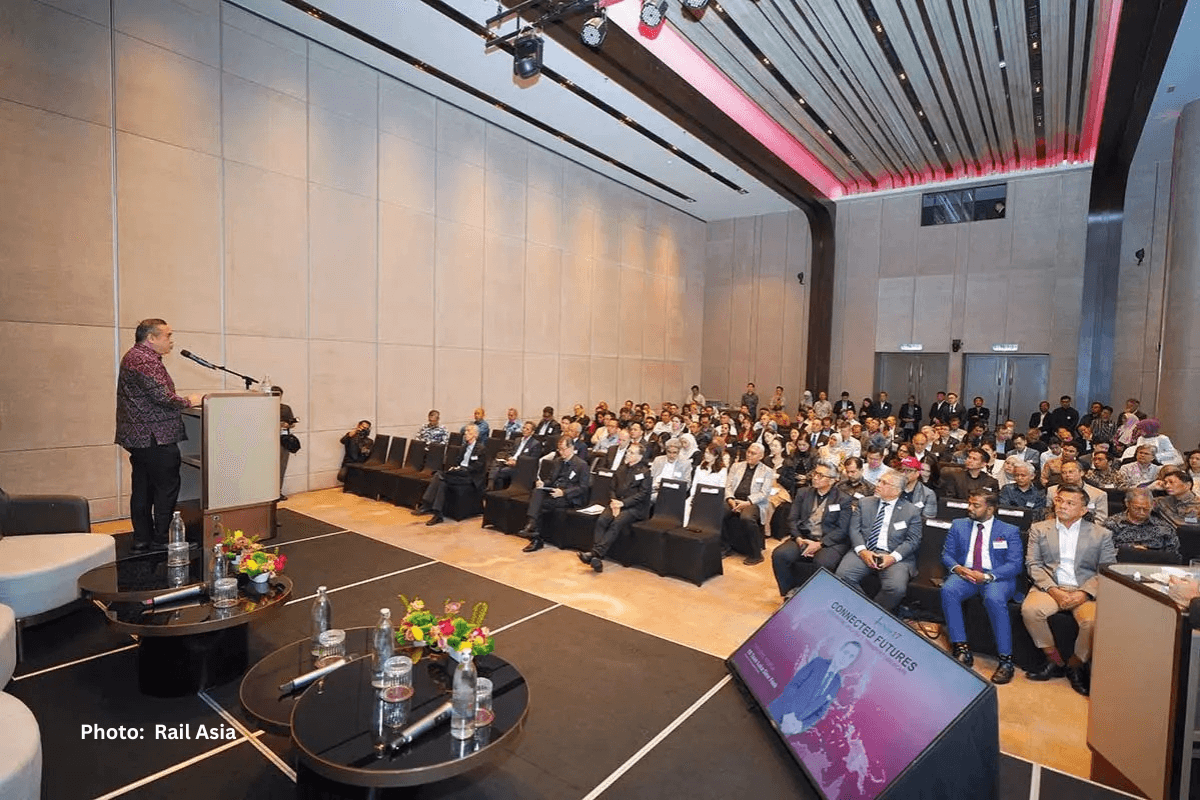

That question was the focus of discussion at the Veritas Lecture Series titled “Connected Futures: Integrating Malaysia’s Transport Landscape,” held at Imperial Lexis Kuala Lumpur on May 7. The lecture series focused on gaps in travel connectivity specifically from origin to destination covering the cargo, tourism, and public transit sectors.
Too Many Silos, Too Little Integration
David Hashim, President of the Veritas Design Group, opened the event by noting that the public and private sectors are pouring tens of billions of ringgit into mega transportation projects ranging from commuter services to cargo and tourism. However, he noted that these projects are often developed in isolation without sufficient data sharing or comprehensive planning.
In his keynote address, Transportation Minister Anthony Loke cited ASEAN connectivity as a key priority for the country, while noting that stakeholders in the sector have so far operated in isolation. “The challenges we have is because we have always worked in silos, airports, customs, immigration, and ground handlers are not necessarily connected,” he said.
Loke also listed ongoing and upcoming projects, including the redevelopment of the Seremban Railway Station and the expansion of airports in Penang, Kuala Lumpur, Kota Kinabalu, and Kuching. For him, physical development alone is insufficient—it must be accompanied by connections that extend beyond airport boundaries to drive tourism and regional economic development.
Regarding the proposed Kuala Lumpur–Bangkok rail link, Loke emphasized that the ministry remains committed to securing regional cooperation and the necessary technical alignment, although this depends on the harmonization of standards among neighboring countries.
Steven Andersen, Chief Development Officer of Malaysia Airports Holdings Bhd (MAHB), emphasized that MAHB’s strategy is not merely to increase passenger numbers at a single airport, but to leverage the entire network.
Current initiatives include improving directional signage, installing digital screens for e-hailing services, and efforts to enhance connectivity between KLIA’s Terminal 1 and Terminal 2 to allow for more flexible transit times.
Railways: Measuring Success by Experience, Not Kilometers
From a railway perspective, Syed Redza Algadrie, CEO of Prasarana Integrated Development Sdn Bhd, acknowledged that Malaysia’s rail system remains incomplete due to differences in payment mechanisms among operators. He views the Johor Bahru–Singapore Rapid Transit System as the best model for the future combining customs and immigration within a single building and emphasized that the success of connectivity is measured not by the kilometers of track built, but by the actual customer experience.
Meanwhile, Datuk Josie Lai, Permanent Secretary of the Sabah Ministry of Tourism, Culture, and Environment, revealed plans to build an international cruise terminal at Jesselton Waterfront City to boost the state’s cruise industry. However, she acknowledged that Sabah still faces significant internal connectivity gaps, particularly regarding access to major tourist destinations, which still require serious improvements.


