JAPAN, April 2026 — Japan’s commuter rail system is widely recognised for its high efficiency, punctuality, and dense network integration, serving as a benchmark for global transit performance. The article examines how its operational model contrasts with the New York metropolitan area’s MTA and NJ Transit systems, particularly in terms of cost structure, service speed, and land use integration.
A key distinction lies in Japan’s emphasis on automation, lightweight rolling stock, and streamlined station operations. Japanese operators rely heavily on labor-saving technologies such as automated train control systems, platform edge barriers, and widespread use of level boarding, enabling faster turnaround times and reduced operational delays.
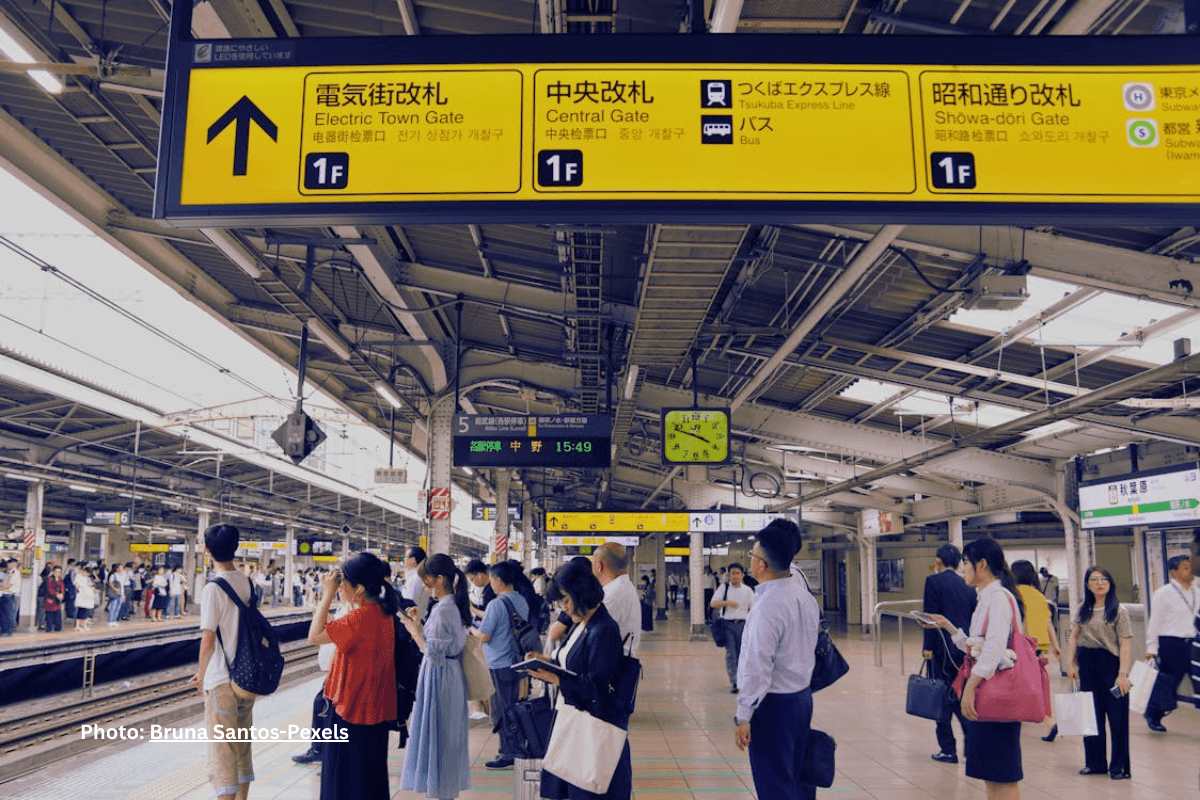
The analysis notes that Japanese commuter rail systems also achieve higher efficiency in fare collection and station flow management, largely through full adoption of turnstile-based systems and tightly coordinated train scheduling. In contrast, US commuter rail agencies such as NJ Transit and the MTA continue to rely on more manual, labor-intensive processes, contributing to higher operating costs per vehicle hour.
Another major difference is rolling stock design. Japanese trains are typically lighter, feature more doors for rapid boarding, and use distributed electric propulsion, allowing faster acceleration and reduced dwell times. By comparison, US commuter trains are generally heavier and slower to accelerate, with fewer doors that constrain passenger movement at busy stations.
The article also highlights Japan’s integration of transit-oriented development as a core financial and operational pillar. Railway operators often generate significant non-fare revenue through real estate development around stations, including retail, residential, and commercial assets. This contrasts with US agencies, where legal and zoning constraints limit similar expansion, increasing reliance on public subsidies and fare revenue.
Overall, the comparison illustrates how Japan’s rail model combines infrastructure design, operational efficiency, and land value capture into a unified system. For agencies like the MTA and NJ Transit, the lessons point toward potential long-term gains in cost efficiency, service reliability, and financial sustainability through structural reform rather than incremental upgrades alone.
Source: Vital City
Japan’s Rail System Offers Efficiency Lessons for US Commuter Rail

Engineering Business Management
Share this story
Global commuter rail systems are increasingly compared as cities seek higher efficiency, capacity, and reliability. A recent analysis highlights how Japan’s rail network provides operational and financial lessons for the MTA and NJ Transit through integrated design and technology.