The European Investment Bank (EIB) has completed a safety investment planning study for the Baku–Boyuk Kesik railway corridor in Azerbaijan, operated by Azerbaijan Railways (ADY). Published on 6 March 2026, the study proposes targeted interventions on the more than 500 km east–west corridor linking Baku to the Georgian border. The plan addresses accident exposure at numerous level crossings, with potential investment scenarios of €50 million to €90 million focused on access control and grade-separation measures.
The corridor includes 76 level crossings and informal access points, predominantly located in rural areas with livestock movement and pedestrian track access. According to accident records cited in the EIB advisory assessment, the line recorded 36 animal collisions, 97 incidents involving people, and 15 fatalities over roughly 20 months, indicating persistent safety risks associated with at-grade interaction between rail traffic and local movement.
The study, prepared under the EU-funded Facility for Eastern Partnership Investment in Connectivity (EPIC), identifies two engineering intervention packages. The first scenario, estimated at €50 million, includes corridor fencing, construction of animal underpasses, and closure or consolidation of eight high-risk level crossings. A second scenario valued at approximately €90 million expands these measures to 17 crossings, increasing physical segregation between railway infrastructure and surrounding land uses.
The proposed programme prioritises grade separation, right-of-way fencing, and controlled crossing access, measures intended to reduce collision risk and improve operational reliability on a corridor carrying growing freight volumes.
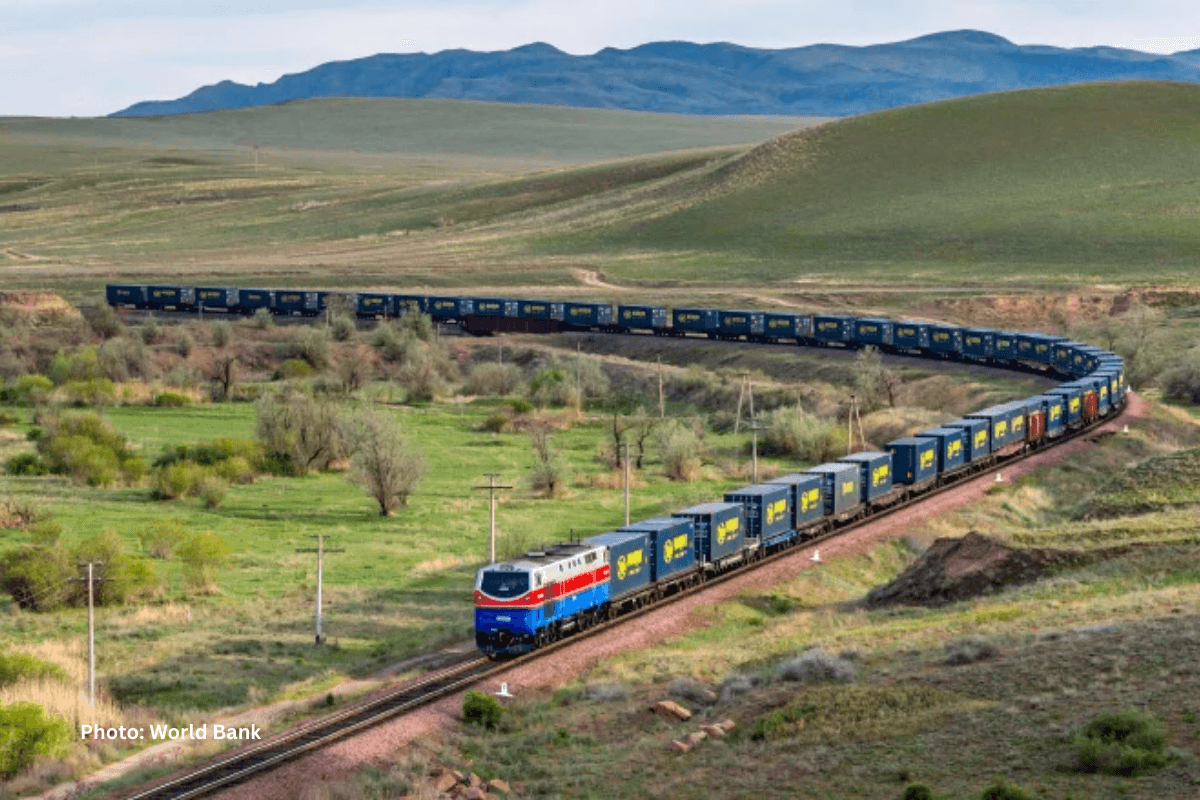
Strategically, safety upgrades on the Baku–Boyuk Kesik line support capacity and reliability improvements on the Trans Caspian International Transport Route, a Europe–Central Asia freight corridor exceeding 6,500 km that has seen increasing utilisation as Eurasian logistics flows diversify.
EIB prepares safety investment plan for Azerbaijan’s Baku–Boyuk Kesik railway corridor

Engineering Business Management
Share this story
The European Investment Bank (EIB) has completed a safety investment planning study for the Baku–Boyuk Kesik railway corridor in Azerbaijan, operated by Azerbaijan Railways (ADY). The proposed programme, valued at €50–90 million, prioritises fencing, crossing closures, and grade-separation measures to improve operational safety and corridor reliability.