Iran is placing a new rail route via Afghanistan on its transportation agenda, seeking to establish a secure, low-risk alternative to increasingly volatile maritime trade routes. This initiative aligns with China's broader strategy to diversify its cargo transport pathways, reducing dependence on high-risk sea lanes amidst global geopolitical competition. The proposed rail connection aims to transform Iran into a key player in connecting East and West, leveraging its unique geopolitical position.
The envisioned rail link would commence in eastern Iran, traverse Afghanistan through cities like Herat and Mazar-e-Sharif, and ultimately connect to China's rail network, potentially via the Wakhan Corridor. This development is part of Iran's long-term railway policy to foster East-West corridors and establish itself as a significant Eurasian transit hub, connecting East Asia, Central Asia, West Asia, and Europe.
Experts suggest that a stable rail connection could yield substantial benefits for Iran, including increased non-oil transit revenues, a strengthened position within regional supply chains, and enhanced access for Central Asian nations to Iran's southern ports. For China, it represents a reliable overland option that complements its Belt and Road Initiative, offering an alternative to maritime routes challenged by geopolitical tensions.
However, the project faces significant hurdles, including slow infrastructure development, inefficient border management, and operational constraints within Iran's railway system. The success of this strategic opportunity hinges on overcoming these domestic challenges and ensuring timely implementation to remain competitive against rival corridors emerging in Central and Northern Asia.
This strategic push for overland connectivity underscores a broader trend in Asia, where nations are investing heavily in rail infrastructure to enhance trade, economic growth, and regional integration. The Iran-China rail link, if realized, could significantly reshape the region's transit map and bolster the strategic importance of land-based logistics in global trade.
Source: WANA News Agency
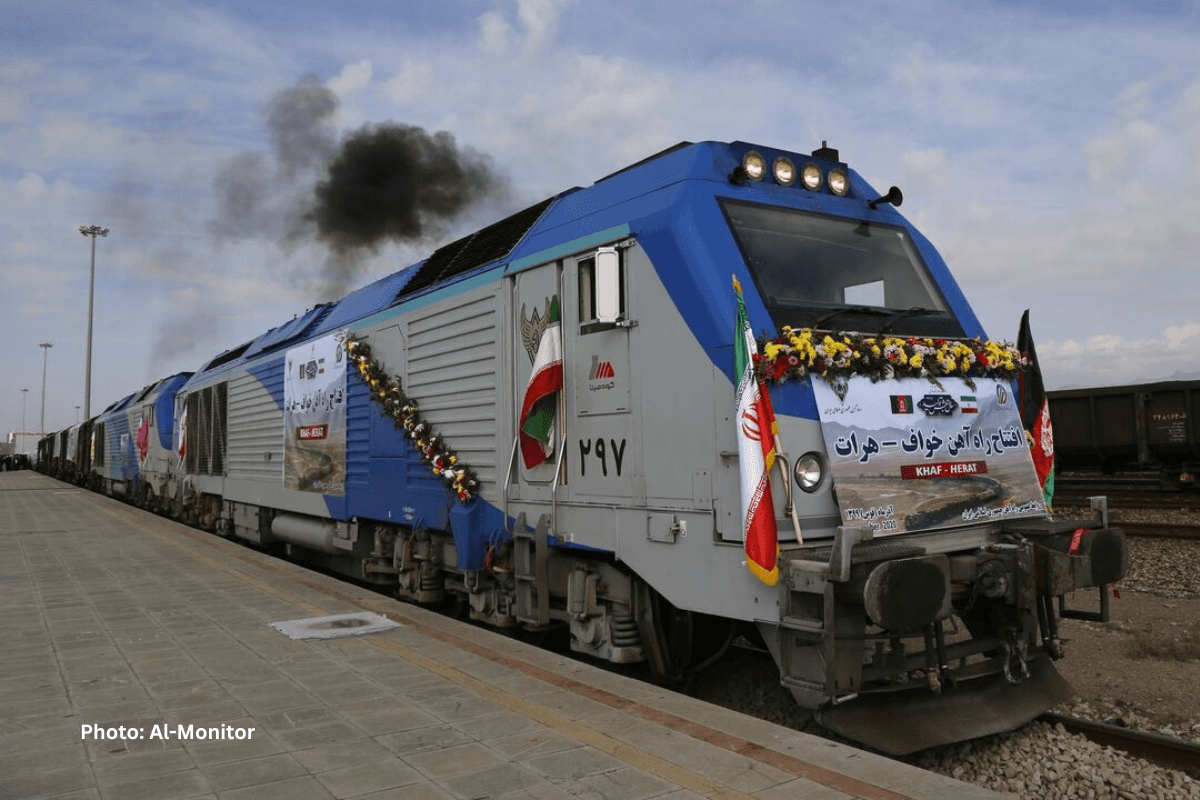
Iran-China Rail Corridor Explored Amidst Shifting Trade Dynamics

Engineering Business Management
Share this story
As maritime trade routes face increasing geopolitical risks, land-based corridors are gaining strategic importance. Iran is prioritizing a new rail link to China via Afghanistan, aiming to bolster its role as a Eurasian transit hub and offer a secure alternative for global logistics.


