LONDON, May 2026 — The integration of advanced signalling technology is becoming a prerequisite for modern rail operators seeking to optimize existing infrastructure without costly civil works. Stadler’s recent deployment of Nova Pro CBTC on the Waldenburgerbahn represents the first application of GoA2 automated operation in Switzerland, following a formal license from the Bundesamt für Verkehr in late 2025. This project serves as a technical baseline for the company’s broader automation roadmap, which includes developing unattended GoA4 depot functions and specialized ATO packages for rack-and-adhesion lines.
Beyond domestic successes, the firm has secured a substantial foothold in the North American market through a US$500m contract with the Metropolitan Atlanta Rapid Transit Authority (MARTA). This agreement involves the comprehensive installation of CBTC across Atlanta’s metro network and has prompted the establishment of a dedicated North American signalling unit. This international expansion is mirrored in Europe, where the company has secured diverse contracts ranging from light rail interlockings in Bergen to specialized systems for the SZU in Zurich, demonstrating a versatile portfolio that spans conventional and high-tech signalling.
The financial trajectory of the signalling division reflects this operational growth, contributing to a 13% increase in group sales to SFr3.7bn in 2025. With an order backlog exceeding SFr32bn, the company is leveraging its strong balance sheet to pursue strategic acquisitions, such as BÄR Bahnsicherung and BBR Verkehrstechnik, alongside new partnerships with software specialists like Ebblo. These moves are designed to bridge the gap between traditional hardware and the emerging requirements of software-defined rail operations.
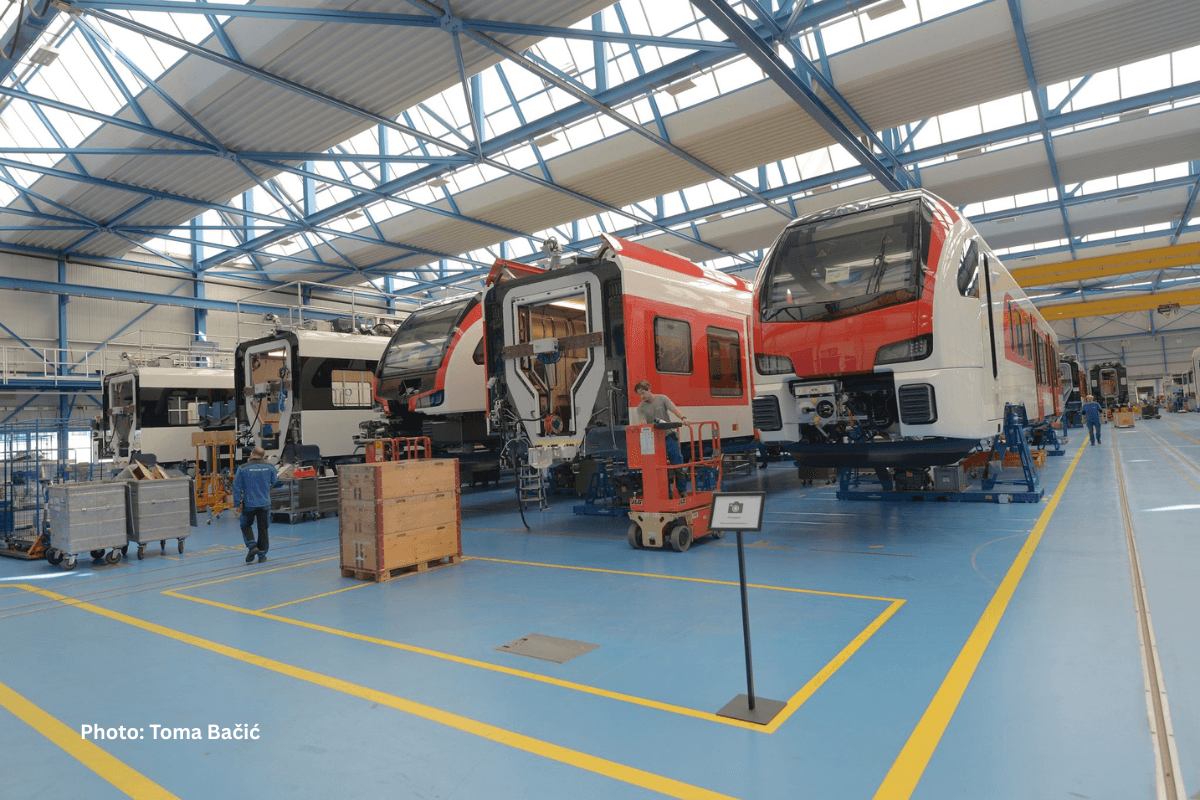
Historically, the signalling market was dominated by a few legacy players, but the entry of rolling stock manufacturers into this space is disrupting traditional procurement models. By offering vertically integrated solutions—where the vehicle and the signalling system are developed in tandem—Stadler aims to reduce the integration risks that have frequently plagued complex automation projects. This approach is particularly relevant as the industry grapples with the challenges of retrofitting ETCS across aging European fleets and the complexities of certifying safety-critical software.
Looking ahead, the focus of the sector is shifting toward the deployment of Artificial Intelligence in safety-critical environments and the realization of fully autonomous 'wake-up' and shunting sequences in depots. As Stadler targets 2028 for formal GoA4 operations on specific Swiss lines, the broader industry will be watching closely to see if these localized successes can be scaled to high-density mainline networks. The transition toward highly automated systems remains the primary lever for achieving the efficiency gains required by modern transport policy.
Source: Railway Gazette International
Stadler Advances Global Signalling Strategy with Automated Operation and Strategic Expansion

Engineering Business Management
Share this story
As the global rail industry increasingly prioritizes digital transformation and automation to enhance network capacity, Stadler Signalling is consolidating its position as a comprehensive systems provider. The company recently achieved a significant milestone with the introduction of Grade of Automation 2 (GoA2) on Switzerland’s Waldenburgerbahn, marking a pivotal shift from rolling stock manufacturing to integrated technology solutions.