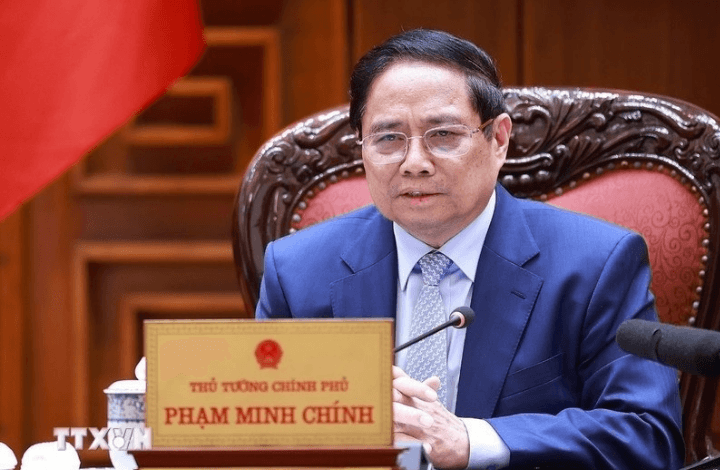

Chairing a government meeting in Hanoi on March 18, the Prime Minister reviewed progress across several strategic rail initiatives, including the North–South high-speed railway, the Lao Cai–Hanoi–Hai Phong corridor, and planned routes such as Hanoi–Lang Son and Hai Phong–Mong Cai, as well as urban rail systems in Hanoi and Ho Chi Minh City.
While acknowledging improvements since the latest Steering Committee meeting, Pham Minh Chinh urged greater urgency, calling for more proactive, flexible and effective implementation to overcome remaining challenges and keep projects on schedule.
He emphasised the importance of establishing clear railway standards and procedures aligned with international practices while tailored to Vietnam’s specific conditions, ensuring consistency in nationwide development.
The Prime Minister also underscored the need for strict oversight throughout project delivery, including inspection, supervision and auditing, alongside firm measures to prevent corruption and inefficiencies.
Local authorities were instructed to expedite land acquisition and resettlement processes, ensuring affected communities benefit from improved living conditions, infrastructure and livelihoods.
In addition, the Ministry of Construction and Vietnam Railways Corporation were tasked with developing workforce training plans to support the sector’s long-term growth.
The government is also seeking to diversify funding sources, including public investment, private capital, public-private partnerships, loans and bonds, while adopting advanced construction technologies to enhance efficiency and quality.
For the North–South high-speed railway, authorities have been directed to finalise technology selection and complete the feasibility study, laying the groundwork for the appointment of investors and contractors.
Meanwhile, local governments along the Lao Cai–Hanoi–Hai Phong route have been urged to accelerate land clearance and complete feasibility studies, alongside developing supporting infrastructure.
On urban rail development, Pham Minh Chinh noted that most major obstacles in Hanoi and Ho Chi Minh City have been addressed, but remaining issues must be resolved promptly. He also highlighted the priority of rail links connecting Long Thanh International Airport and Tan Son Nhat International Airport to Ho Chi Minh City’s urban core.
The Prime Minister further instructed the Ministry of Finance to advance restructuring plans for Vietnam Railways, while the Ministry of Industry and Trade was tasked with finalising a railway industry development framework by March 2026.
The directive signals Vietnam’s intensified push to accelerate rail infrastructure development as a cornerstone of its long-term economic and transport strategy.