BEIJING (Feb 4, 2026) — China has embarked on the 2026 Spring Festival travel rush, known as chunyun, signalling the commencement of what officials are calling the largest seasonal movement of people ever recorded. This year’s travel period, spanning 40 days from February 2 to March 13, is projected to support 9.5 billion interregional passenger trips. This remarkable level of mobility reflects the dynamism of the world’s second-largest economy, as millions take the opportunity to reunite with family or enjoy the extended Lunar New Year holiday.
The expected number of trips is up from last year’s estimated 9.02 billion, driven by factors including a generous nine-day public holiday and a notable recovery in consumer confidence. Transport officials have observed a rising demand not only for traditional homebound travel but also for leisure trips, suggesting a positive shift in travel preferences as domestic tourism continues to flourish.
Road travel remains the predominant mode, accounting for about 80 per cent of all journeys. This trend is largely driven by private vehicle use, as families travel from major urban areas to their hometowns in smaller cities and rural areas. Rail and air travel, however, are also expected to reach new heights, with the national railway network forecasting more than 540 million passenger trips and civil aviation authorities estimating around 95 million air journeys during the travel period, both figures exceeding previous records.
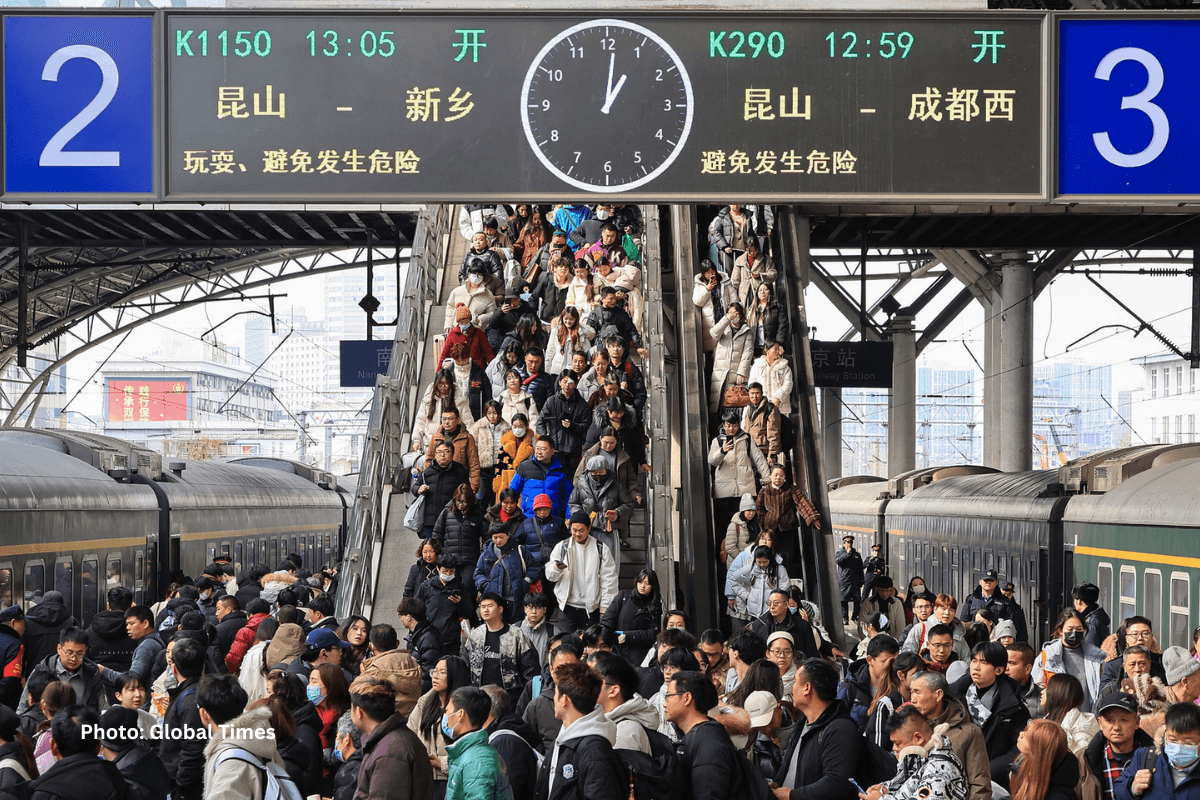
The magnitude of the movement was immediately evident on the first day of chunyun, with nearly 188 million cross-regional trips recorded nationwide, representing a double-digit increase from the previous year. Major railway stations and airports experienced heavy but well-organised passenger flows, thanks to the implementation of additional services and increased operational capacity.
In preparation for this surge, authorities have skillfully mobilised a variety of resources. High-speed rail services have been enhanced on key routes, highways are receiving vigilant monitoring, and emergency response teams have been strategically deployed across the country. At transportation hubs, additional personnel have been assigned to ensure effective crowd management and safety oversight, and to leverage digital ticketing systems to improve passenger flow.
Additionally, there is a strong emphasis on service quality. Transport operators have introduced initiatives such as priority assistance for elderly passengers, families with young children, and travellers with special needs. Enhancements to station amenities and onboard services are designed to alleviate the pressures of long journeys during peak travel times.
Beyond logistical considerations, the Spring Festival travel rush serves as a valuable indicator of economic and social trends. Economists view the increase in travel as a sign of buoyant domestic demand and household confidence, which are crucial as policymakers aim to foster consumption-driven growth. Popular tourist destinations, from coastal resorts to historic inland cities, are reporting healthy booking levels, while travel to nearby Asian countries is also increasing.
Culturally, travel is expected to peak around Lunar New Year on February 17, when millions gather for traditional family reunions that are fundamental to Chinese social life. For many, chunyun is not merely an infrastructure challenge; it is an annual ritual that reinforces family bonds amid ongoing urbanisation and demographic change.
As China navigates this record-breaking travel season, the outcomes will be closely monitored. Observers will be keen to see insights into the country's economic resilience and evolving patterns of daily life, underscoring the importance of adaptability and community connectivity during this vibrant period.
China’s Spring Festival Exodus Tests Transport Networks at Historic Scale

Engineering Business Management
Share this story
As the 40-day Spring Festival travel season gets underway, China’s transport system is facing one of its most demanding tests yet, with officials projecting a record 9.5 billion passenger trips amid surging road, rail and air travel linked to the Lunar New Year holidays.