BAKU, January 2026 —The Middle Corridor serves as a crucial land bridge that links Asia and Europe, offering a strategic alternative to established maritime and northern routes. Its development is essential for enhancing connectivity across Eurasia and facilitating international trade.
Recent infrastructure enhancements, including the modernization of the Baku–Tbilisi–Kars railway scheduled for 2024, have significantly increased its annual capacity to five million tons. Furthermore, in August 2024, the China Railway and Container Shipping Corporation joined the Middle Corridor Multimodal Ltd joint venture to strengthen operational coordination.
By early 2026, these advancements are expected to reduce transit times to as few as 11 days. This increased efficiency establishes Azerbaijan as a key logistics hub, benefiting organizations that depend on timely cargo movement between continents.
The corridor's reduced transit times and diversified routing are becoming increasingly critical as geopolitical dynamics and supply-chain considerations reshape global trade patterns. This development provides a competitive advantage over traditional transport routes.
The acceleration of the Middle Corridor aligns with a broader industry trend aimed at optimizing intercontinental rail freight, driven by the necessity for faster, more reliable, and resilient supply chains in an increasingly interconnected global economy.
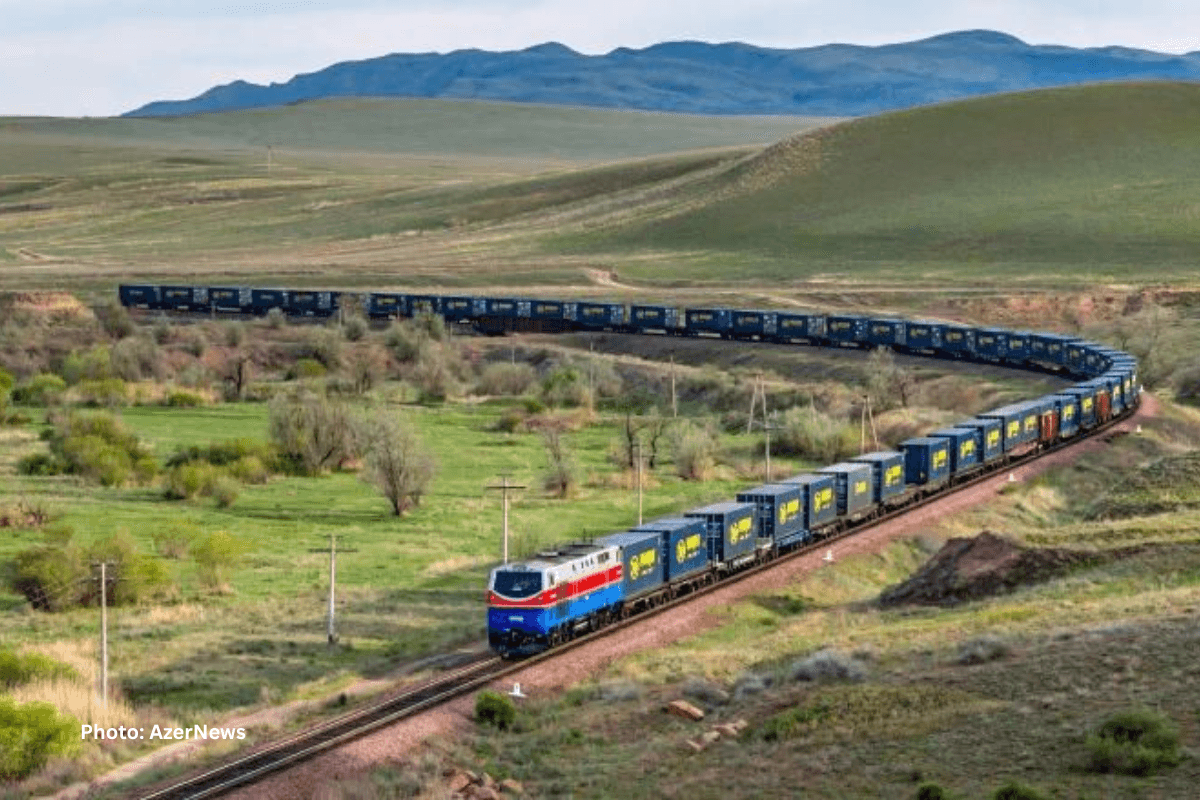
Strategic Middle Corridor Sees Significant Speed Gains in China-Europe Rail Freight

Engineering Business Management
Share this story
As global trade routes evolve, the Middle Corridor's efficiency is improving. Recent infrastructure upgrades have drastically cut transit times between China and Europe, positioning Azerbaijan as a critical Eurasian logistics hub.


