Today, railway stations are no longer just locations for boarding and alighting from trains. They have transformed into vibrant urban spaces where people shop, dine, work, socialise and connect with the surrounding communities. Every station, corridor and infrastructure asset presents an opportunity to generate commercial value beyond transportation.
The future of rail will therefore depend not only on the efficiency of train operations but also on how effectively railway organisations unlock the full potential of their assets. Retail spaces, telecommunications infrastructure, parking facilities, digital platforms, passenger data and strategic partnerships have all become valuable commercial resources that can generate sustainable revenue beyond just ticket sales.
Non-fare revenue has evolved from being a supplementary source of income to a defining pillar of a resilient and financially sustainable railway industry.
From Railway Operator to Commercial Ecosystem
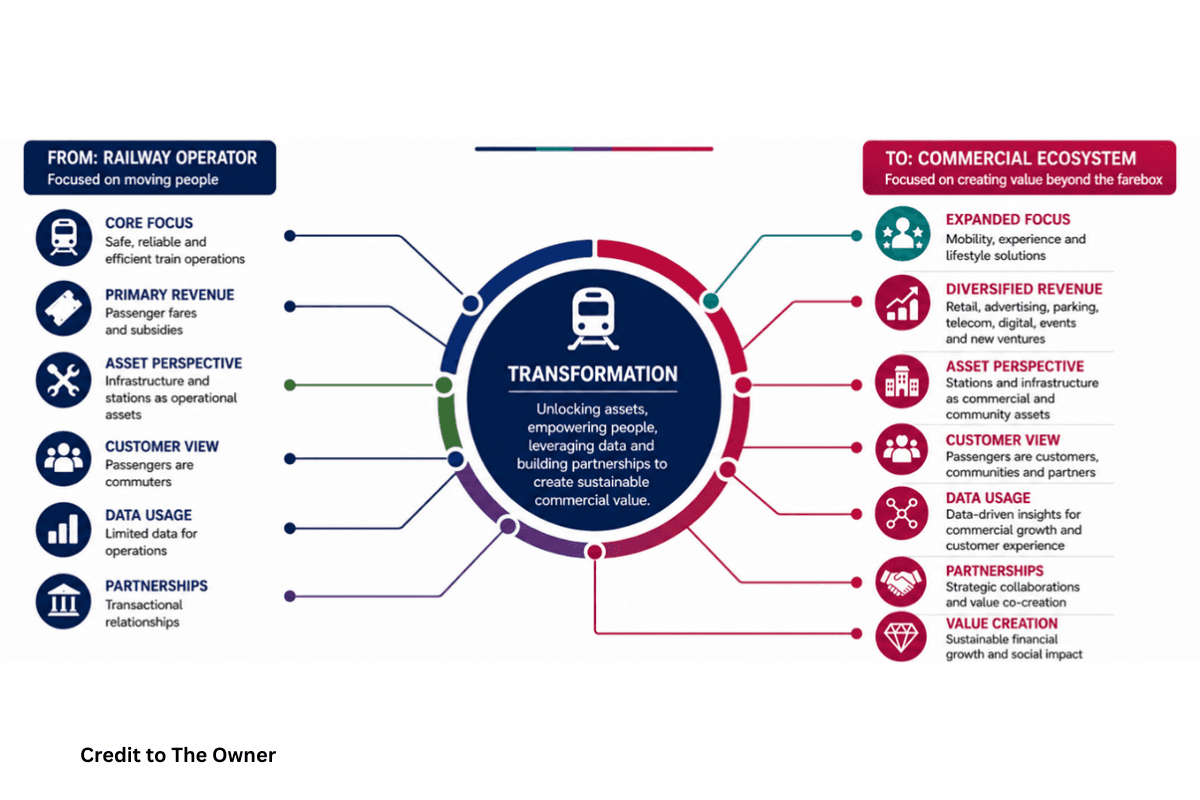
Around the world, successful railway organisations have demonstrated that commercial diversification is essential for long-term growth. Operators such as MTR Hong Kong, JR East, Tokyu Corporation and Transport for London have transformed themselves from transport providers into integrated commercial enterprises by leveraging their stations, infrastructure and customer networks.
Their success lies in a fundamental shift in perspective. Rather than viewing stations solely as transport facilities, these organisations recognise them as commercial ecosystems capable of creating value through multiple interconnected businesses. Retail outlets, advertising media, event spaces, telecommunications infrastructure, mobility services, logistics facilities and digital platforms all contribute to a diversified revenue portfolio while enhancing the passenger experience.
This approach creates a virtuous cycle. Stronger commercial performance enables greater investment in customer experience and infrastructure, which in turn attracts more passengers, business partners and commercial opportunities.
A Strategic Framework for Commercial Transformation

Commercial transformation cannot be achieved through isolated initiatives or short-term projects. It requires a structured roadmap that progressively strengthens organisational capability while expanding commercial opportunities. The proposed Non-Fare Revenue Framework adopts a three-phase approach that guides railway operators from establishing strong commercial foundations to achieving a mature, data-driven commercial ecosystem.
The first phase focuses on building the necessary capabilities to support long-term growth. This begins with a comprehensive review of retail portfolios to optimise tenant mix, rental structures and station positioning according to market demand rather than applying uniform leasing strategies across the network. Advertising assets are systematically audited to identify underutilised inventory while premium stations begin transitioning towards digital advertising solutions.
Commercial activation spaces are established with clear governance, safety procedures and approval processes, allowing stations to host a broader range of events, exhibitions, and community programs. Parking facilities are enhanced through modern technology, digital payment systems and pricing strategies that better align with commuter behaviour. Telecommunications assets, including fibre corridors, communication rooms, rooftops and tower locations, are assessed for potential commercial leasing opportunities. Additionally, digital platforms are implemented to improve operational efficiency with tenant management systems, dashboards and IoT applications. Emerging business opportunities, such as parcel lockers, mobility partnerships and logistics services, are also explored through structured feasibility studies to prepare the organisation for future expansion.
Once the foundational elements are in place, the focus shifts to optimisation and commercial growth. Leasing strategies become increasingly performance-based through turnover rental models that align the interests of landlords and tenants. Commercial decisions are informed by passenger footfall analytics, allowing operators to better understand customer movement, dwell time and purchasing behaviour.
Advertising transforms beyond traditional billboards into dynamic digital media networks, station naming rights and programmatic advertising that can deliver targeted campaigns to specific commuter segments. Stations themselves evolve into organised commercial marketplaces where brands can activate campaigns across multiple locations using standardised booking platforms. Parking is redefined as an integrated mobility service that includes electric vehicle charging, parcel lockers and digital customer services, generating additional revenue while enhancing convenience.
Telecommunications infrastructure expands through fibre leasing, Wi-Fi sponsorships and strategic data partnerships, while technology platforms mature into commercial products that support loyalty programs, digital marketplaces and customer engagement initiatives. New ventures, such as commuter lounges and logistics micro-hubs, transition from pilot projects into scalable business operations that complement the railway's core services.
The final phase represents the maturity of the commercial railway. Artificial intelligence aids leasing decisions by forecasting tenant performance, recommending rental rates and predicting vacancies before they occur. Retail portfolios become increasingly resilient, featuring a balanced mix of anchor tenants and local businesses tailored to the unique characteristics of individual stations.
Advertising evolves into a fully integrated media business that combines digital displays, passenger analytics, mobile engagement and long-term brand partnerships into a cohesive commercial offering. Stations become destinations, hosting cultural events, community programs, festivals and immersive brand experiences that enhance passenger engagement while creating new commercial opportunities.
Parking becomes part of a seamless mobility ecosystem featuring dynamic pricing, loyalty rewards and multimodal journey integration. Telecommunications infrastructure supports next-generation digital services such as 5G deployment, smart city applications and edge computing. Meanwhile, digital platforms evolve into revenue-generating businesses through analytics services, application programming interfaces, subscription models and monetised data solutions. Successful pilot businesses expand into sustainable commercial ventures, resulting in a diversified income portfolio that significantly reduces reliance on passenger fares.
Building Multiple Engines of Growth
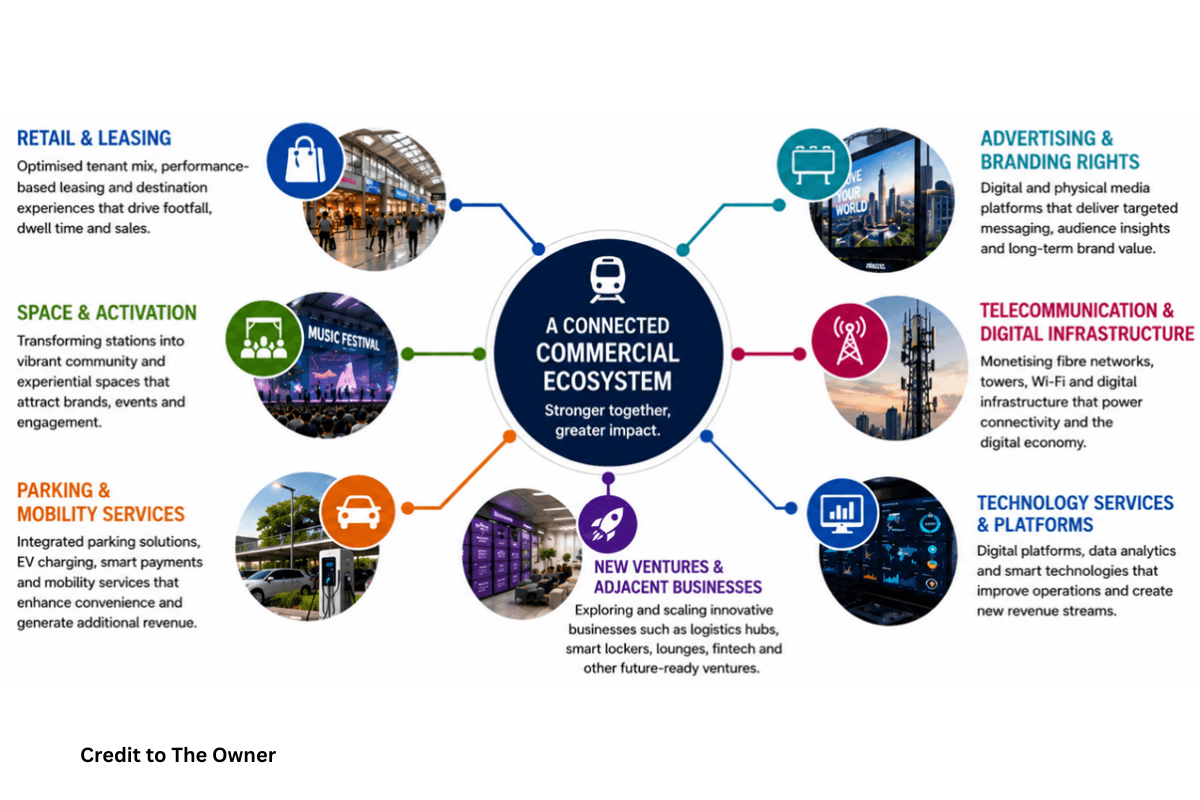
The core of the framework recognises that commercial growth should be diversified. Instead of depending on a single revenue source, the framework brings together retail leasing, advertising, space activation, parking and mobility services, telecommunications infrastructure, digital platforms and related business opportunities into a cohesive commercial strategy. Each component supports the others, creating synergies that enhance both financial performance and customer experience.
For instance, a retail tenant benefits from the increased foot traffic generated by events at the station. Additionally, digital advertising campaigns can be improved using passenger analytics gathered from digital platforms. Telecommunications infrastructure facilitates smart mobility services, while parking facilities serve as gateways to a wider range of commercial offerings. This interconnected model ensures that every railway asset contributes to a larger commercial ecosystem.
The Foundations of Sustainable Growth
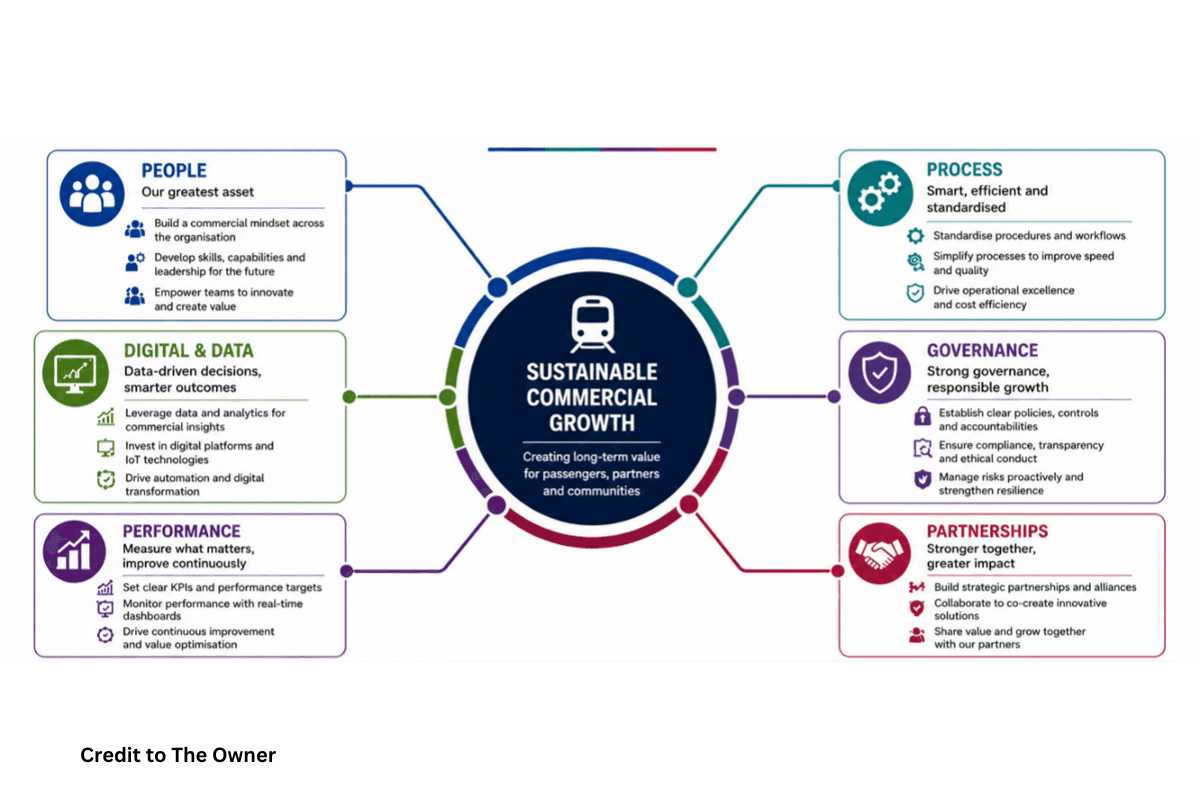
Successful commercial transformation relies not only on innovative business ideas but also on strong organisational capabilities. Key factors such as effective leadership, skilled personnel, robust governance, streamlined processes, digital capabilities, performance management and strategic partnerships lay the groundwork for successful commercial initiatives.
Equally important is the ability to measure performance consistently. A comprehensive commercial dashboard enables management to monitor key indicators across all business segments, providing insights into commercial performance and supporting evidence-based decision-making. This capability allows organisations to respond quickly to market changes, optimise investments and continually enhance operational effectiveness.
Looking Beyond the Farebox
The next decade offers a unique opportunity for railway operators to redefine their roles within the communities they serve. While ensuring the safe and reliable movement of passengers will always be the core mission of public transport, financial sustainability will increasingly depend on generating value beyond just ticket sales.
Railway stations are transforming into destinations rather than mere transit points. Infrastructure is evolving into digital frameworks and passenger data is becoming a strategic asset. Partnerships are replacing traditional commercial relationships, with technology driving innovation across every aspect of railway operations.
The railway industry is no longer solely focused on transporting people from one destination to another; it is now creating connected commercial ecosystems that generate economic value, enhance customer experiences and strengthen long-term organisational resilience.
The concept of a commercial railway is not a distant future vision; it represents the next evolution of the railway industry. Organisations that embrace this transformation today will shape the future of rail for decades to come.